Universities Hiding Involvement in Climate Lawfare, Complaint Alleges
The Universities of Illinois and Arizona are attempting to conceal their faculties’ ties to climate activism, according to a new complaint from a watchdog group.
Read more ‘Prattman,’ Murder by Tractor, and Painted Clowns: How AI Is Transforming the Political Campaign
The universities have refused to release records that would reveal the involvement of some members of their faculties in writing a chapter on climate science in a newly released edition of Reference Manual on Scientific Evidence, which federal judges rely on for neutral information. After the chapter was retracted for biased science and conflicts of interest with ongoing climate litigation efforts, the universities denied requests for information in what appears to be a coordinated effort.
On Wednesday, the Patriots Foundation, a nonprofit watchdog group, filed complaints in Maricopa County, Ariz., and Champaign County, Ill., asking the courts to order the universities to release the records.
The dispute began last year when the Federal Judicial Center partnered with the National Academies of Science, Engineering, and Medicine to produce the fourth edition of the Reference Manual, which aims to supply federal judges with advice for evaluating scientific evidence objectively.
“In other words, courts are acting as gatekeepers: they don’t want a party to be able to introduce some junk scientists,” said Mark Pinkert, a lawyer at Holtzman Vogel representing the Patriots Foundation.
However, the chapter on climate science was found to have contained a pro-climate activism slant. The incorporation of “attribution science,” a novel field that claims to be able to attribute specific effects of climate change to specific human activities, was particularly controversial.
“In a normal situation, a court would look at [attribution science] and say, ‘I’m not letting this in front of a jury. It’s brand new,’” said Pinkert.
Attribution science has been the subject of recent litigation and activist attempts to hold large fossil fuel companies accountable for local damages. Such lawfare includes a case that was just taken up by the U.S. Supreme Court regarding the City of Boulder: Colorado’s attempt to sue Suncor Energy under statewide public nuisance and consumer protection laws.
Additionally, the chapter came under fire for massive conflicts of interest. The authors lifted much of the text from a previous article written by them and a third expert, who is of counsel at a large law firm involved in climate litigation cases.
If the chapter were to successfully convince judges to side with plaintiffs in climate lawfare cases, “this law firm stands to gain millions and millions and millions of dollars,” said Pinkert.
The Federal Judicial Center removed the chapter from the manual on its website following a February letter signed by 27 attorneys general decrying the attempt to influence the judiciary.
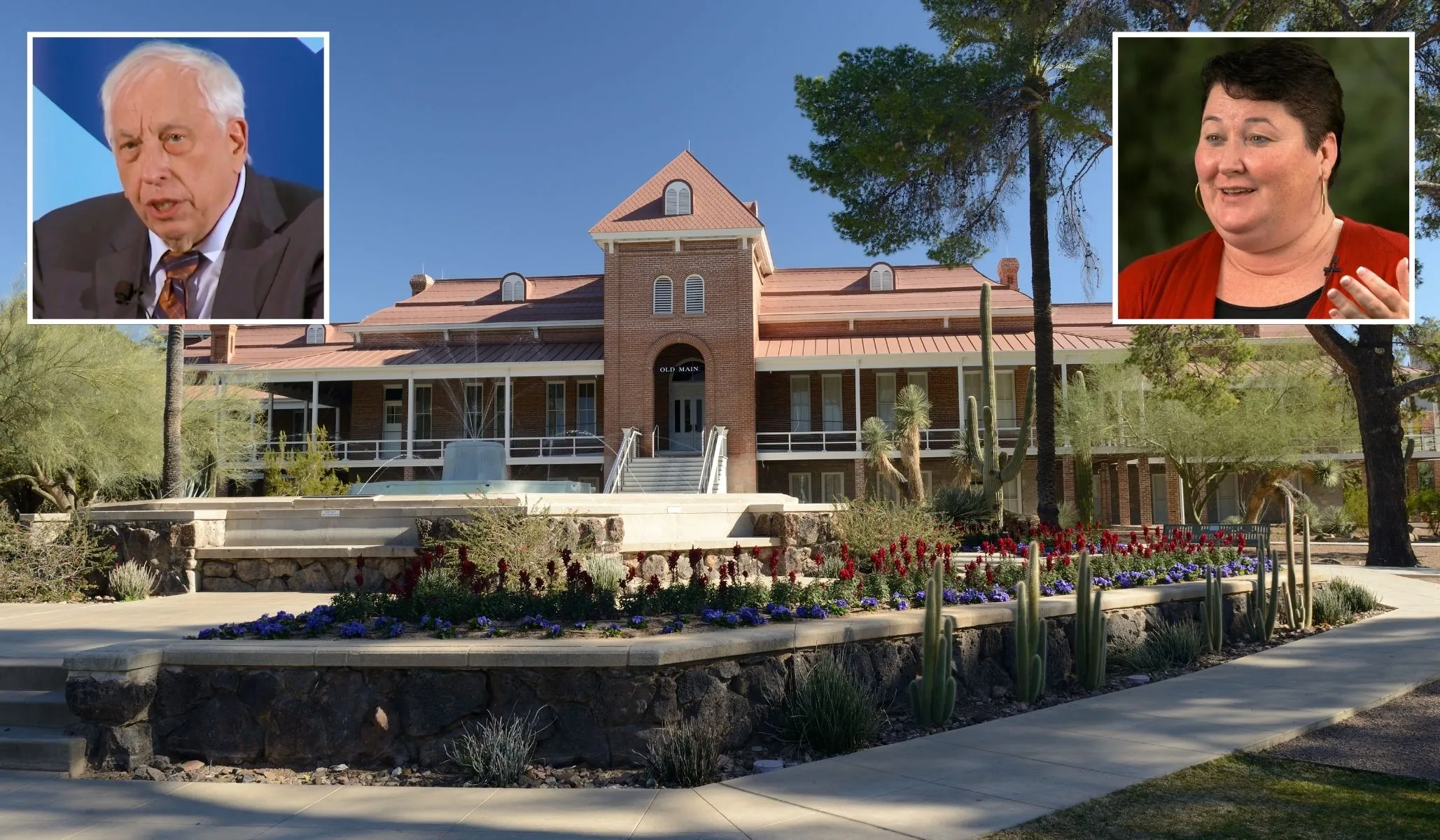
After the removal controversy, the Patriots Foundation began to investigate professors and activists involved in the manual’s redacted chapter. Joellen Russell and Donald Wuebbles, professors at the Universities of Arizona and Illinois, respectively, reviewed the chapter on climate science.
Read more House Republicans Sound the Alarm on China Exploiting U.S. Technology
Video from a National Academies of Science, Engineering, and Medicine panel in 2021 related to the contents of what would become the chapter shows Russell discussing her research into carbon emissions specifically in relation to the landmark Supreme Court case Massachusetts v. EPA, for which Russell filed an amicus curiae brief supporting the plaintiff. The 2007 decision allowed the EPA to regulate greenhouse gases under the Clean Air Act.
“We’ve made amazing progress toward near real-time carbon accounting,” said Russell in the video. Russell is also one of the founding members of Science Moms, a climate activist group for mothers.
Wuebbles spoke in the same panel and made a call to action, encouraging the audience to respond to warming temperatures.
Following the chapter removal, the Patriots Foundation requested the professors’ communications and records related to the chapter, as well as relevant information from other universities across the country.
Both universities refused to release relevant records, which are legally available under state freedom of information laws. After the Patriots Foundation pressed harder, both universities claimed that the records were not in the scope of the law.
The Universities of Arizona and Illinois did not respond to a request for comment.
The Patriots Foundation’s legal team obtained documents from the National Academies of Science, Engineering, and Medicine, which show an invitation to a “time-sensitive call” about “recent developments since the release of the manual” to members on the manual’s committee. Given the timing of the call, and the eerily similar responses by the universities, Pinkert and his partner Jason Torchinsky suspect that the cover-up effort was coordinated.
The National Academies of Science, Engineering, and Medicine also directed the committee members to contact their general counsel and to direct records requests to their PR spokesperson if they received media coverage.
As Pinkert notes, “NASEM and its GC Marc Gold are not the professors’ or universities’ outside lawyers, and they should not be directing public entities on how to handle (or evade) public records requests.”
The National Academies of Science, Engineering, and Medicine is a private, nonprofit organization that receives hundreds of millions of dollars in government grants and contracts.
This not the first time in recent years that public officials have attempted to escape freedom of information requests. Recently, an adviser of Anthony Fauci’s was indicted by a federal grand jury for concealing records related to the suppression of Covid-19 lab leak theories.
Read more Blue-State Attorneys General Tilt the Playing Field to Gain Edge in Climate Change Litigation

Related Posts
California Elementary Schools Teach ‘Cisheteropatriarchy’ and ‘Decolonization,’ House Probe Finds