Blue-State Attorneys General Tilt the Playing Field to Gain Edge in Climate Change Litigation
Attorneys general in blue states across the U.S. are urging the Federal Judicial Center to reinstate its biased “climate science” chapter in the group’s judicial reference manual, failing to mention the signatories are plaintiffs in dozens of consequential climate lawfare cases.
Read more Trump-Backed Mike Collins Prevails over Kemp-Backed Candidate in Georgia Primary Runoff
In a letter from earlier this month signed by a coalition of more than two dozen Democratic attorneys general and city legal officers, the group claims the removal undermines the FJC’s purpose, raises concerns over partisan-endorsed censorship, and “harms our judicial system, as judges and litigants are left without impartial, peer-reviewed information on complex and crucial scientific issues.”
The section was originally removed following concerns over deep conflicts of interest, biased information, and concerns it “would tip the scales in favor of left-leaning policies that would be the final nail in the coffin of American-produced energy,” 27 attorneys general previously wrote, warning FJC about the implications of the chapter. One week later, the FJC announced it would not be including the section in its most recent manual.
The FJC is a taxpayer-funded nonprofit created by Congress to advise the courts on complicated scientific issues. Every year, the group publishes a reference manual, covering various scientific issues that may arise throughout litigation.
This most recent letter, coming from the other side of the aisle, is addressed to FJC Director Robin L. Rosenberg on behalf of signatories who claim to be concerned about the climate and the potential effects of alleged climate change. The signatories leave out an important detail: Their involvement with massive climate cases in their jurisdictions.
Hawaii Attorney General Anne E. Lopez, for example, signed the letter while a major climate lawfare case is pending in her state. She filed a lawsuit against seven major fossil fuel companies — including ExxonMobil and Chevron — alleging they failed to appropriately warn consumers about their products’ contribution to climate change and the associated dangers. The suit is seeking compensatory, punitive, and natural resource damages.
The Trump administration’s Department of Justice previously tried to preemptively shoot down the climate case, which former U.S. Attorney General Pam Bondi described as “burdensome and ideologically motivated.” The Hawaii Supreme Court, however, rejected the federal government’s attempt, allowing Hawaii to move forward with its crusade against Big Oil.
The Hawaii case, as well as others in dozens of states represented by the signatories, carry significant implications for the future of the fossil fuel industry and the broader economy. These cases, which fall under the category of tort liability, essentially work as an indirect carbon tax on the consumer. Carbon taxes are historically extremely difficult to pass through traditional democratic processes, so climate activists have instead resorted to punitive legislation to extract costs from fossil fuel providers. If successful, energy companies will owe billions of dollars in damages to whatever locality sued them. When push comes to shove, and these companies are forced to pay up, costs will be passed on to the consumer.
Read more MLB Issues Warning to S.F. Giants Players Who Wrote Bible Verses on ‘Pride’ Night Caps
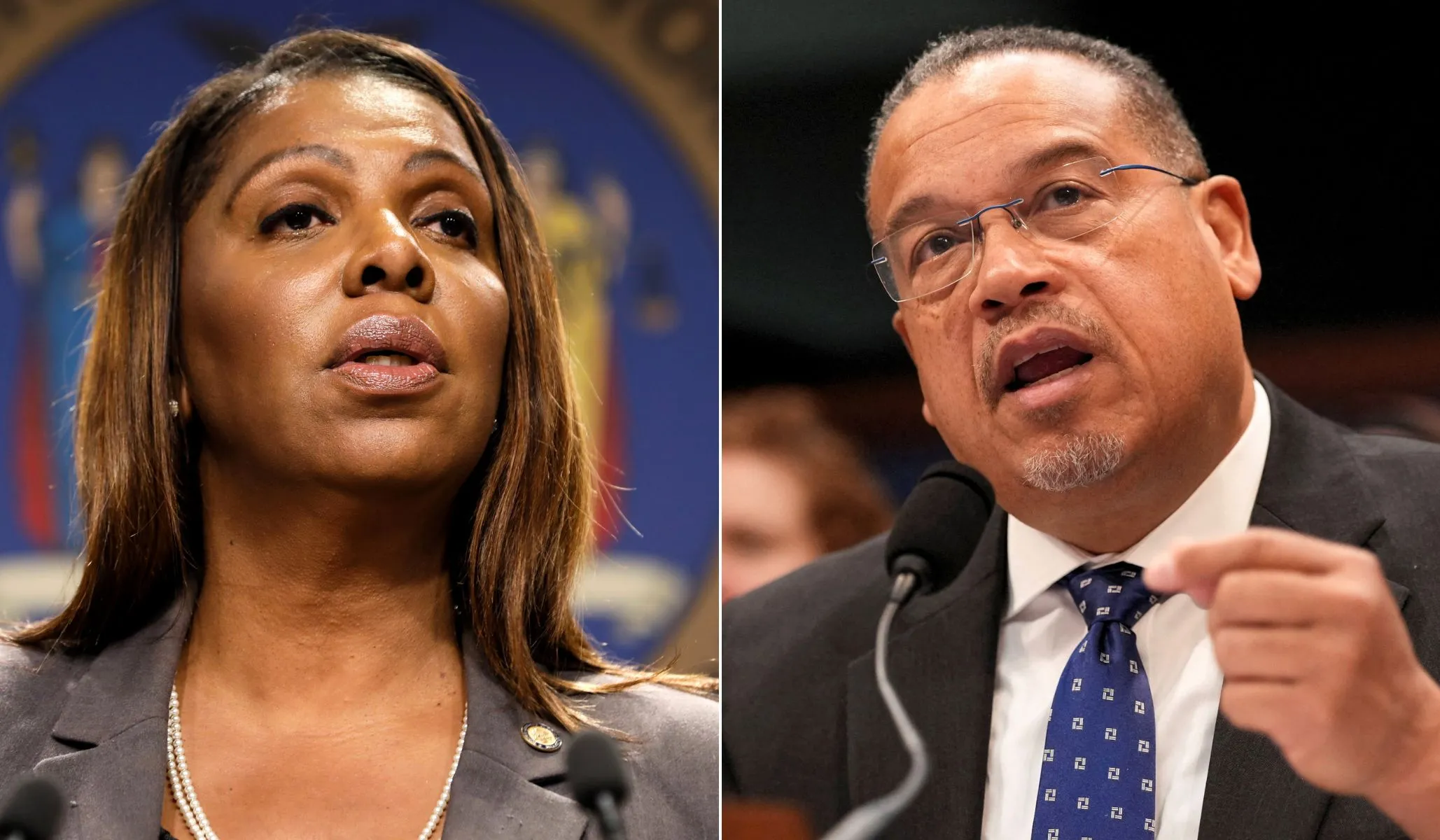
In New York State, Governor Kathy Hochul signed the “polluter pays” New York Climate Change Superfund Act into law, requiring energy companies to pay a collective $75 billion over the next 25 years. The state’s attorney general, Letitia James, is a signatory as well. Payments toward the fund are set to begin this September, and are intended to “require companies that have contributed significantly to the buildup of climate-warming greenhouse gases in the atmosphere to bear a share of the costs of needed infrastructure investments to adapt to climate change,” the law reads. There are currently pending lawsuits to overturn the act.
The DOJ has argued against the validity of the suits and policies, citing federal supremacy in controlling greenhouse gas emissions. In Minnesota, for example, Attorney General Keith Ellison filed a suit in 2020 against ExxonMobil, Koch Industries, and the American Petroleum Institute, vowing to move forward with the case “because Big Oil has pulled every procedural trick in the book to delay facing the consequences of their unlawful actions.”
On a state-to-state basis, determining actual harm a company has caused is almost impossible, especially when these cases are billed as a “public nuisance” tort liability suit. Traditionally, in these types of cases, there are tangible issues to correct, like cleaning up an oil spill from a specific factory. Alleged climate change, however, is a different story.
In Board of County Commissioners of Boulder County v. Suncor Energy (U.S.A.), Inc., for example, the energy companies being sued are not present in the county representing the plaintiff — the alleged “nuisance” the companies’ products and practices have created applies equally to any jurisdiction across the globe.
If these climate cases prevail, in part because judges are making judgments based on the “climate science” chapter, it would open a Pandora’s box, allowing “every locality in the country to sue essentially anyone in the world,” according to a letter — previously signed by 100 members of Congress — urging the Colorado Supreme Court to throw out the Boulder case.
Among the attorneys general and legal officers who signed the letter, California, Connecticut, Delaware, Hawaii, Maine, Massachusetts, Michigan, Minnesota, New Jersey, Rhode Island, and Vermont, plus the District of Columbia and City of Chicago, are all included. In all of these jurisdictions, there is an active climate lawfare case.
Read more FIFA Goes Looking for Discrimination in the Wrong Place

Related Posts
Top Virginia Democrat Louise Lucas Charged in Public Corruption, Drug Trafficking Case
Court Slaps Down NYC’s Latest Attempt to Punish Energy Companies for Climate Change