House Republicans Sound the Alarm on China Exploiting U.S. Technology
House Republicans are sounding the alarm over the federal government’s inability to adequately monitor and track science and technology agreements (STAs) between federal agencies and foreign governments, including adversaries like China, warning that gaps in oversight pose a grave national security risk.
Read more Blue-State Attorneys General Tilt the Playing Field to Gain Edge in Climate Change Litigation
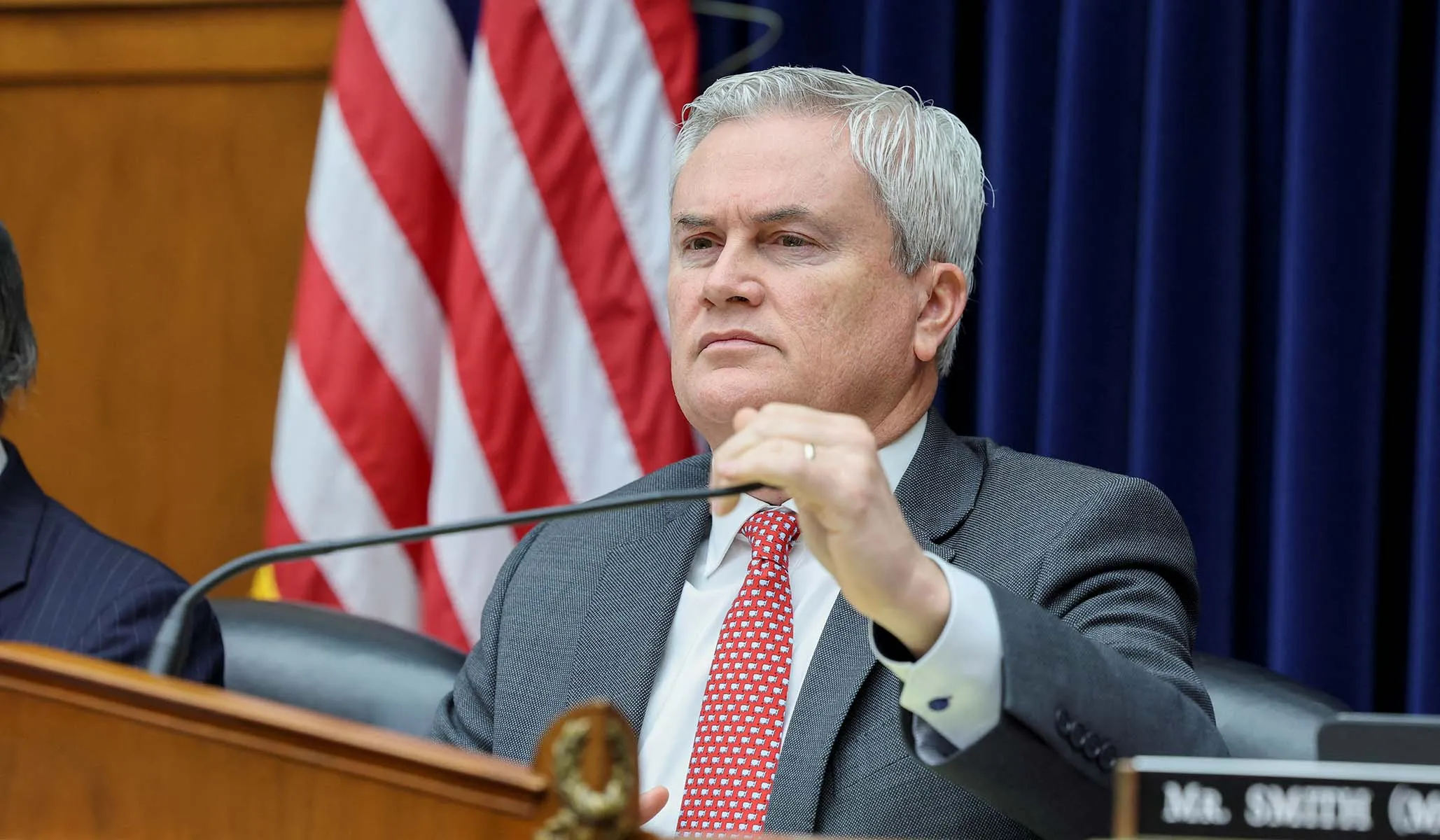
House Oversight Committee Chairman James Comer and House Subcommittee on Military and Foreign Affairs Chairman William Timmons are asking the Trump administration to conduct comprehensive assessments of the State Department’s current capabilities to monitor the agreements, after finding earlier this year that “Due to the lack of information sharing and ability to monitor STAs, the United States is unable to effectively track China’s intentional exploitation of cooperative agreements and the national security risks this poses.”
“China has frequently abused STAs between cooperating nations to violate intellectual property rights and patent agreements,” the lawmakers warn.
Comer and Timmons sent letters to the (OIG) and the (GAO) on Wednesday, obtained exclusively by National Review, as part of their efforts to investigate the “significant gaps” in the federal government’s ability to monitor and track STAs.
“While STAs serve as established instruments of diplomatic cooperation and scientific exchange, entering into such agreements with adversarial nations poses acute risks to U.S. economic competitiveness and national security due to intellectual property theft and information access manipulation,” the lawmakers write.
The two chairmen previously sent a letter to Assistant Secretary of State for East Asian and Pacific Affairs Michael DeSombre in April requesting written answers on the extent to which the Bureau for East Asian and Pacific Affairs is tracking STAs with China and any sub-agreements made between China and other federal agencies.
The State Department explained in its response that there is a tracking mechanism for sub-agreements, but the determinations of which sub-agreements are reported is at the discretion of the agency that enters into the sub-agreement. The lawmakers say that process can result in underreporting sub-agreements to the State Department if an agency incorrectly determines the significance of a sub-agreement.
“The lack of proper oversight and tracking of STA sub-agreements between federal agencies and foreign governments poses a grave risk to U.S. economic and national security, underscoring the need for a centralized tracking and management system for said sub-agreements,” Comer and Timmons write.
Read more Trump-Backed Mike Collins Prevails over Kemp-Backed Candidate in Georgia Primary Runoff
The U.S. and China first signed the U.S.-China Science and Technology Cooperation Agreement (STA) in 1979 under President Jimmy Carter. The agreement was an effort by the U.S. to counter the influence of the Soviet Union by developing ties with China. The United States’s science and technology ties with China later expanded under the Obama administration to cover a number of issues involving health, energy and climate change.
However, in the time since the STA agreement was first reached, the U.S. diplomatic strategy as it concerns China has shifted, with the U.S. now viewing China as a strategic competitor.
“STA proponents and critics both say that the current STA did not reflect this U.S. policy shift or U.S. concerns about PRC S&T practices and industrial policies,” according to the Library of Congress. “Some say the most recent STA did not address China’s growing technological capabilities and restrictive and potentially risky operating environment for cross-border research.”
The State Department signed an agreement to amend and extend the STA for five years in December 2024, under the outgoing Biden administration.
Now, Comer and Timmons are calling on the State Department OIG to evaluate STAs from January 31, 1979, to present and to review the Department of State’s past practices in monitoring STA sub-agreements. They also ask the inspector general to examine the security vulnerabilities and documented consequences associated with insufficient monitoring of STA sub-agreements; to assess the viability of a STA sub-agreement tracking program and mandatory reporting system with the State Department’s current resources; and to identify the financial and personnel requirements needed for the State Department to implement an effective sub-agreement tracking system with mandatory reporting requirements. Finally, the letters ask the State OIG to assess the organizational changes necessary within the department to establish a sub-agreement tracking program with compulsory sub-agreement reporting practices for agencies.
Meanwhile, the lawmakers are asking the GAO to evaluate the State Department’s past practices in monitoring STA sub-agreements; to identify the number and nature of STA sub-agreements between U.S. federal agencies and China; and to examine the sub-agreement tracking practices and approval processes within major federal agencies who enter into STA sub-agreements.
Comer and Timmons go on to instruct the GAO to examine the security vulnerabilities and documented consequences associated with insufficient monitoring and reporting of STA sub-agreements; to assess the viability of a STA sub-agreement tracking program and compulsory reporting process with the department’s current resources; to identify the financial and personnel requirements needed for the department to implement an effective sub-agreement tracking system; and to assess the organizational changes necessary within the department to establish a sub-agreement tracking program.
Read more MLB Issues Warning to S.F. Giants Players Who Wrote Bible Verses on ‘Pride’ Night Caps

Related Posts

Top Virginia Democrat Louise Lucas Charged in Public Corruption, Drug Trafficking Case
Court Slaps Down NYC’s Latest Attempt to Punish Energy Companies for Climate Change