Professors at Top Universities Donate Overwhelmingly to Far-Left Candidates
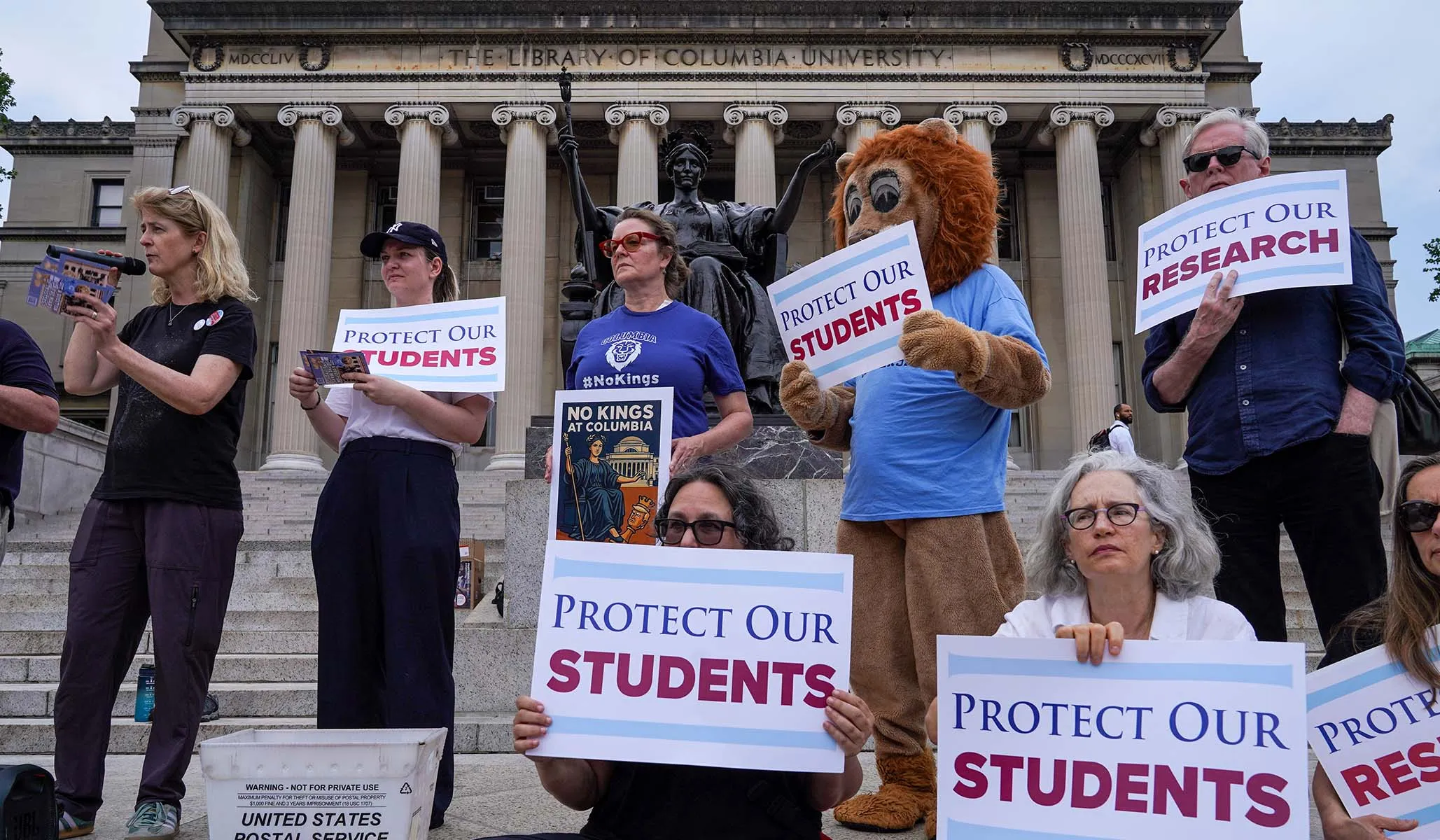
Faculty members at top American universities overwhelmingly donate to far-left candidates, and the trend has only grown more dramatic over the past four decades, according to a new report by the Foundation for Individual Rights and Expression (FIRE).
Read more Gay World Cup Fans Search Desperately for ‘Safe Havens’ in . . . San Francisco
The report, released last week, is based on the political donation histories of tens of thousands of faculty members across dozens of U.S. universities. It found that professors are only slightly less radical than the most progressive members of the Democratic Party.
“Faculty members at these schools who make campaign contributions can be fairly described as heavily concentrated on the left,” the report reads.
“Representative Alexandria Ocasio-Cortez and Senators Bernie Sanders and Elizabeth Warren would rank as the furthest-left members of their respective chambers in 2024, yet would appear only slightly left of center in a legislature composed of faculty contributors,” the report continues.
FIRE provided David Primo, a University of Rochester professor, data from more than 100,000 faculty members gathered for the 2024 FIRE Faculty Survey Report. Those names were compared with a database containing more than 850 million campaign contributions stretching back to 1979, and professors whose donations could be identified were assigned a “CFScore” that measures their political ideology. CFScores, developed by political scientist Adam Bonica, analyze patterns in the recipients whom donors support financially, rather than how much is given.
The study analyzes 30,289 faculty members — about 27 percent of the original faculty dataset — who had sufficient donation histories to generate a reliable CFScore.
On a scale of −2 (meaning liberal) to +2 (meaning conservative), Alexandria Ocasio-Cortez receives a CFScore of −1.16, while both Bernie Sanders and Elizabeth Warren score −1.14. The median CFScore for faculty donors was −1.02, meaning that the standard university professor is closely ideologically aligned with the country’s most far-left politicians.
The study found that both population-wide donations and faculty donations have shifted toward the left over time. While the overall campaign donations of the American public skew left but show a conservative presence, the faculty members show virtually no right-of-center campaign contributions.
Read more Inside the Austin Church That Shaped James Talarico’s Left-Wing Views on Christian Morality
Analyzing faculty contributions by academic field shows that the humanities and fine arts rank as the least ideologically diverse disciplines, while business and agriculture showed the highest diversity — but even donations made by business and agriculture professors lean to the left.
“The figures suggest that ideological diversity is essentially absent from universities today,” says the report.
Not only do faculty members lean significantly to the left, but they are also much more politically active. In 2024, about 13 percent of faculty members made a campaign contribution of any amount, compared to 3.5 percent of Americans overall. Just under 8 percent of faculty donated at least $200, whereas just 1.5 percent of Americans did the same. The humanities also showed the highest rate of political giving — over 35 percent of faculty — compared to just over 25 percent in business.
“Faculty members, therefore, were four to five times more likely to make a campaign contribution than the average American,” says the report. “Simply put, the faculty at these schools are very engaged politically. Even if these faculty are not representative of all faculty, their status as politically engaged makes them important to study in the context of understanding the politicization of higher education.”
Eight of the ten most politically diverse faculty bodies were at universities located in the South. Of the ten least politically diverse campuses, four were located on the West Coast, and four were Ivy League schools in the Northeast.
“Free speech is not just the right to speak, it is the condition that lets universities test ideas through real disagreement,” FIRE Vice President of Research Angela Erickson said in a press release. “Our findings suggest politically active faculty are clustered within a narrow ideological band, which raises serious concerns about whether students and scholars are getting the full benefit of the open inquiry universities promise.”
Read more As Trump Strays, Mike Pence Urges Conservatives to Return to Their Roots

Related Posts
California Elementary Schools Teach ‘Cisheteropatriarchy’ and ‘Decolonization,’ House Probe Finds