Inside the Austin Church That Shaped James Talarico’s Left-Wing Views on Christian Morality
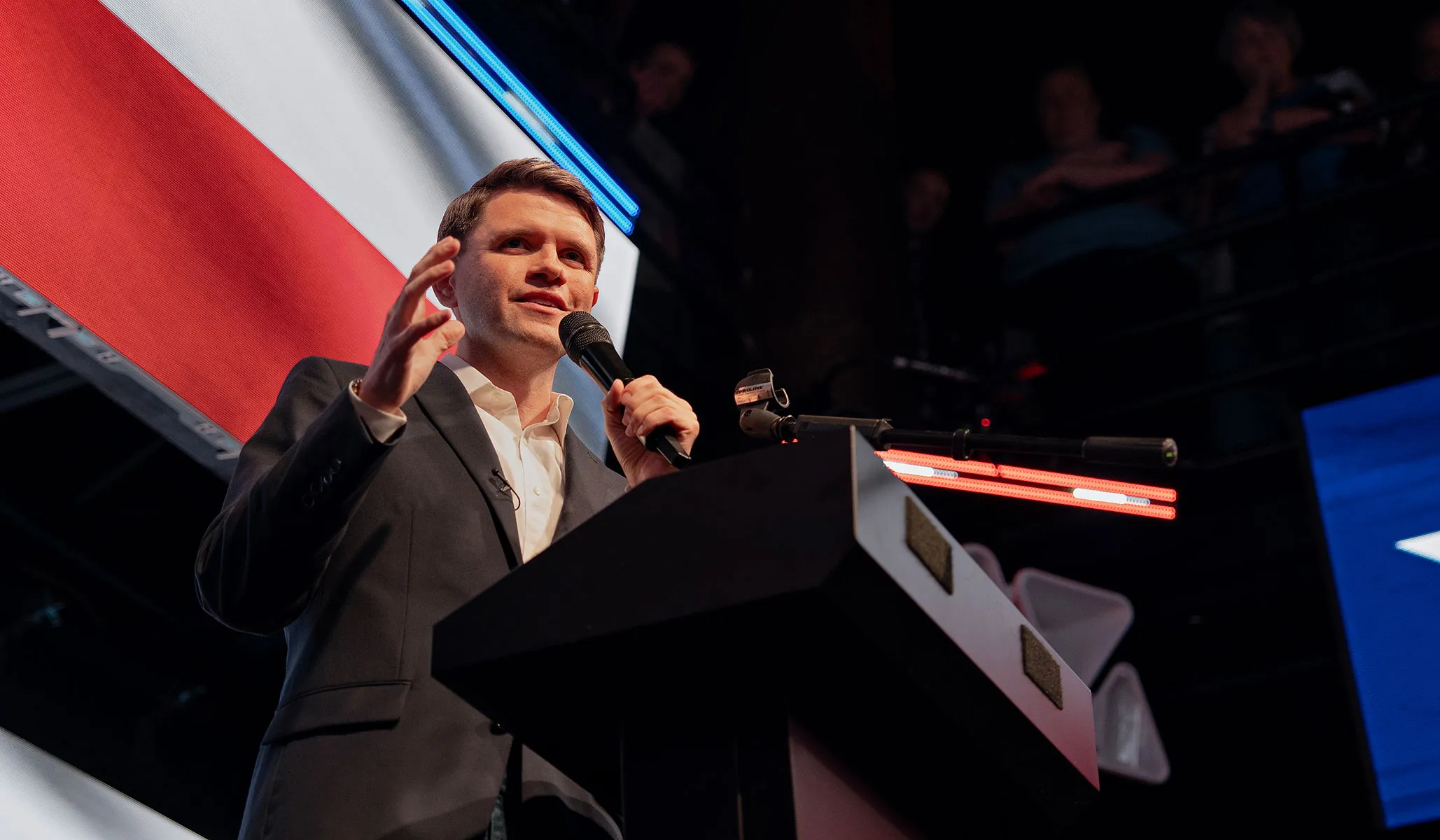
James Talarico believes that Christians are called to embrace progressive social views on everything from abortion to gender.
Read more As Trump Strays, Mike Pence Urges Conservatives to Return to Their Roots
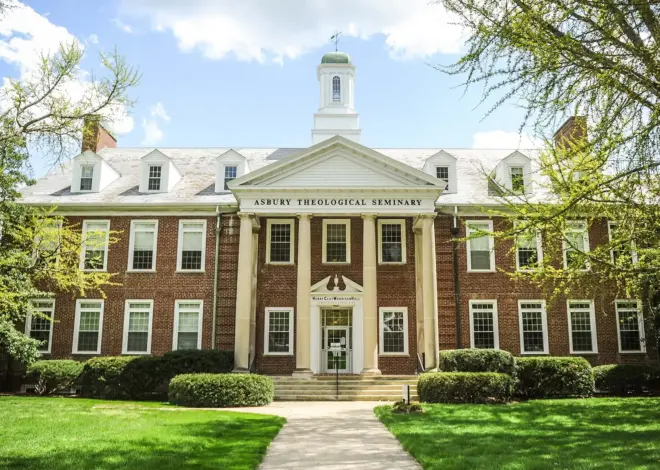
The Texas Senate candidate’s conception of Christian moral teaching, which he tirelessly promotes as the foundation of his campaign, seems to have been shaped by the church he has attended since childhood, St. Andrew’s Presbyterian Church in Austin, Texas.
The minister of St. Andrew’s, the Reverend Jim Rigby, often brings politics into his sermons, frequently criticizing the Trump administration from the pulpit. His April 26 sermon, delivered a day after the assassination attempt at the White House Correspondents’ Dinner, is a striking example. “There was an assassination attempt,” he told his congregation, “and I know a lot of people have mixed feelings” — he paused, and laughter rippled across the congregation — “but it’s really, really important if we’re going to be the healing agents of the world, to recognize that violence isn’t going to get rid of the problem that we have.”
St. Andrew’s church leadership passed an official resolution against Christian nationalism on Tuesday, shunning the narrative that America has a Christian founding. The leaders promote the idea that the United States has fundamentally corrupt roots, primarily in the unjust acquisition of Native American lands and enslavement of black Americans.
Advertised as Sunday school classes in St. Andrew’s news bulletin, the church’s summer “adult education” sessions are used to promote these ideas. The May 15–21 bulletin introduces one such class: “Christianity today, especially the American version, has discovered some interesting ways to ignore the message of Jesus,” it reads. The study aims to answer financial, political, ethical, and legal questions about Christopher Columbus and is rooted in sources like “art, Bible, Church documents, guest speakers, U.S. federal law, and the U.S. Supreme Court.”
In a statement to National Review, Talarico rejected the notion that he and his church promote a distinctly political version of Christianity.
“I don’t believe in a progressive or conservative Christianity; I believe in a biblical Christianity. My faith is rooted in scripture and the teachings of Jesus Christ. I’m not a perfect Christian, but I try my best to follow the two commandments Jesus gave us: love God and love neighbor,” Talarico said.
Throughout its studies and sermons, the church refuses to use terms for God that its members call “feudal” — words such as “Lord” or “King.” They have also rewritten hymns to be “inclusive” and read from the “Inclusive Bible” during services. During a Scripture reading from Galatians 5, for example, St. Andrew’s PowerPoint slide clarifies that “the word ‘kindom,’ often used by mujerista theologian Ada Maria Isasi–Diaz, replaces ‘kingdom’ because it represents an egalitarian realm and emphasizes our familial relationship with each other.”
Another primary feature of this so-called inclusivity is the omission of any gendered language about God. On the church’s “Inclusive Language” web page, the church’s leaders connect what they call “sexist theology” to a culture of rape, and the leaders are specifically perturbed by the thought of little girls perceiving God as a “he” because they believe God is higher than gender. Talarico, a seminary student and Texas state legislator, has himself promoted this “genderless” conception of God on the floor of the Texas state house, calling God “nonbinary” during a debate.
These views specifically shape St. Andrew’s approach to children’s ministry.
Children’s education at St. Andrew’s takes the form of “inclusive” Sunday school curriculum and an expansive library of “banned books.” Members of the church insist that St. Andrew’s library collects these so-called banned books, a term they use to refer to texts that have been barred from school libraries because they promote a particular political view or deal with sensitive topics such as sexuality. Beyond the books already on its shelves, the church has a wish list through Bookshop.org with a range of shocking titles.
Two of these books, The Hundred Years’ War on Palestine: A History of Settler Colonialism and Resistance, 1917–2017 and Freedom Is a Constant Struggle: Ferguson, Palestine, and the Foundations of a Movement, celebrate Palestinian activism.
Read more Chinese Dissident Spent 30 Hours in Inflatable Dinghy to Escape to South Korea
Forget the Alamo: The Rise and Fall of an American Myth suggests that the history of the Alamo was blown out of proportion to create “a historic Anglo narrative” that distracted Americans from the so-called true origin of this conflict: Mexico’s efforts to abolish slavery.
Another one of these books, The Moral Circle: Who Matters, What Matters, and Why, criticizes the concept of human exceptionalism and advocates for nonhuman rights — including the rights of animals and artificial intelligence.
There are also several books that discuss transgenderism and even one, Marley’s Pride, advertised for its “glossary of terms to help adults answer kids’ questions about the LGBTQ+ community.”
The church library does have several religious books on its wish list, and these books — books such as Be Still and Know: Zen and the Bible — make explicit St. Andrew’s universalist views.
The church considers itself a values-based as opposed to a belief-based congregation. St. Andrew’s ministers highlight the general values contained within biblical passages like the Sermon on the Mount but are convinced that Jesus did not care about the specifics of what people believed beyond that.
Talarico’s speeches and sermons in front of the St. Andrew’s congregation illustrate his eager acceptance of this loose religious framework and a willingness to inject contemporary political issues into religious instruction. “It’s the Sunday before the Fourth of July, so I thought I’d talk about the two things you’re not supposed to talk about in polite company: religion and politics,” he said, introducing his June 30, 2024, sermon titled “On Earth as It Is in Heaven: A Christian Commitment to Democracy.”
During President Trump’s first term in office, Talarico went so far as to illustrate the contrast between the president and Jesus. “I believe there are two competing impulses inside each of us, the ego and the heart,” he said in a September 17, 2019, speech at St. Andrew’s. “To me personally, the two clearest personifications of the ego and the heart are President Donald Trump and Jesus of Nazareth.” He explained that Jesus is a pure picture of the heart, while the president embodies the ego.
“I believe that Trump — and the impulses he embodies — scares us so profoundly because he’s within each of us,” he said. “He’s a manifestation of our own inclinations toward physical, rhetorical, and spiritual violence against our fellow human beings and our own planet in ways both big and small.”
“This is not a partisan comparison; Jesus of Nazareth was neither a Democrat nor Republican, and President Trump is neither a typical liberal or a typical conservative.”
Talarico used this kind of religious language to garner support during an interview on The Late Show with Stephen Colbert back in February. Despite his emphasis on the separation of church and state, Talarico appeals to Democrats by calling his victory a moral necessity: “We are seeing the consequences of losing elections as we speak,” he said. “And we have a moral imperative to win in November in Texas and to win across this country because that’s how we’re going to get things back on track.”
Read more Police Respond to ‘Swatting’ Attempt at Justice Amy Coney Barrett’s Home