House Democrats’ Budding Anti-DSA Caucus
Last week, Republicans in the House of Representatives approved a resolution denouncing socialism, including the Democratic Socialists of America (DSA), in all its forms.
Read more How 9/11 Led an Egyptian Immigrant to Become a U.S. Diplomat
All Republicans who cast a vote voted in the affirmative, but only eight Democrats voted in favor, with two voting present. It was a messaging bill through and through. In addition to its denunciation of socialism, the resolution also called for the enactment of the SAVE America Act, a provision that many Democrats cited as their justification for opposing the measure.
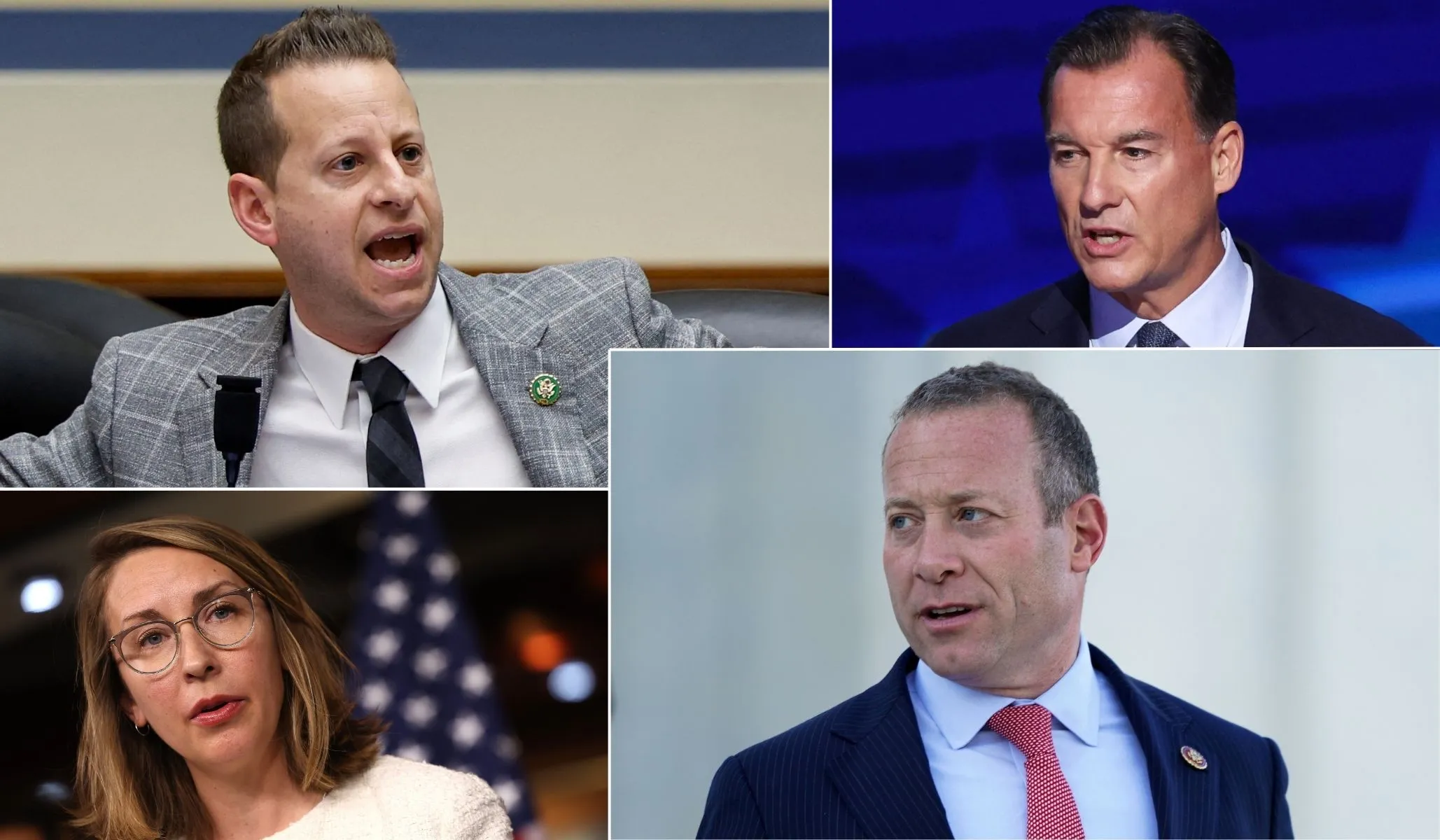
But some Democrats who voted against the GOP’s measure offered their own anti-socialist resolution, which the House did not end up voting on. The legislation from Representatives Josh Gottheimer of New Jersey, Hillary Scholten of Michigan, Jared Moskowitz of Florida, and Tom Suozzi of New York would have likewise denounced socialism and the DSA without any partisan poison pills.
The resolution was the latest move from a nascent anti-DSA caucus forming among House Democrats. While many quietly disapprove of the rise of socialism in their party, the four who offered the resolution have, like John Fetterman in the Senate, been vocal in pushing back on an ideology they believe is corrupting their party.
“The DSA aren’t Democrats. They’re socialists,” Gottheimer told National Review. “And they’re fine to do what they want to do, but they shouldn’t try to hijack the Democratic Party. They have their own convention, they have their own platform. Those views are extremist.”
DSA candidates had a moment during Donald Trump’s first term with Representatives Alexandria Ocasio-Cortez and Rashida Tlaib winning election to Congress in 2018 and Cori Bush and Jamaal Bowman winning in 2020. The wave seemed to recede, however, during Joe Biden’s administration, with Bush and Bowman losing primaries to more moderate challengers in 2024. This midterm cycle, the organization is back with a vengeance, with several DSA candidates winning open Democratic congressional primaries and others even toppling incumbents.
“Obviously, they’ve won a bunch of races in very blue seats and made them cobalt blue,” Moskowitz told NR. “But they’re not winning seats that are going to decide the balance of the House in the general election.”
Moskowitz, who ran in a new district following Florida’s redistricting effort this year, defeated a DSA-backed candidate in last month’s primary by nearly 30 points. His win presumably gives Democrats a better chance at winning the district, which the Cook Political Report measures as a toss-up. A week earlier, Democratic voters similarly rejected DSA member Francesca Hong in the Wisconsin gubernatorial primary.
But the party’s voters have not been as politically pragmatic in other races. While Moskowitz won his primary, DSA member Angie Nixon won the party’s nomination for Senate in Florida on the same night. The following week, a candidate who is an avowed democratic socialist — though is “not yet” an official member of the organization — became the Democratic nominee for Senate in Oklahoma. The same month, William Lawrence, a progressive activist who was a DSA member until the month before his primary, won the Democratic nomination for a critical House swing district in Michigan.
Suozzi has warned that DSA candidates will have a hard time winning competitive elections. “Candidates aligned with the DSA can win in places where Republicans don’t even bother to compete, like New York City’s ‘Commie Corridor,’” he wrote in a recent op-ed in the Free Press. “But the vast majority of them are doomed in the swing districts and states that will decide who controls Congress in November.”
Read more Roger Waters to Headline 9/11 Conspiracy Conference in NYC
One inflection point in the debate between moderates and the DSA has been how to handle Hasan Piker, a radical leftist Twitch streamer. Although Piker is not an official DSA member, he has close ties to the organization.
Some Democrats have embraced Piker. Ocasio-Cortez appeared on a stream with him as recently as 2024, and Lawrence asked Piker to his face if he could be a guest. Abdul El-Sayed, the Democratic Senate nominee in Michigan, has refused to condemn Piker’s objectionable views on the grounds that he wants to avoid alienating Piker’s audience of millions.
Moderates have balked at controversial comments from the streamer, which include defending Hamas and other terrorist groups. Recently, Piker claimed that if Jews in America continue to give the impression “that they are singularly invested in Israel, eventually someone is going to come around and take action, not against the state of Israel, mind you, but against American Jews.”
That comment drew condemnation from Scholten. “Piker is a hack who thrives on hate, shock and awe because he lacks substance. It’s dangerous for everyone,” she said in a release. Scholten has also refused to endorse El-Sayed due to his association with Piker. (For his part, El-Sayed claims he is not a socialist but has the backing of prominent socialists like Ocasio-Cortez and Senator Bernie Sanders, and his platform mirrors the DSA’s in many respects.)
Despite the moderates’ disapproval of Piker, Moskowitz, who trolled the streamer after winning his primary, acknowledged that many younger voters are attracted to radical political actors thanks in part to their prodigious internet personas. “The center needs to get into the communications game, no doubt,” he told NR. “Because progressives are younger and are more online and do podcasts and things of that nature, the center is getting dramatically out-communicated.”
He added that his faction also needs to listen to the concerns of young voters, who feel disadvantaged by student debt and diminished job prospects due to artificial intelligence. “They can’t afford the American dream,” Moskowitz said. “So, amongst all the noise, young people are very frustrated, and we have to understand that.”
When DSA members who do win their general elections get into Congress, they could form a key bloc with other progressive Democrats, especially in the House, to extract concessions from leadership. But that could also be difficult given their statements on the campaign trail. Gottheimer noted that many DSA candidates have not committed to voting for Minority Leader Hakeem Jeffries to be speaker of the House should Democrats take the chamber. He also brought up that Jeffries has rejected the most radical tenets of the DSA’s platform.
“I see them as their own party,” Gottheimer told NR of the DSA.
Still, Moskowitz floated the possibility that DSA members could be a bothersome faction in a Democratic House. “They could turn out to be our Freedom Caucus,” he said, referencing the hard-right Republican faction in the House that tries to push leadership to make policy more conservative. Ultimately, however, Moskowitz warned of the dangers of compromising with the DSA, arguing that Republican-controlled Houses have become “dysfunctional” due to catering to the Freedom Caucus.
“Republicans had to make a deal with their fringe,” he said. “If we try to do the same, we will become dysfunctional.”
Read more From Reagan to Trump: The GOP Has Changed — but Mike DeWine Hasn’t

Related Posts
Dearborn Leaders Spent Taxpayer Funds to Promote Islam While Discriminating Against Christians and Jews, Lawsuit Alleges
Dem Fundraising Giant ActBlue Accepted Illegal Foreign Donations, Covered Up Evidence, House Report Says