Drug Companies, Prescribers Endanger Patients by Routinely Flouting FDA Rules, Senate Probe Finds
Drug companies producing chemical abortion pills and the online prescribers they provide those drugs to routinely fail to comply with U.S. Food and Drug Administration (FDA) safeguards, an extensive investigation by Senate Republicans found.
Read more Jon Husted Keeps Trump at Arm’s Length on the Campaign Trail
Major drug companies sell large quantities of chemical abortion pills to telemedicine companies, which then prescribe those drugs to women without first ensuring that the drugs will be used according to FDA guidelines, according to an investigative released Thursday by the Senate Health, Education, Labor, and Pensions (HELP) Committee.
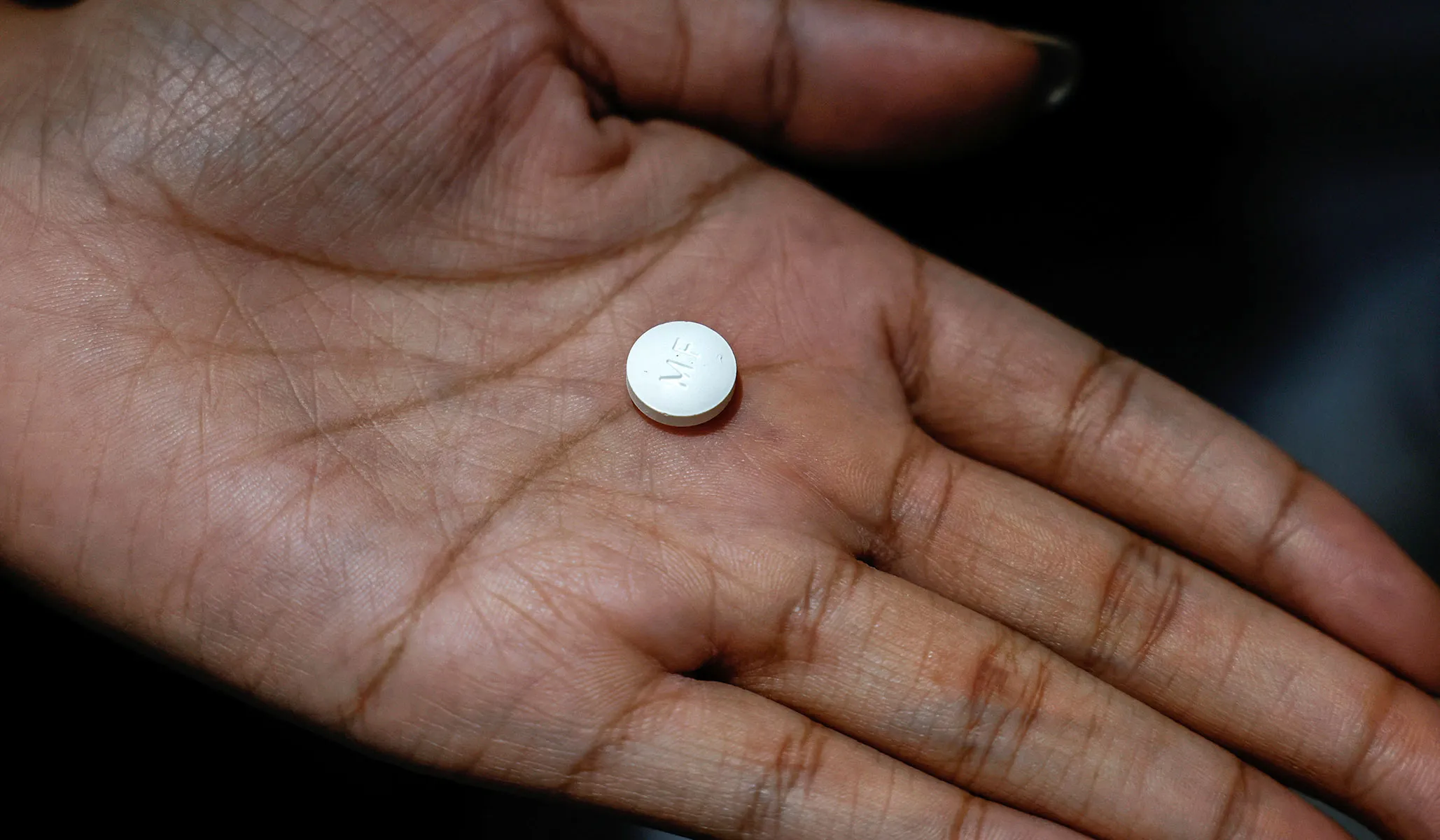
Danco Laboratories, GenBioPro, and Evita Solutions LLC are approved Mifepristone sponsors under the FDA. Mifepristone is the first pill in a two-pill series inducing a chemical abortion.
The drugmakers insist that it is not their responsibility to ensure that prescribers comply with FDA guidelines, yet the agency’s Risk Evaluation and Mitigation Strategy (REMS) program requires that drugmakers ensure that the prescribers they’re selling their drugs to are complying with federal law. If the prescribers are not complying, the drugmakers are required to decertify them.
“GenBioPro is deeply committed to complying with all regulatory frameworks that govern our business and disputes any suggestion to the contrary. Furthermore, the safety and efficacy of mifepristone is backed by more than a quarter century of rigorous scientific research, regulatory review, and real-world use, and remains unchanged,” a GenBioPro spokesperson said in a statement provided to National Review.
The report details a video in which Dr. Christina Francis of the American Association of Pro-Life OBGYNs posed as a 13-year-old girl and received GenBioPro’s generic Mifepristone from the platform Aid Access within two days of requesting the drug. Aid Access is not a certified prescriber and cannot therefore prescribe the drug directly. Instead, the platform collects a patient’s information and passes it on to a “licensed doctor” who then prescribes the drug without ever having any direct contact with the patient.
Francis was sent the drug despite informing Aid Access that “she was 13 years old, had an intrauterine device in place (which leads to higher risk of having an ectopic pregnancy), had anemia (low blood count), took blood pressure medication, took blood thinning medication, had three caesarean sections (last one two years ago), and had an ectopic pregnancy one year ago,” the report states.
Multiple REMS guidelines were likely violated in Francis’s case, the report asserts.
“If the prescriber involved in the transaction was certified, the way in which Dr. Francis was able to order mifepristone indicates numerous instances of what appear to be clear violations of the REMS outlined below. If, on the other hand, the prescriber was not certified, the prescribing and dispensing of GBP’s mifepristone would themselves be violations of the REMS because the drug was accessed outside certified channels,” the report reads.
“If this is the case, it indicates either that GBP does not have adequate insight into the supply chain and prescribing of its drug or, perhaps even more concerningly, that it may be aware of these types of arrangements and complicit in them.”
Danco Laboratories, Evita Solutions LLC, and Aid Access did not respond to National Review‘s request for comment regarding their REMS compliance.
Danco Laboratories’ version of the drug, Mifeprex, was the first name-brand version of Mifepristone approved by the FDA in September 2000; at the time, several safety restrictions were placed on the drug. The initial rules required that the drug not be prescribed to women after seven weeks gestation and that the drug be prescribed in person by a licensed physician after three in-person consultations, after which the patient would be required to sign a patient agreement form. The drugmakers were also required under those rules to report all adverse events to the FDA.
Read more Canadian Broadcast Corporation Tells Staff Not to Refer to 9/11 as a Terrorist Attack
These safeguards were relaxed dramatically by the Obama and Biden administrations and now, under the Trump administration, the remaining restrictions are barely enforced, according to the report.
Under former President Barack Obama, for example, the prescription limit was extended to ten weeks gestation. The Obama administration also decreased the mandatory three in-office visits to one — maintaining only the in-person dispensing requirement — and expanded the definition of who could prescribe these pills to include so-called health care providers. Prescribers and drug manufacturers were also no longer required to report adverse effects of the drug to the FDA, except when the mother dies after taking the drug.
Before the dissolution of mandatory reporting, “Danco had reported about 4,000 non-fatal adverse events associated with the use of Mifeprex. However, since this change, Danco has only reported about 150 non-fatal adverse events over the last 10 years,” the report reads.
Simultaneously, in-person dispensing requirements were halted by the Biden administration during the Covid-19 pandemic, leading to a rise in “telemedicine” abortions. Despite pressure from pro-life groups, the Trump administration has not reinstated the in-person dispensing requirements and has defended the existing rules in court.
“Abortion drug companies are putting mothers at risk through their failure to properly oversee the prescription and distribution of their products. We are seeing that the explosion in online sales of chemical abortion drugs has opened the door to coercion and abuse of women,” Senator Bill Cassidy (R., La.), the chairman of the committee, said in a statement. “FDA and the sponsors of these drugs have a responsibility to the American people to crack down on these prescribers that violate the prescribing requirements and reinstate the safeguards that keep mothers and babies safe.”
A May 2026 report from the pro-choice Charlotte Lozier Institute found that 81 percent of online abortion drug distributors dispense the drug beyond the ten-week threshold.
The state of Louisiana is currently suing the FDA on the grounds that the FDA’s removal of in-person dispensing requirements undermines state pro-life laws. Earlier this year, the Supreme Court blocked a lower-court order that would have blocked nationwide distribution of the drugs. The Fifth Circuit Court of Appeals will hear oral arguments in the case on September 9.
Susan B. Anthony Pro-Life America is urging the FDA to settle in Louisiana v. FDA.
“Sen. Cassidy’s research shows there is no way to address the harms of abortion drugs since Danco, GenBioPro, and Evita Solutions’ drugs are being shipped through the mail nationwide at all stages of pregnancy, including in the third trimester in North Carolina,” SBA President Marjorie Dannenfelser said in a statement. “Todd Blanche has the opportunity to protect women and save the lives of 15,000 babies every month by settling with the state of Louisiana before Sept. 9. He can end this fight with the red states, allow pro-life laws to finally take effect and stop the rise of criminals poisoning mothers with abortion drugs.”
Cassidy, alongside Senators Steve Daines (R., Mont.), James Lankford (R., Okla.), Cindy Hyde-Smith (R., Miss.), and the late Lindsey Graham (R., S.C.) conducted the investigation.
“The findings in this investigation demonstrate a consistent pattern of a lack of transparency regarding the operations of mifepristone sponsors and raise critical questions about the effectiveness of their oversight of the supply chain for their drugs and prescribers to ensure compliance with REMS requirements,” the report reads.