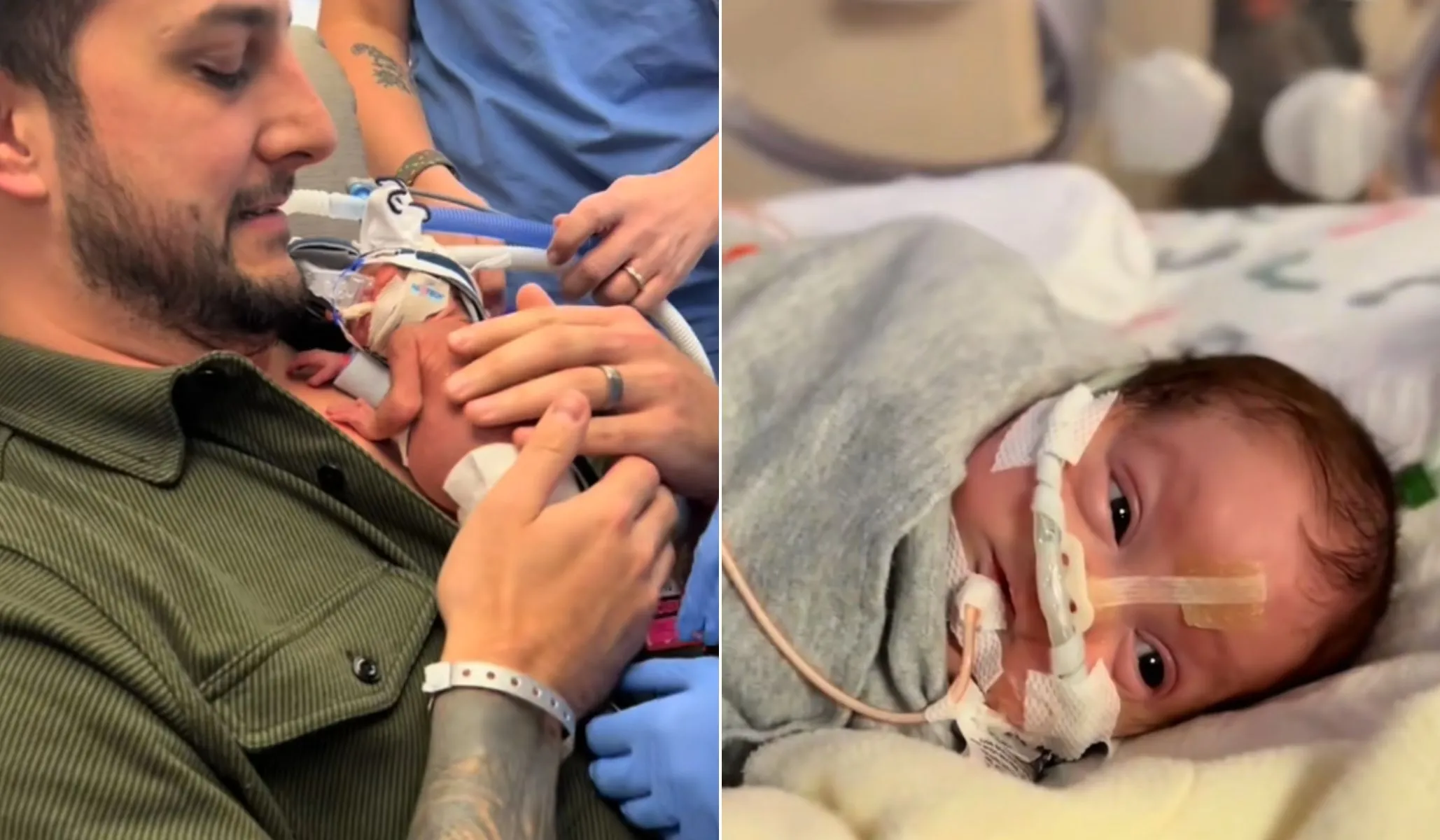
Texas Mom Recorded as Her Premature Daughter Beat the Odds. The Videos Became a Viral Pro-Life Sensation
Ella Bettini is a sweet, playful, two-year-old Texas girl. She’s an active kid who loves to be outside and to run around making silly faces at her parents and her kindergarten-age stepsister.
Read more Judge Dismisses Criminal Case Against Kilmar Abrego Garcia
But when Ella was born, her mother, Hannah Bettini, could not imagine the full, beautiful life her daughter would live. That’s because doctors told Bettini that Ella, who was born at just 24 weeks, had just a 12 percent chance of survival. If she did survive, doctors said, she would likely face numerous struggles, including developmental issues, autism, vision loss, and hearing loss.
Bettini, who was 23 when she had Ella, documented their time in a Neonatal Intensive Care Unit (NICU) in Fort Worth on TikTok. To her great surprise, she received millions of likes on her videos — including one video that she captioned, “If you’re wondering what 25 weeks looks like,” which received 3.6 million likes.
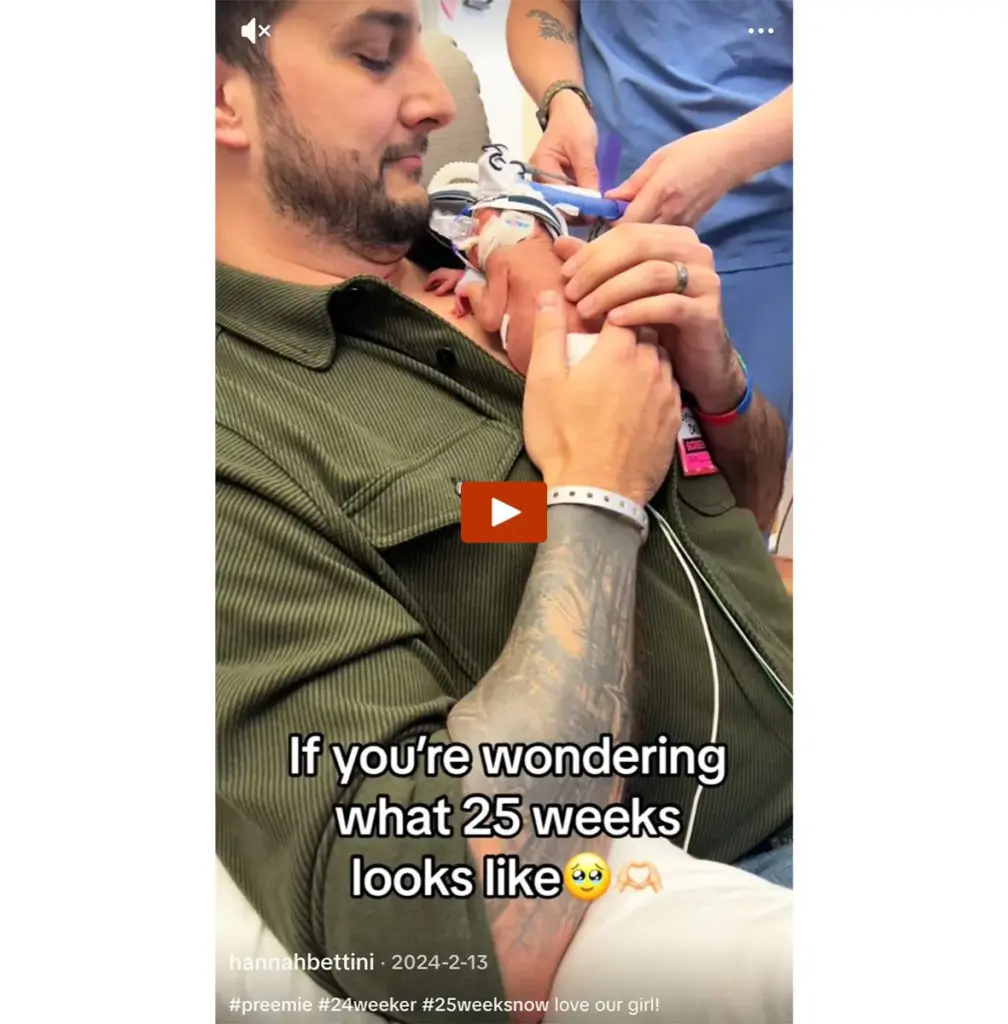
Bettini says she, a former preschool teacher turned stay-at-home mom, and her husband, who is a pastor, were “emotionally fragile” at the time of her daughter’s birth and didn’t expect their videos to go viral.
“We didn’t really know how to talk about all of it yet,” she said.
But two years on, with her videos from 2024 still circulating in the pro-life community, Bettini says she is ready to share the story of how having a premature birth changed her own stance on abortion.
“We really wanted this story to be shared, because it might make people see the baby in their stomach differently,” Bettini told NR. “She was able to feel pain, so she could feel when they would prick her feet. She could feel when they would put tubes in her, and she was wide awake, and she would cry, and she would kick her legs, she could open her eyes. She could do all of these things.”
“She was fully formed other than just her lungs being a little bit premature and needing a little bit of help,” she added.
Bettini had pregnancy complications early on. At ten weeks, she experienced bleeding and was diagnosed with a subchorionic hemorrhage — a collection of blood that gathers between the uterine wall and the chorion, the outer fetal membrane surrounding the embryo. The hemorrhage, which is the most common cause of vaginal bleeding in early pregnancy, according to the NIH, typically goes away after the first trimester. Bettini’s bleeding did stop, initially, but then recurred in the second trimester, which is more rare. She recalls bleeding daily for most of her pregnancy.
At 20 weeks, she traveled to California and realized she was bleeding even more than normal, so she visited the local emergency room. When the ER doctors failed to diagnose her, she went back to Texas to visit her own doctors, who determined that her water had already broken; they sent her to the ER.
At the ER, a doctor came and said she was likely going to give birth that night, at 21 weeks pregnant — three weeks before the widely accepted point of viability. The doctor said her daughter would have just an 8 percent chance of survival.
Bettini was told she could either give birth that night and then comfort her daughter until she passed, or doctors could administer medications to try to delay labor.
Bettini decided to try to delay labor. “We wanted to give her a chance and for them to do everything they can do, medically, to save her.”
She spent the next three weeks on bed rest at the hospital, while she and doctors worried each day that baby Ella would come.
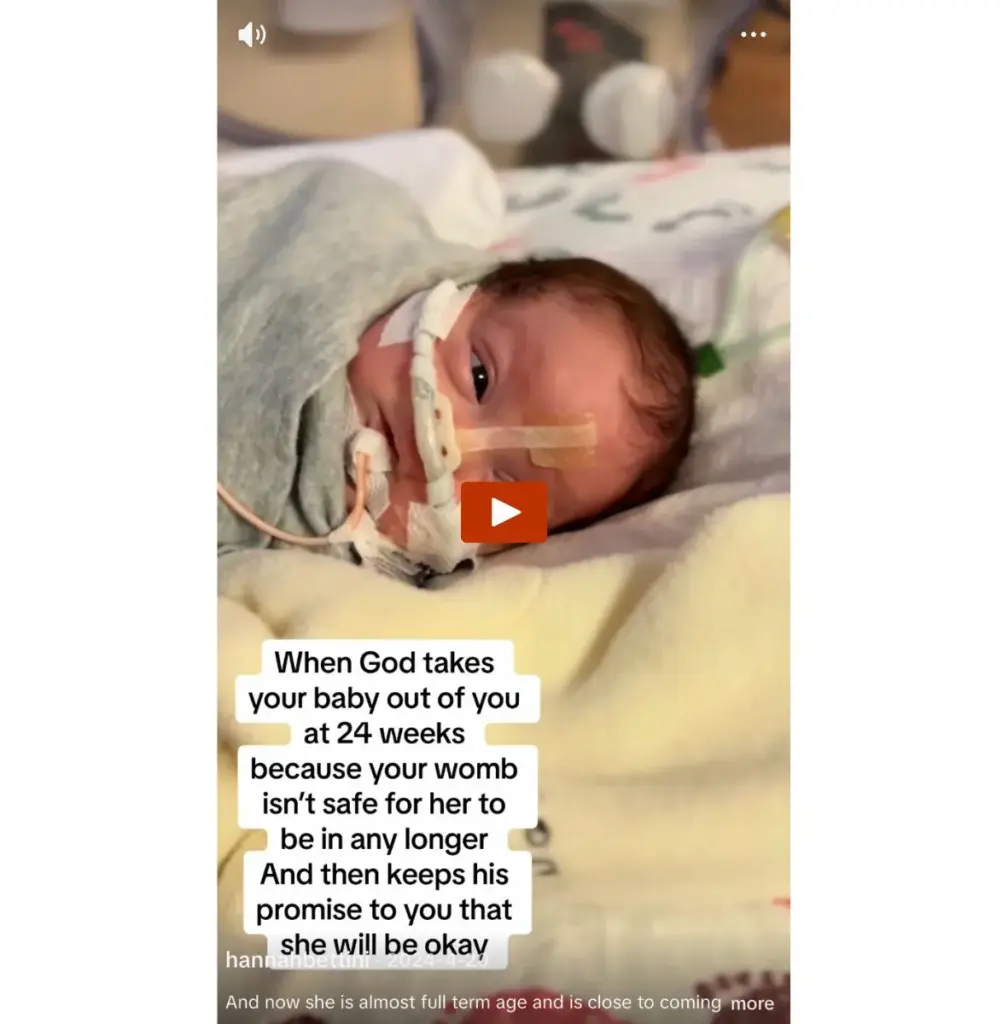
At 24 weeks, Ella was born.
“I remember praying that night, and I said, ‘God, if she’s safer outside of my body than inside, then just take her out,’” Bettini said.
Ella was born three hours later, and NICU doctors quickly whisked her away and intubated her. At this point, doctors were still giving her just a 12 percent chance of survival.
Read more Tulsi Gabbard Resigns as DNI to Support Husband During Cancer Treatment
Bettini and her husband had to wait one week to be able to hold their daughter. At that time, her breathing had improved and she was able to be extubated and placed on a CPAP machine.
However, Ella’s skin was not yet thick enough to tolerate the CPAP being on her face and the skin on her septum broke down, until it was just cartilage showing. Ella then developed MRSA and then pneumonia, and she had to be placed in isolation and intubated again.
After four long months, Ella was discharged from the hospital. She spent her early days at home with an oxygen machine and a g-tube, but she weaned off both quickly.
Doctors warned that Ella would probably have brain bleeds, that she would probably be deaf and blind, “and all of these different things — which she has none of,” Bettini said.
Before her experience with her daughter, Bettini says she didn’t identify as pro-life or pro-choice. She said she had never given the issue much thought, because she tended to steer away from controversial topics. “And then all of this happened, and now I can’t imagine a baby that can feel so many things” being killed in the womb.
Bettini says her viral videos initially received a warm reception online. She had a lot of moms messaging her sharing similar stories of premature birth.
“It was just crazy to see how many moms related to the story that we shared,” she said. “A lot of moms were uniting in the comments, or a lot of moms were pregnant and were saying, ‘My baby got to the age of viability in my belly, so this is really cool to see that she could live outside my womb if she needed to.’”
But then the controversy began. “People started saying, ‘How dare you post this’ and ‘People don’t have abortions that are that late,’” she said.
However, multiple states — Alaska, Colorado, Maryland, Michigan, Minnesota, New Jersey, New Mexico, Oregon, Vermont — and Washington, D.C., have no gestational limits on abortion. A handful of other states allow abortion past the point of viability if a medical provider determines that the baby is not viable or the patient’s life, physical health, or mental health is at risk.
When pro-life groups began sharing her videos, Bettini began to rethink her position on the issue of abortion. “I started thinking, ‘Wow, maybe I should be pro-life, because this does show what is in your belly.’”
She saw the impact her videos had on women who were planning to get late-term abortions but decided against them after seeing her video. Bettini was shocked to see that her videos could change someone’s point of view and potentially even save a woman from an abortion she might later regret.
“I have a lot of friends that are still pro-choice, and that’s okay with me, because that’s their life, and I’m not going to tell them what to do. But they do know where I stand, and I think that that’s important,” she said.
But if someone were talking about an abortion they planned to have around her, she said she would share her story and her stance to help potentially change their perspective.
Two years on, Bettini credits her faith and her family for getting her through those difficult days in the NICU. “I genuinely feel like the Lord blinded us from a lot of the hurt and the pain,” she said, adding that nurses would remark that they had never seen NICU parents so calm.
Read more A Warning from Washington: The U.S. Must Lean on the Private Sector to Beat China in the AI Race
Bettini and her husband would tell them, “We just know she’s going to be okay.”