A Warning from Washington: The U.S. Must Lean on the Private Sector to Beat China in the AI Race
The Chinese Communist Party’s hand-in-glove relationship with ostensibly private tech firms within its borders has given Beijing a significant leg up in the A.I. race. If the U.S. is to compete, American policymakers and industry leaders must figure out how to cooperate within America’s free market framework.
Read more Crime in Fairfax County Rises Despite Claims It’s the Safest Jurisdiction of Its Size
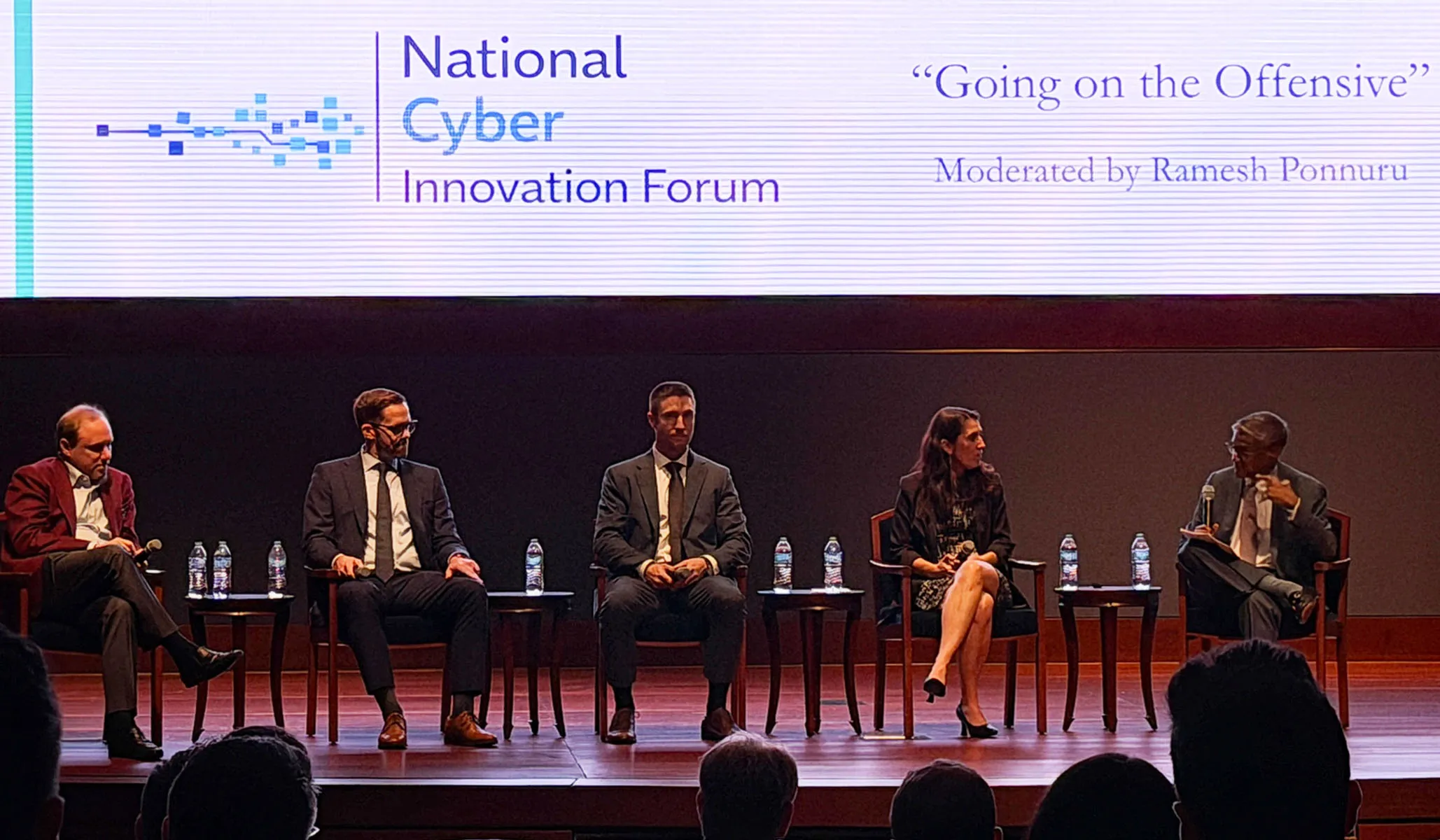
That urgent message was front and center at the 2026 National Cyber Innovation Forum, which took place Thursday at the U.S. Capitol. George Mason University’s National Security Institute brought together government officials, policy analysts, corporate leaders, and other experts to discuss the future of American cybersecurity. One panel, led by National Review’s Ramesh Ponnuru, explored how America can use technology to bolster its national security against foreign threats. Harnessing private enterprise can accelerate these efforts.
“The private sector can add scale and unique capacity to this issue that the government may not have,” said Dmitri Alperovitch, the executive chairman of Silverado Policy Accelerator, a geopolitical think tank.
Alperovitch observed that in addition to fostering innovation, private companies can provide the government with “unique offensive capabilities.” For instance, their resources can make it far easier for government agencies such as the FBI and NSA to prevent foreign powers from infiltrating America’s technological infrastructure. The Chinese government, Alperovitch noted, has already assembled “hundreds of thousands of people” to expand its cyberwarfare strategies. To remain competitive, America must follow suit.
Private businesses, universities, and other non-governmental organizations won a majority of China’s defense contracts between 2023 and 2024. Many of these entities are exempt from US sanctions. They are working to modernize the People’s Liberation Army by developing new kinds of military technology and integrating AI models into existing military frameworks. So far, their progress has been rapid.
Read more Harris Campaign Didn’t Go Negative Enough on Trump, DNC Autopsy Concludes
The U.S. military is slowly beginning to embrace private-sector collaboration. Earlier this month, the Pentagon announced that it will allow seven tech companies — including Google, Microsoft, and Nvidia — to use AI to enhance its computer networks. U.S. Cyber Command, meanwhile, has established a new task force that may use private-sector AI models to boost its hacking capabilities. To outpace China, however, far greater steps will be required. “We need to have much more integration and leverage the innovations that are in the private sector going forward,” Alperovitch said.
Fortunately, as other experts on the panel discussed, the government recognizes the importance of leveraging private entities. “I think there’s a lot of opportunity to look at what are the elements of national power that industry can bring to the table,” said Katie Sutton, assistant secretary of war for cyber policy at the Department of Defense. She particularly emphasized that private-sector resources can improve information sharing across government departments. In turn, they can help encourage innovation and disrupt malicious cyber attacks. To get the best results, Sutton believes that the government should avoid treating private industries as mere tools and instead help them understand why they should feel invested in military goals. That question — “How do we take from just someone that delivers capabilities to actually having a stake in our outcomes?” — will shape the Defense Department’s approach to AI collaboration.
To efficiently use AI and other new technologies, the government’s military workforce will require extensive training. This will need to happen quickly to keep up with Beijing, and that won’t be easy. But Sutton believes that through specialized education and consistent practice, it can be achieved. She’s similarly optimistic about America’s fate in the AI race. Despite China’s immense progress, our culture of creativity and entrepreneurship fundamentally remains unique.
“One of our fundamental strengths in the country is our innovation ecosystem and the fact that every single one of these large-language models that comes out and shatters new records is an American company,” Sutton said. “We are the front horse that everybody’s trying to catch up with.”
Read more Podcasters Are Pushing the Right Toward Antisemitism. These Conservatives Are Fighting Back
