Harris Campaign Didn’t Go Negative Enough on Trump, DNC Autopsy Concludes
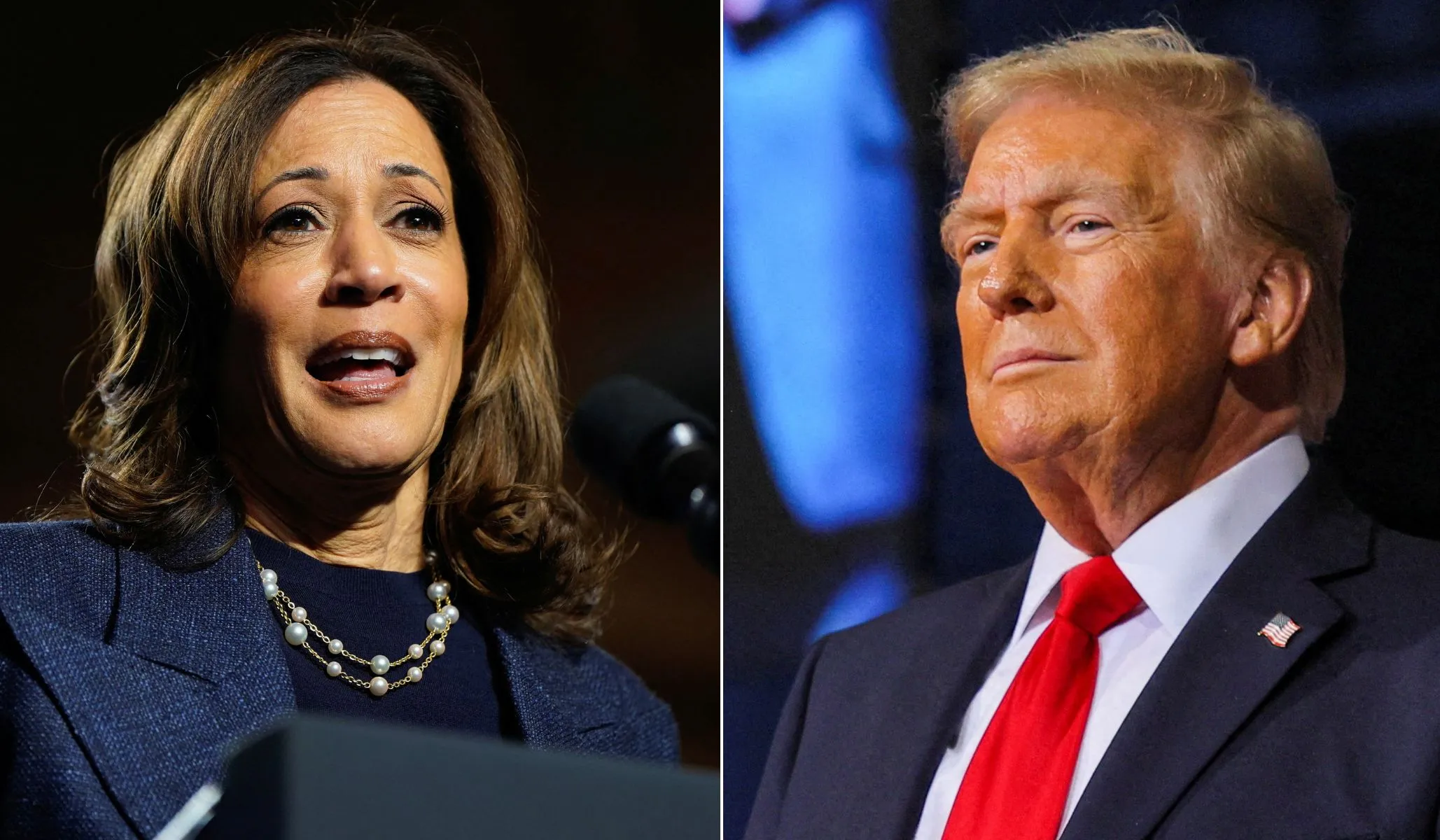
A newly-released Democratic National Committee report looking back at how the party lost the 2024 election concludes that then-Vice President Kamala Harris lost, in part, because she failed to focus sufficient negative attention on President Trump.
Read more Podcasters Are Pushing the Right Toward Antisemitism. These Conservatives Are Fighting Back
“The national campaign did not effectively drive Trump’s negatives, and the White House did not effectively support Vice President Harris over three and half years to improve her standing before the candidate switch,” reads the autopsy, written by Democratic strategist Paul Rivera, who was asked by the DNC to investigate why the party failed to wing big in 2024.
Rivera goes on to suggest that Democrats failed to remind Americans why they disliked Trump in his first term.
“The idea Trump’s negatives were ‘baked in’ is a major failure of analysis and reality, given how his favorability has cratered less than a year into this term,” he adds.
Rivera’s finding that Harris wasn’t sufficiently negative is curious given that Harris and her surrogates incessantly depicted Trump as a threat to democracy who revealed his true colors on January 6.
Harris attacked Trump repeatedly during the campaign, calling her opponent “increasingly unhinged and unstable” and telling CNN that she believed he was a fascist who wanted “unchecked power.”
Party officials interviewed hundreds of Democrats in all 50 states to create the report. Democrats had asked DNC Chairman Ken Martin for months to publicly release the findings, but Martin chose to do so only after being “presented with CNN’s reporting about much of its contents,” according to the outlet, which first obtained the nearly 200-page report.
The report is littered with notes drafted by DNC editors pointing out that many of Rivera’s claims are unsubstantiated and/or contradict publicly available reporting.
Martin had previously maintained that releasing the report would serve only as a distraction and as a source of more infighting within the party. “Here’s our North Star: does this help us win? If the answer is no, it’s a distraction from the core mission,” he told the Washington Post last year.
But on Thursday, he acknowledged in a statement that by not releasing the report he “ended up creating an even bigger distraction.”
“When I was elected DNC chair, I commissioned an after action review of the 2024 election that I wanted to be honest and transparent, and with actionable and specific takeaways for the future of the Democratic Party. When I received the report late last year, it wasn’t ready for primetime — not even close — and because no source material was provided, it would have meant starting over. I could not in good faith put the DNC’s stamp of approval on the report that was produced.”
“For full transparency, I am releasing the report as we received it, in its entirety, unedited and unabridged. It does not meet my standards, and it won’t meet your standards, but I am doing this because people need to be able to trust the Democratic Party and trust our word,” he said.
While its findings are not endorsed by the DNC, the report found that the Harris campaign erred in several ways, including focusing too much on building a case against Trump — rather than an argument for Harris — and getting too bogged down by unpopular identity politics. The Harris campaign also did not receive enough help from President Biden’s team, according to the analysis.
Rivera finds the Democratic nominee’s campaign “appears to have relied on Trump being unacceptable rather than building an affirmative case for Harris.”
Read more RNC Heads into 2026 Midterms with Most Cash on Hand Ever
“Harris struggled with definition beyond ‘not Trump’ and ‘prosecutor vs. felon,’” he says. “The truncated campaign timeline didn’t help, but the campaign did not quickly resolve on how to tag Trump and define Harris.”
The report names identity politics as a weak spot for the Harris campaign, citing the viral Trump campaign ad that said, “Kamala is for they/them, President Trump is for you.”
It says the Harris campaign’s pollsters “all recognized the attack as very effective.”
“If the Vice President would not change her position – and she did not – then there was nothing which would have worked as a response,” Rivera writes.
He further cites North Carolina gubernatorial candidate Josh Stein’s win as evidence that Democrats can and should “focus less on abstract issues and identity politics, and connect with voters on the issues they say matter most, including the economy, disaster relief, and addressing housing affordability.”
Rivera warns Democrats not to “assume identity politics will hold male voters of color” and urges the party to deploy male messengers to win over more male voters of all races.
The autopsy also alleges that the Biden White House and campaign failed to support Harris, both by failing to conduct polling around her before she became the presidential nominee, and by failing to defend her against attacks from conservative media.
“Democrats won the election and President Biden assigned the Vice President a brief including immigration, which was poorly framed by Republicans as the ‘border czar,’ It was not the official title, but it was the one that the media propagated and the White House failed to contradict or correct,” Rivera writes in a claim that the DNC rejects in its annotated version of the report, saying the claim “contradicts public reporting.”
However, both press secretaries for the Biden White House — Jen Psaki and Karine Jean Pierre — repeatedly refuted that Harris had been named the “border czar,” instead claiming she had been tasked with handling the “root causes” of the immigration crisis.
The autopsy also finds that Democratic candidates writ large have “proven incapable of projecting strength, unity, and leadership.”
He rejects the idea that recent close elections mean Democrats do not need a major party overhaul.
“This kind of thinking – denialist at its core – prevents the Party from seeking real accountability, and from making the changes we need to deliver on our promises to the American people,” the report says, finding that the Democratic Party, since 2008, has “vacillated between stagnation and retrogression.”

Related Posts
Top Virginia Democrat Louise Lucas Charged in Public Corruption, Drug Trafficking Case
Court Slaps Down NYC’s Latest Attempt to Punish Energy Companies for Climate Change