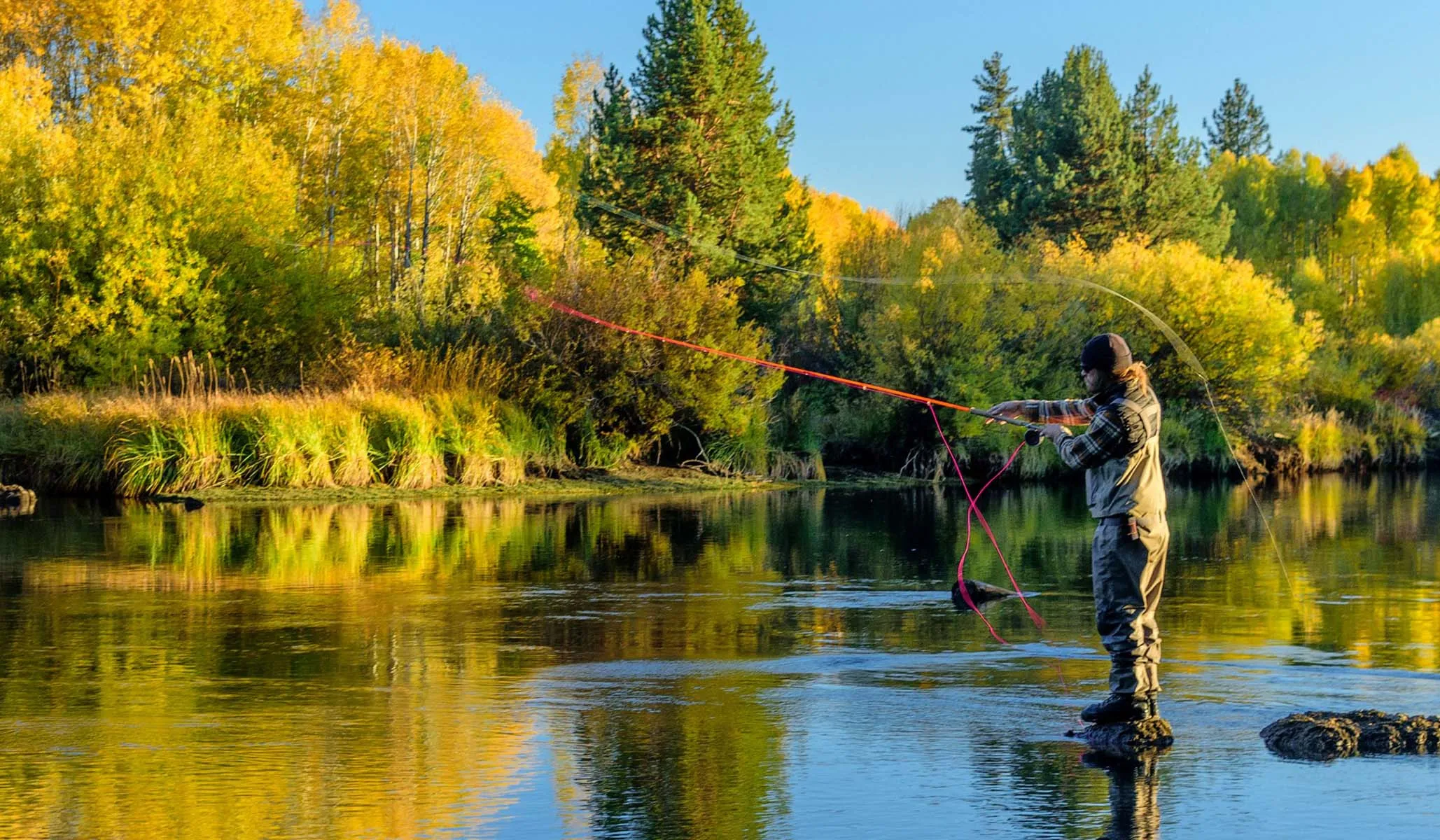
Animal-Rights Activists Want Oregon to Make Hunting and Fishing a Crime
Hunting, trapping, and fishing could soon be a thing of the past for Oregonians if a group of animal rights activists gets their way.
Read more Xavier Becerra Advances to General Election in California Gubernatorial Race
The activists have amassed 720,000 signatures on a petition to advance a ballot measure that, if approved, would criminalize hunting, trapping, and fishing in the state. While state officials will still have to validate those signatures — 117,000 valid signatures are needed for a ballot referendum — wildlife advocates worry they will soon be stuck defending what they see as not only a critical industry in the Beaver State, but a way of life for many Oregonians.
Oregon currently has over 330,000 licensed hunters, over 500,000 licensed anglers, and 37,000 farms and ranches, according to the OHA.
If the referendum comes to pass, it could “change everything about what it means to be from Oregon,” warns Todd Adkins, the executive director of the Oregon Hunter’s Association (OHA).
The Initiative Petition 28, also known as the People for the Elimination of Animal Cruelty Exemptions (PEACE) Act, would amend Chapter 167 of the Oregon Revised Statutes; activists claim the current statute “provides unnecessary exemptions to laws governing animal abuse, animal neglect, and animal sexual assault.” Thus, the only exceptions permitted under the PEACE Act would be self-defense and veterinary care.
The animal activists’ aim, according to the act, is to increase animals’ quality of life and reduce their suffering. In response, Adkins encouraged his fellow Oregonians to take immediate action by rallying around the OHA.
“We put together a battle plan that will begin to roll right now,” he said in a statement on the group’s website. “By all means, you can become an OHA member. You can renew or update your membership. You can sign up for alerts. A whole host of things we can do now to make this commitment to one another.”
The OHA website urges visitors to “Join OHA to Fight IP28,” and points to numerous areas of society that would be adversely affected by this legislation, including farming, fishing, scientific research, and even tribal rights.
Adkins also blasts the activists behind the legislation. “Their way of life is not our way of life. Their belief system is not our belief system,” he said. “Let’s send them packing, along with the message, ‘Don’t come back.’”
Aaron Kindle, the director of sporting advocacy at the National Wildlife Federation (NWF), believes most people wanting to ban activities like hunting or fishing don’t really understand them.
“What we’ve seen throughout the history on a lot of these ballot initiatives is they’re getting the signatures from the population centers, from the urban areas, the folks who aren’t directly impacted by a lot of these decisions and aren’t as familiar with the fish and wildlife, with livestock operations — ranching, farming, those types of things,” he told National Review.
Kindle has served with NWF for the past eleven years, and this is not the first time he has seen this petition raised in Oregon. It was first introduced in 2020 as Petition 3 and, after failing to make it onto the ballot, resurfaced again as Petition 13 four years later, when it still did not have enough signatures to qualify.
Still, Kindle and his coworkers at NWF are taking this third proposal of the petition very seriously. Though the organization has yet to make an official statement, Kindle called it a “critically important issue.” He explained that hunters and anglers originally founded NWF, so “we feel like it’s a key piece of the conservation portfolio, and we would support responsible hunting and fishing all the way to the end.”
Read more How Decolonization Ideology Is Upending the Anthropology Field
Kindle believes these activities are vital for Americans, specifically in the context of a technology-driven society. “There’s 11 million Americans who go out and hunt every year. There’s millions of Americans who fish every year,” he said. “We know young people are getting more attached to screens and less time outdoors . . . You keep cutting away at all the ways that we have contact with nature, and we lose care for those things.”
Cost is another serious concern around Initiative Petition 28. One of its sections specifically outlines “The Humane Transition Fund,” an initial support system for organizations and individuals who would be most affected if the petition became law. The fund guarantees assistance to people like restaurant owners and farmers who would face potential complications in getting food; financial support to organizations and individuals stuck caring for animals that would otherwise have been killed; and the replenishment of any initial monetary loss for individuals or companies under the new regulations.
The petition is particularly troubling to Luke Hilgemann, who is the CEO of the International Order of T. Roosevelt (IOTR), an organization dedicated to protecting conservation efforts like hunting and fishing.
To Hilgemann, this issue “equates to millions of meals” and roughly “a billion and a half dollars of annual economic impact.” He told NR it would be a serious “multi-billion-dollar effort . . . to try and supplant the protein that Oregon families depend on” if the petition became law.
The terms of the petition are also incredibly narrow. First-degree animal abuse is defined by the PEACE Act as physical injury or death. People convicted of first- or second-degree animal abuse, abandonment, fighting, or neglect are required to complete 100 hours of supervised community service at an animal care facility within three months after their conviction. They are also forbidden from owning any kind of domestic animal or any animal “of the same genus against which the crime was committed” within the following five years.
That time span increases to 15 years for people found guilty of dogfighting, cockfighting, aggravated abuse of animals, sexual abuse of animals, or Class A felonies. Convicts must also perform 300 hours of supervised community service at an animal care facility within the following nine years.
In response to the petition, organizations like IOTR are fighting to enshrine the right to fish and hunt in Oregon’s constitution and in state constitutions nationwide.
Hunting and fishing are already constitutionally-protected in 24 states, and Hilgemann is confident that there will be many more of these amendments to come. IOTR has already aided twelve states in the process of constitutionally protecting hunting and fishing this year, and the organization’s hope is that at least 35 states will adopt this constitutional right over the next decade.
Despite their efforts, IOTR leaders acknowledge that Initiative Petition 28 will almost certainly be on the Oregon ballot in November.
But the group is prepared to keep fighting, even if the associated legal fees could cost upwards of $75,000.
“We see the Oregon threat as a culmination of decades worth of work by a well-funded, well-organized, and determined opposition to our outdoor traditions here in America,” Hilgemann said. “It’s about educating people that this actually exists out there and then doing everything we can to create a groundswell of support against this initiative.”
Read more School Board Director’s Sex Shop Offers Sex-Ed Classes for 9-Year-Olds

Related Posts

Top Virginia Democrat Louise Lucas Charged in Public Corruption, Drug Trafficking Case

Court Slaps Down NYC’s Latest Attempt to Punish Energy Companies for Climate Change