How Decolonization Ideology Is Upending the Anthropology Field
Deference to Native American cultural norms and a leftward shift in the intellectual currents of anthropology are hindering scientific research into America’s past, warns a new report from the Goldwater Institute.
Read more School Board Director’s Sex Shop Offers Sex-Ed Classes for 9-Year-Olds
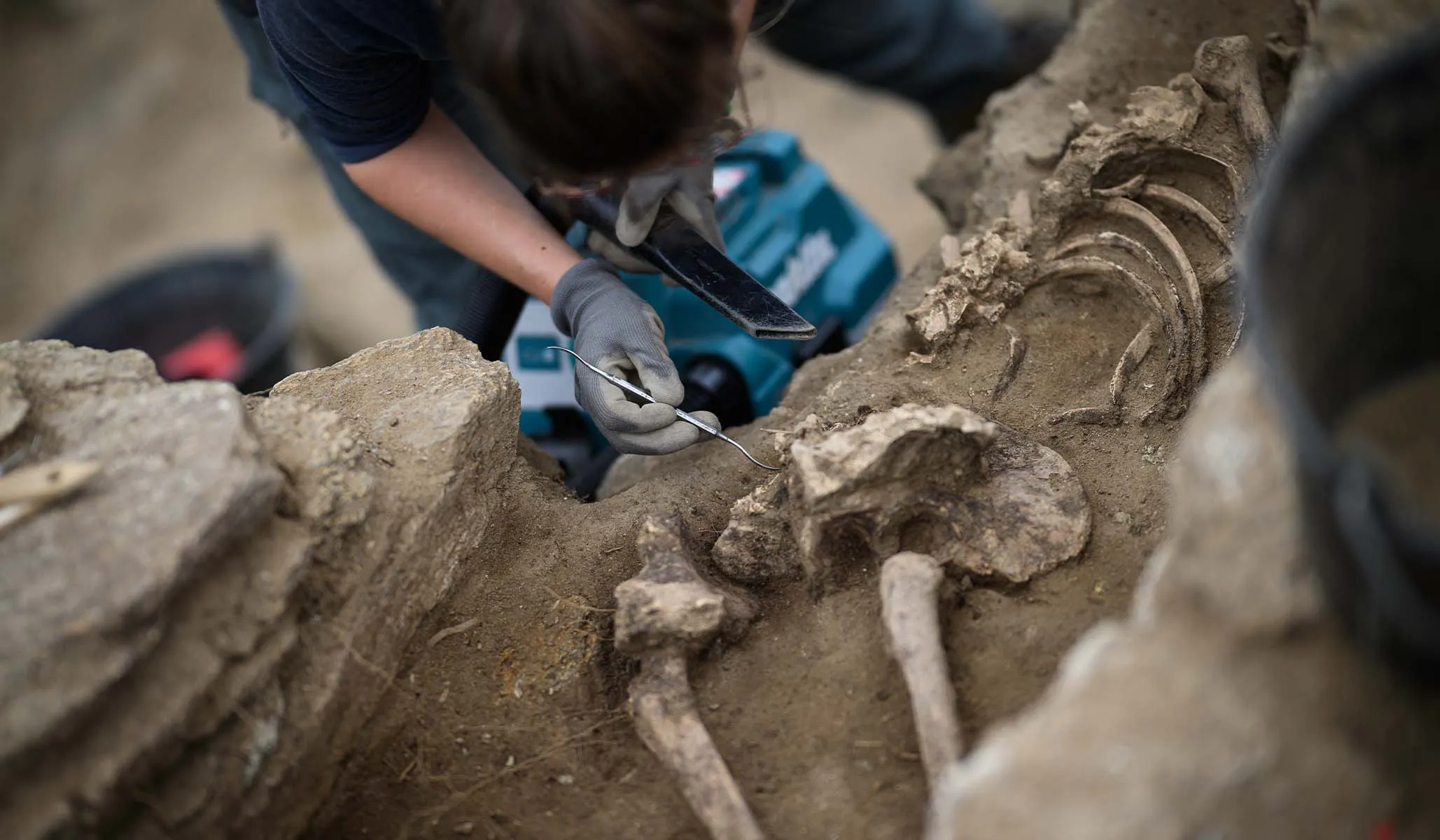
Elizabeth Weiss, professor emeritus of anthropology at San Jose State University, argues that the field has been plagued by overbroad interpretations of the 1990 Native American Graves Protection and Repatriation Act (.) Designed in part to deter grave-robbing, the act required the repatriation of human remains and sacred objects connected to federally recognized tribes, granting some leeway to tribal practices. Many repatriated items are reburied, which essentially destroys the item and prevents further scientific investigation.
In the decades since the measure was passed, activists acting on behalf of Native American tribes have increasingly contributed to over-repatriation and confusion over which artifacts fall under the law.
Initially, artifacts qualified for repatriation only if they had a specific religious significance, which excluded Native American arts and crafts as well as common items like arrowheads. Similarly, human remains had to be tied to a specific tribe to constitute a valid claim.
But supporters of the act quickly looked for ways to loosen the requirements for repatriation.
“The activism actually started very early on. . . . There was always an activist wing of those who supported NAGPRA,” said Weiss, who explained that NAGPRA was a “compromise” between Native Americans and scientists.
States such as Arizona have increasingly repatriated objects that are not governed by NAGPRA or corresponding state standards. In 2011, the Arizona State Museum returned eagle feathers that were legally purchased from a Native American, citing compliance with NAGPRA. A repatriation effort in 2025 by the Department of Agriculture in Coronado National Forest disposed of “faunal remains” and “flaked stone.”
Pressure from ideologues eventually culminated in a 2023 update to NAGPRA, which banned research without tribal consent and required “deference to the Native American traditional knowledge.” Yet even before these changes, cultural epistemic standards had started to thwart scientific and empirical ones.
The famous Kennewick Man, one of the most complete skeletons ever found in North America, was the subject of legal custody battles for decades after it was first discovered in 1996. Despite the fact that Kennewick Man was around 9,000 years old, and could not be sufficiently connected to any existing group, tribes from the Washington area argued that their oral history stretched back 10,000 years. The U.S. Army Corps of Engineers originally supported their claim.
“At that time, there was still a core group of scientists who were willing to fight for research, and sued to get access,” Weiss said.
Researchers studied Kennewick Man for several years before a ruling in a 2015 lawsuit reversed an earlier 2002 decision, citing new DNA research that demonstrated a connection between the skeleton and modern indigenous Americans in the region.
Weiss disputes the significance of the link.
“If we took all 522 federally recognized tribes’ DNA and tested it, it is possible that the Colville tribe would not have been the closest tribe,” Weiss said.
The deference to Native American cultural norms extends beyond standards for repatriation.
In the name of sensitivity to cultural practices, anthropologists are undoing their own research. Weiss speaks of the damning effects on museums and public knowledge. In Arizona alone, no new research articles with newly collected data on Native American human remains were published in 2024 or 2025.
Weiss aired her concerns about the undue influence of Native American tribes in the field of anthropology in her book Repatriation and Erasing the Past. She says a new policy at SJSU immediately validated those concerns.
“One of the first things they put in place was a menstruation taboo,” Weiss said. The taboo, which banned “menstruating personnel” from curation rooms with indigenous artifacts, was an attempt to appease the spiritual practices of Native Americans. SJSU is only one example of many institutions that have sacrificed scientific research and equal rights to respect tribal wishes.
In 2023, new industry-wide regulations reaffirmed the practice of incorporating “traditional knowledge” into research protocols. Such a move may discriminate against more than just menstruating women; during a collaboration between the Smithsonian Arctic Studies Center and the Anchorage Museum, Inuit leaders insisted that none of the all-women research team could handle sacred materials.
The modern “decolonization” movement, the latest hallmark of postmodern academia, “decenters” Western perspectives in favor of diverse and historically marginalized accounts. In the real world, this looks like the THRIVE exhibit at the Arizona Museum of Natural History, which features creation myths from the O’odham tribe rather than evidence-based analysis of where the tribe originated. It looks like the 2024 meeting at the White House between space exploration companies and Navajo leaders, who objected that the moon was sacred in their culture. The White House took them seriously.
Looking toward the future, Weiss’s ultimate dream would be to completely repeal NAGPRA, given that laws to protect archaeological sites already exist.
“A second option would be to . . . at the very minimum, get rid of the 2023 regulations, and dial back NAGPRA to the original intent,” Weiss said.
Read more Scott Pelley’s Left-Wing Bias Was Clear Long Before His Firing from 60 Minutes

Related Posts

California Elementary Schools Teach ‘Cisheteropatriarchy’ and ‘Decolonization,’ House Probe Finds