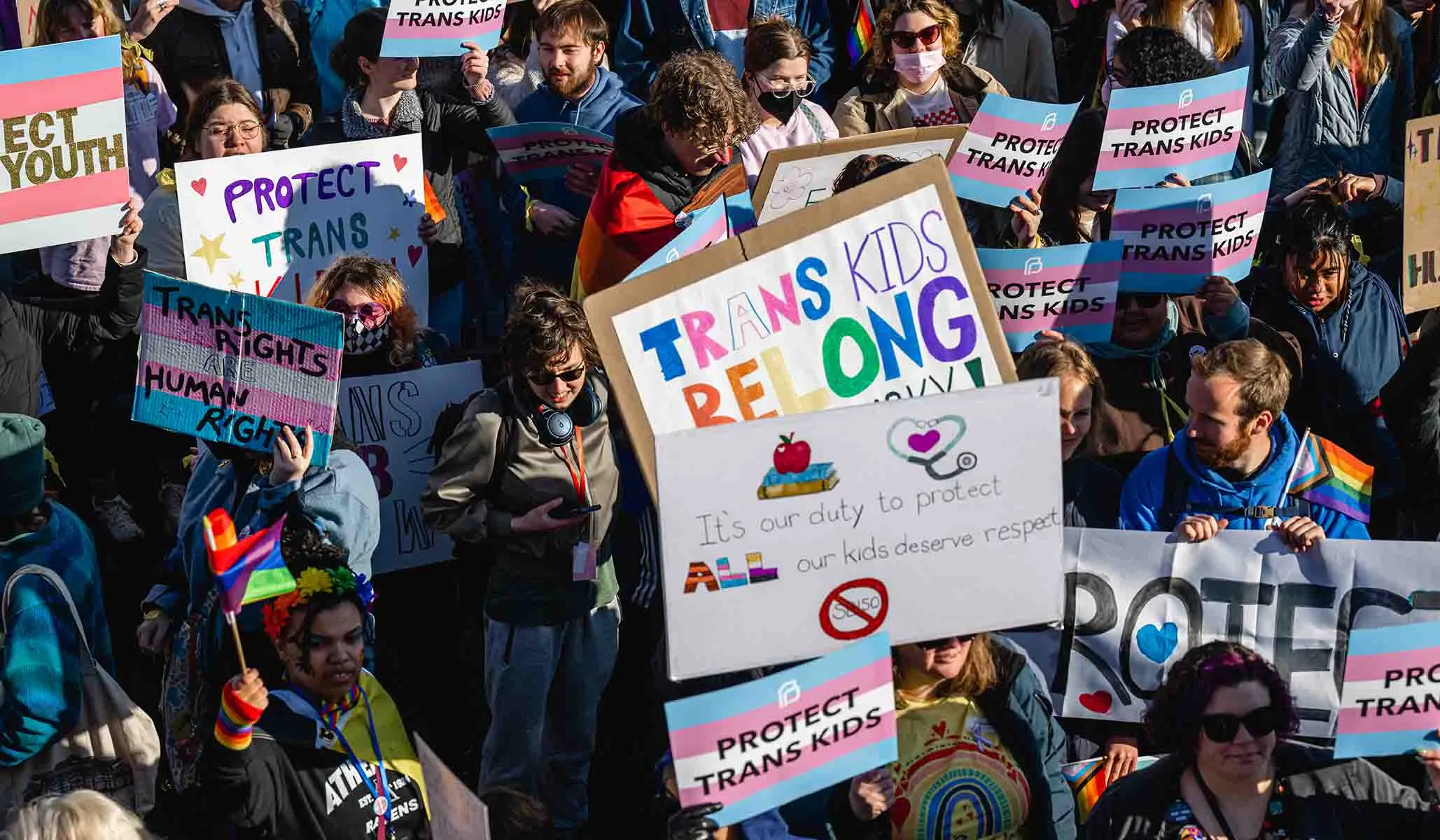
Activists Claim Restrictions on ‘Gender-Affirming Care’ for Minors Cause Suicide. The Study They Rely on Has a Huge Flaw
Activist groups that promote “gender-affirming” care for minors routinely claim that restrictions on the procedures result in increased suicide among trans-identifying minors — but the study they have long relied on to support that claim has glaring flaws, according to a new analysis.
Read more Rubio Defends U.S. Engagements with Cuba, Doubles Down on ‘Failed State’ Designation
The initial study, published in September 2024 in the journal Nature Human Behaviour and authored by researchers from the Trevor Project, compared the rates of self-reported suicide attempts from before and after so-called “anti-transgender” laws were passed in respondents’ states. According to the initial analysis, the researchers estimated the sample mean per respondent, pre-legislation, was .54 — this stat refers to the average number of self-reported attempts. Respondents for this data set included transgender and nonbinary people ages 13 to 17.
Researchers set specific time periods following the implementation of laws in “treatment” states to track the estimated increase in reported suicide attempts that could be linked to said laws — and did identify an increase compared with “control” states after periods 2 and 3. Based on the estimates, Trevor Project researchers noted an approximately 72 percent rise in average suicide attempts, from .54 to .93. This, in turn, appears to have driven the group’s public messaging regarding a large statistical increase in suicides among transgender and nonbinary youth, also informing its “affirmation only” approach.
“Enacting state-level anti-transgender laws increased incidents of past-year suicide attempts among TGNB young people by 7–72%. Our findings highlight the need to consider the mental health impact of recent anti-transgender laws and to advance protective policies,” the Trevor Project–led analysis reads.
The study included respondents from 48 states and territories, but much of the purported increase in attempted suicides can be traced to respondents from Idaho, according to a re-analysis published this month in the same journal as the original study. In their re-analysis, the researchers argue that the design of the original study failed to control for differences between states that are unrelated to legislation that affects trans-identifying minors, differences which are particularly pronounced in the case of Idaho.
“The published analysis used all untreated states as controls, but there are geographic, cultural and political differences between most control states and the treatment states,” the re-analysis reads.
Further, there were only two laws in Idaho even remotely related to transgender status including HB 500 — banning males from participating in female sports — and HB 509 — a law concerning how sex is recorded on a birth certificate. Neither of these bills bans procedures or treatments for gender dysphoric youth.
The original study also failed to consider that, while HB 500 and HB 509 had technically passed, the increases in suicide were not seen during that period. The two bills were blocked, and the state saw increases regardless.
“This temporal separation introduces uncertainty about the extent to which the estimated post-treatment differences reflect effects of the laws or instead reflect other factors occurring during that period,” the re-analysis reads.
The critique also notes that the sample size from Idaho was relatively small compared to many of the states included in the study — and the Covid-19 pandemic may have had an effect on results given the harm pandemic conditions did to mental health.
Idaho, politically and culturally, is not comparable to many of the control states — California, New York, and Washington, to name a few. The researchers behind the re-analysis suggest that the public debate around trans issues in Idaho may have contributed to the increase in suicidality, rather than any piece of legislation. The bill protecting women’s sports, for example, was described by opponents as “incredibly dangerous and discriminatory,” the authors point out.
It may not be the law itself that caused an increase in suicide attempts, but rather the discourse around said law. Incidentally, researchers concluded the concerns “introduce uncertainty into the interpretation of the estimated effects.”
Read more Incumbent Karen Bass Advances to Runoff in L.A. Mayoral Race
The Trevor Project ardently defended its work, claiming Idaho’s influence does not undermine the validity of the study. They also rejected the idea that the public debate around the laws could be separated from the impact of the laws themselves.
“In sum, we rigorously employed widely accepted methodological standards and were careful not to overstate findings where assumptions were not robustly met,” researchers wrote. “The concerns raised by Cohn et al. do not alter the interpretation of our findings.”
Researchers behind the original study are past or current employees of the Trevor Project, an advocacy group that promotes the medicalization of gender dysphoric minors. The group ultimately promoted the September 2024 study, particularly highlighting the consequential claim about adolescent LGBT suicide rates. The group uses this stat to encourage parents to affirm their child’s dysphoria, rather than seek other non-affirming approaches or care.
The Trevor Project’s claim has been cited hundreds of times in defense of looser restrictions on so-called “gender-affirming” treatments for youth patients.
The plaintiffs in the 2025 landmark healthcare case United States v. Skrmetti, which ultimately upheld Tennessee’s law banning puberty blockers and hormone therapy for minors, cited the Trevor Project’s peer-reviewed study and its “72 percent” statistic.
A mom with a gender-confused child previously told National Review she sought out help from the Trevor Project in part because of the claim that gender-dysphoric children are more likely to commit suicide. She, at one time, “thought [her] child was going to kill herself.”
The woman and her husband ultimately learned that those who go through gender transitions are actually more likely to commit suicide than the general public.
“Forty-one percent of the transgender persons in the United States attempt for suicide at least once in their life,” according to a National Library of Medicine study. “In England, 48% of the transgender young people had attempted suicide at least once in their lives.”
Last summer, the Trump administration stripped the Trevor Project of a $26 million contract.
Public support for the medicalization of trans-identifying minors has fallen in recent years. The American Society of Plastic Surgeons released a statement in February advocating that gender dysphoric teens treatment until 19 years old. Many major hospital systems, including NYU Langone Health and Children’s Hospital Los Angeles, shuttered their gender transition programs for minor-aged patients, over concerns regarding federal funding.
Read more Jill Biden Says She Was ‘Frightened’ After Disastrous Debate, Doctors Checked on Joe