United Methodist Church Cuts Ties with Kentucky Seminary That Refused to Embrace DEI
The official elected body responsible for overseeing and accrediting educational institutions within the United Methodist Church (UMC) cut ties with a prominent Kentucky seminary for refusing to go along with the church’s embrace of left-wing social justice activism.
Read more Vance Dismisses Senate Filibuster as ‘Procedural Bullsh**’
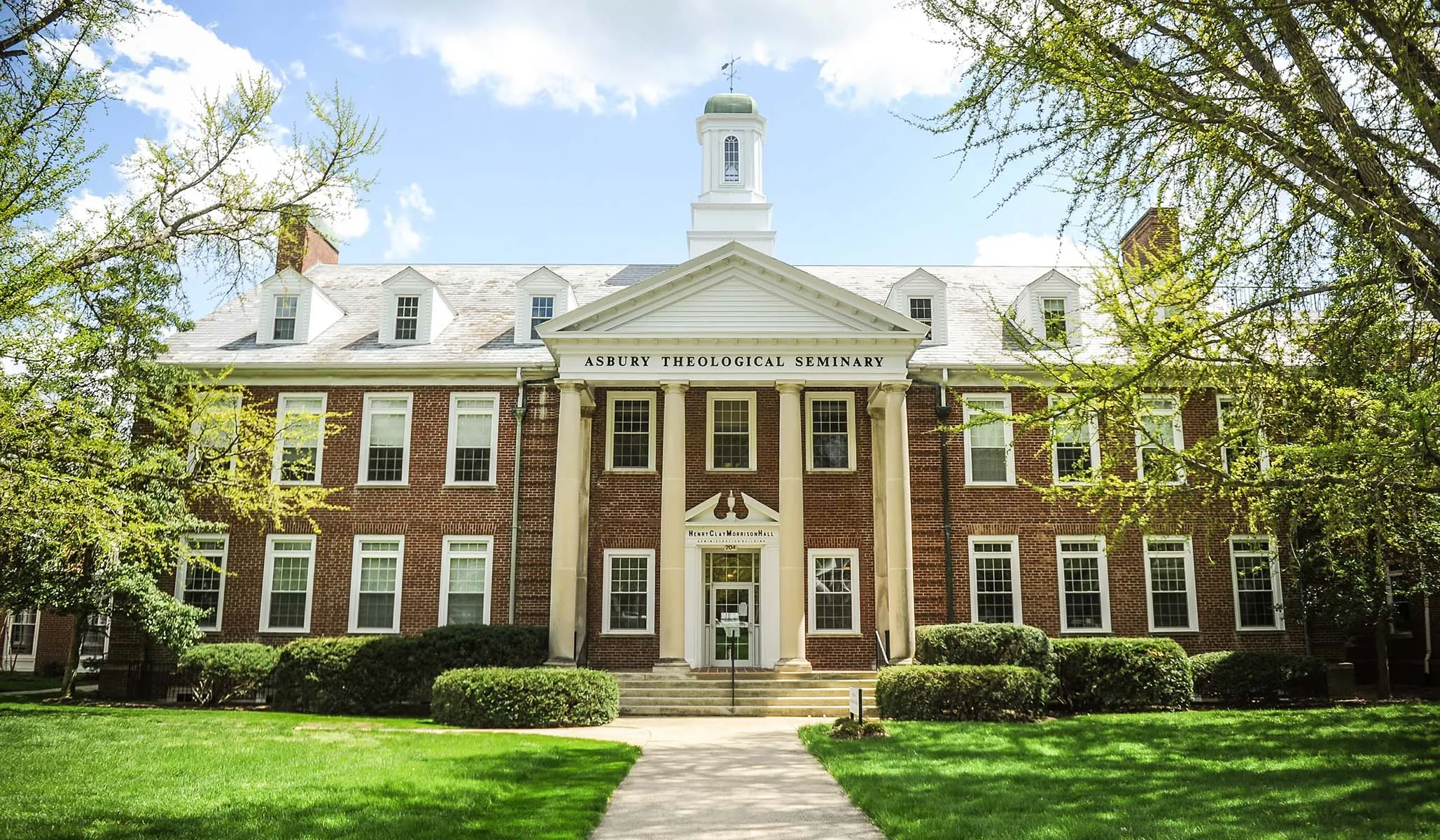
The UMC University Senate delisted the Asbury Theological Seminary last month over its “social principles” and “ethos statement.” The 103-year-old seminary in Wilmore, Ky., is the largest in the Wesleyan tradition worldwide, bringing in students from over 50 countries and over 80 denominations.
Every four years, the UMC reviews its list of non-Methodist institutions that have been approved to educate prospective UMC Clergy. This year’s review, the first conducted since the denomination updated its social principles in favor of the LBGT movement in June 2024, resulted in Asbury being delisted.
“The Senate’s requirements, particularly those related to the UMC’s 2024 Social Principles concerning ‘Human Sexuality’ and ‘Marriage,’ are not aligned with Asbury Theological Seminary’s institutional ethos and the historic witness of the Christian faith,” Asbury Theological Seminary President David F. Watson said in a June 25 statement on the seminary website.
The seminary’s leaders suggests that the UMC decision ultimately came down to the church’s new emphasis on DEI — and Asbury’s unwillingness to compromise.
The seminary’s ethos statement, cited by the UMC in its explanation for the delisting, states that “we will nurture redemptive relationships that honor and uphold the dignity of creation, human life, the sanctity of embodied human sexuality, the equality of women and men, the covenant of Christian marriage between one man and one woman, and the importance of the family.”
The UMC Higher Education and Ministry’s senate guidelines make their stance clear, going so far as to ask, “How is United Methodist-relatedness reflected in the life of the institution (curriculum; student life; diversity, equity, and inclusion (DEI); and research)?”
The UMC quotes an excerpt from The Book of Resolutions of The United Methodist Church 2020/2024 as a justification for its specific social principles: “Methodists have always been known as a denomination involved with people’s lives, including their political and social struggles,” the book explains.
This push for social justice and embrace of DEI advocacy is rooted in the UMC’s perspective on marriage, sexuality, and the family.
“We support both gender equality and gender diversity as important goals for ensuring that the aspirations of women and girls are taken seriously and guaranteeing that paid positions and leadership opportunities are distributed equally for all,” the revised guidelines explain.
Moreover, these guidelines present sexuality as “expressed in wonderfully diverse ways” and “shaped by a combination of nature and nurture.” “We further honor the diversity of choices and vocations in relation to sexuality such as celibacy, marriage and singleness,” the site adds.
In its discussion of family, the UMC stresses how “families come in a variety of sizes and forms” and defines marriage as “a sacred, lifelong covenant that brings two people of faith, an adult man and woman of consenting age, or two adult persons of consenting age into union with one another.”
Amid these striking doctrinal changes in the UMC, the Global Methodist Church (GMC) continues to regard Asbury Theological Seminary as an approved institution. The GMC was founded in May 2022 in response to the UMC’s more progressive views. Like the UMC, the GMC claims to be rooted in Wesleyan tradition, but its website specifically emphasizes its focus on preserving “the doctrinal integrity” of the faith.
Read more Houston Man Killed by ICE, Hailed as Father Chasing ‘American Dream,’ Had Meth in His Car, FBI Says
“The Global Methodist Church exists to spread scriptural holiness across the globe and to carry forward the faith once delivered to the saints,” GMC’s site explains.
Asbury was not the only school removed from the UMC’s list of non-Methodist schools approved for ordination, but it was the only one removed for disagreement on social principles.
In total, four schools were removed, leaving a list of 13 schools of divinity which includes seminaries like Duke Divinity School, Emory University’s Candler School of Theology, and Boston University School of Theology.
Luther Seminary and Palmer Theological Seminary declined to participate in the UMC review. According to the UMC General Board of Higher Education and Ministry’s site, both sent in “formal notifications” that requested their seminary’s “removal from the listing of approved, non-United Methodist theological schools.” After its review, the senate delisted Northeastern Seminary, citing its failure to employ a UMC faculty member and its predominantly online programming.
The explanation of Asbury’s delisting cited a similar faculty issue — the seminary does not employ a full-time UMC faculty member to “consistently” teach “required United Methodist history, doctrine, and polity”— but the disagreement in social policy seemed to be the primary cause for the delisting. The UMC senate said it met with leaders at both seminaries after completing the review.
“The University Senate’s Commission on Theological Education determined that Asbury’s published ethos statement is not compatible with the Social Principles of The United Methodist Church,” said Roland Fernandes, the senate’s general secretary of Higher Education and Ministry, in an announcement on the UMC General Board of Higher Education site.
In response to NR’s request for comment, the UMC General Board of Higher Education and Ministry said it did not have “any additional statements at this time” and directed NR to its initial announcement and a site outlining the role of the UMC’s University Senate.
Students currently enrolled in Asbury Theological Seminary or starting out this fall can still complete the required programs and qualify for UMC ordination, but this will no longer be an opportunity for students who join the seminary after fall 2026.
Watson said he understands the university senate’s role in the UMC and acknowledges its decision, but he called the conclusion “unilateral”— a “determination” as opposed to a “shared resolution.”
“While we had hoped for a different outcome,” Waston said, “our focus remains steadfast on our unchanging calling.”
He believes there will be a “modest difference in enrollment” in the shorter term but said the seminary has known this was likely to happen for a while now.
“We’ve been preparing for some time for two scenarios,” Watson told National Review in a statement. “The first was that we would be de-listed by the UMC and no longer have access to UMC students preparing for ordination. The second is a slow decline in the number of UMC students corresponding to denominational decline, so none of this catches us by surprise.”
Read more Republican Senators Grill Acting AG Blanche on Trump’s $1.8 Million ‘Anti-Weaponization Fund’