For Years, 9/11 Was Something Students Lived. Today, It’s a History Lesson
George Mason University professor Meredith Lair has been teaching history for 27 years — but it wasn’t until the late 2010s that she started to feel the September 11, 2001, terror attacks had shifted from something students had lived, to a history event that needed to be taught.
Read more South Carolina Senate Candidate Went All in on Child Gender Transition Despite Being a Pediatrician
“It didn’t really feel like history, so much as it was this pervasive factor in our lives for a long time,” she said.
But in 2020, facing the first generation of college students who were born after the attacks that would forever change America, Lair asked her department if she could teach a class solely focused on 9/11.
“I was troubled by a lack of investment in the day, that it was increasingly just another day that people would go about their lives,” she said. “And I also was troubled by the misinformation and glibness in the conversation about 9/11 online, particularly on social media, because increasingly there were young people who had no memory of it, they could be really casual, and in that casualness quite cruel and speculating and dismissing.”
She taught the class for the first time in 2021 to mark the 20-year anniversary of the attacks, and decided she would try to teach the course, 9/11 in History & Memory, every five years.
“It is a challenge, because the further we move away from the event, the less my students understand — not just about the history, but about the culture, because there have been such profound changes in how people communicate and how they document their experiences,” she said.
Lair is one of many professors who are trying to keep the “Never Forget” ethos alive in a generation that never knew a world before 9/11.
Stephen Sloan, an associate professor of history at Baylor University, acknowledged the ongoing shift in the collective consciousness during the 20th anniversary of the attacks in 2021.
“In teaching students about 9/11, one of the things that has happened until recently is, it was part of their own experience, so it resonated with them,” he said on the 20-year anniversary of the attack. “We could kind of draw on and talk about their experiences with it. But now, it’s more of a historical event for our students, so it’s working to help them understand the importance of 9/11 as an event that changed so much of, not only America’s role in the world, but even elements of American culture and the political landscape at home.”
Stony Brook University history professor Nancy Tomes, who was working at the Long Island college 60 miles west of NYC at the time of the attacks, is also currently teaching a class about documenting 9/11.
She started off the class this semester asking her students what they had heard about the attacks.
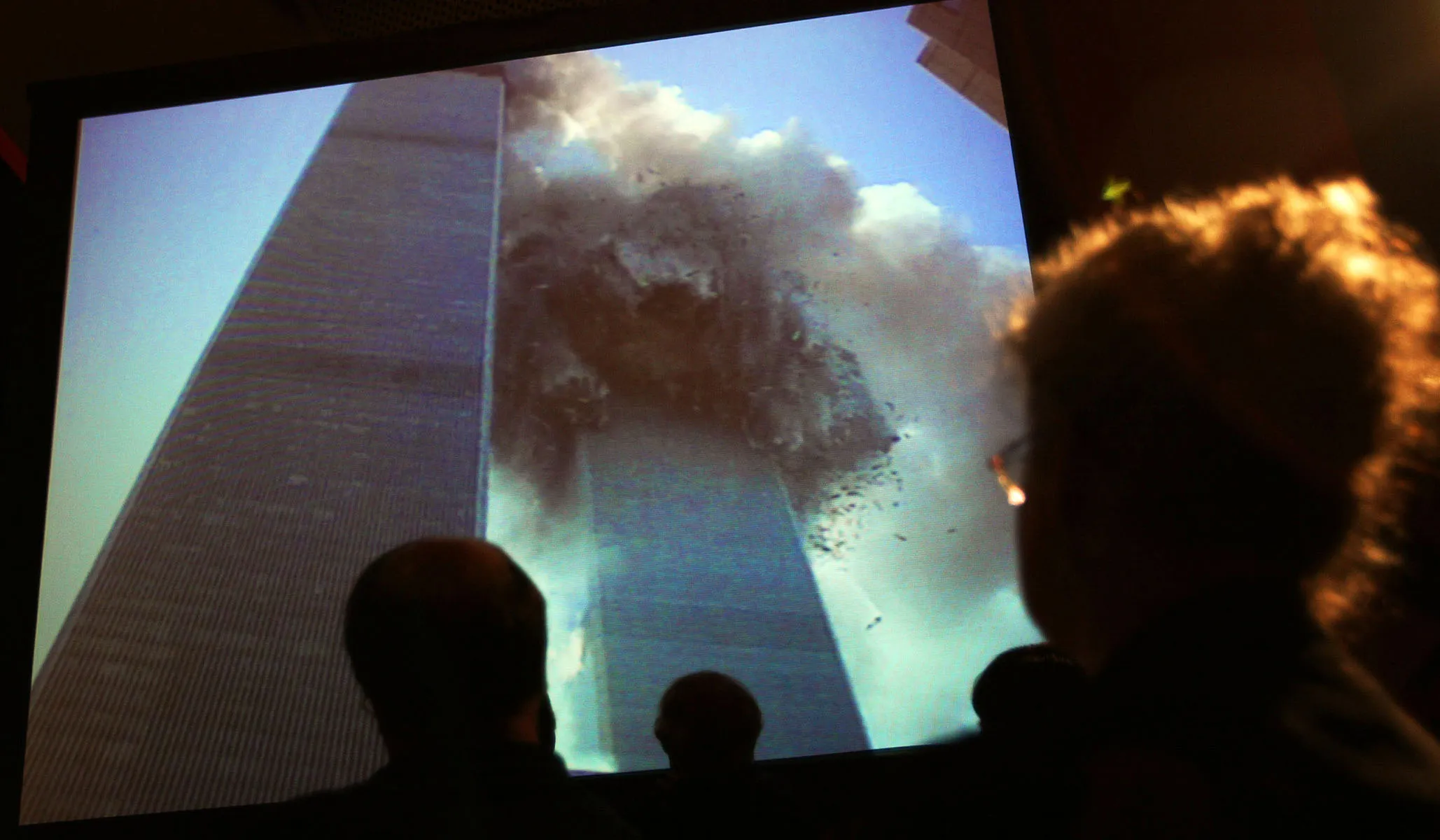
“I was amazed that they had, for example, in fifth grade, been shown video of the bodies falling from the tower,” she said.
But despite having learned about 9/11 in school, her students expressed a desire to better understand the context around the day, she said. While they know the story of what happened on 9/11, and that once upon a time boarding a plane was a much simpler process, they wish they understood more behind the geopolitical situation leading up to the attacks.
“The impression I get from them is that as far as the school part goes, what they hear was kind of big on the drama and the emotion, and light on an understanding of what caused it,” she said.
Lair says some of her students never received any instruction on the 9/11 attacks in their K–12 education. That’s because education curricula vary widely by state. More than 83 percent of students at Stony Brook University are New York State residents; in New York, the state education department requires students to study different facets of the attacks and the aftermath in social studies classes for eighth, tenth and eleventh graders. A 2019 state law also requires schools to hold a moment of silence on the anniversary of the attacks each year.
At George Mason, more than 80 percent of students are from Virginia, where students are required to learn about the attacks in “middle and upper grades.”
Still, fewer than two dozen states have academic standards requiring instruction on 9/11.
Read more New Jersey Fails to Vet Medicaid Providers, Raising Fraud Concerns
And Lair finds that even students who did learn about the attacks in school have only a cursory understanding of the situation — making their exposure to conspiracy theories online all the more concerning.
A number of far-fetched and antisemitic conspiracy theories have proliferated online in the 25 years since 19 hijackers carried out the attacks on the World Trade Center, the Pentagon, and United Airlines Flight 93 that killed 2,977 people.
As part of her class curriculum, Lair will have her students pick one of several conspiracy theories to research and debunk. Among them: the “Let It Happen on Purpose” (LIHOP) theory that U.S. officials knew the September 11, 2001, attacks were going to happen and did nothing to stop them in an effort to justify later military conflicts; that the Twin Towers came down as a function of controlled demolition; and that Jewish people or Israelis were behind the attacks.
“That’s the kind of information that if you fall into the wrong rabbit hole of the internet, can become really overwhelming, and very dramatically shift your worldview, not just about 9/11, but about how everything works, that there can be vast, sinister plots, and, and secrets that we can maintain for 25 years,” Lair said.
An example of internet fodder shifting young people’s worldview was on clear display in November 2023, one month after Hamas carried out its attacks on Israel. Young Americans posted viral videos on TikTok expressing sympathy with Osama bin Laden, the al-Qaeda terrorist who orchestrated the September 11 attacks, after they discovered a letter he wrote 20 years earlier criticizing the U.S. government and its support for Israel.
TikTok users were speaking favorably about bin Laden’s arguments and encouraging others to read the letter. Videos on the topic received at least 14 million views over the course of several days, according to CNN’s reporting at the time.
The report cited a since-deleted video by a New York–based lifestyle influencer who said, “If you have read it, let me know if you are also going through an existential crisis in this very moment because in the last 20 minutes, my entire viewpoint on the entire life I have believed, and I have lived, has changed.” The video was viewed more than 1.6 million times before it was taken down.
Lair notes her course tries to look past the conspiracy theories and social media noise.
The reality, she tells students, is “so much more disturbing” than any conspiracy theories: “A bunch of guys with little knives took down four airliners, and the U.S. government really struggled that morning to mount any kind of meaningful response.”
But the actions of many of the victims of the attacks, including the passengers of United 93, serve as a “profound lesson for young people,” many of whom, Lair notes, are struggling with resiliency.
Both Lair and Tomes said it has taken them by surprise how emotional it can be teaching about 9/11.
Tomes said teaching about 9/11 is “more meaningful” and challenging than other historical events because she has to work through her own memories of the day. In teaching the class on documenting 9/11, she included a statement in her syllabus about the use of difficult material in the class and warned that it could raise some uncomfortable feelings.
“The person who got upset was me,” she said. “It’s a lot to process.”
In fact, the emotions of the day were so raw for one professor who was teaching in Manhattan during the attacks, that he declined an interview request from NR, saying he could not bear to relive the trauma.
Lair, who was a Ph.D. student at Penn State University at the time and taught a night class about the Vietnam War on the evening of 9/11, says her current course on 9/11 is “the hardest class” she’s ever taught.
“I’ve never, for another class, had the experience where I am reduced to tears, literally every lecture that I create,” she said.
“And so that took me by surprise, as someone who teaches military history, and who’s had to teach war crimes, and very troubling experiences, that it still takes me back to the person that I was that day, just like other Americans, completely overwhelmed, and shocked, and frightened, and deep in the throes of grief for all of the loss,” she said.
Read more House Democrats’ Budding Anti-DSA Caucus

Related Posts
University of Washington Pays $600,000 to Professor After Losing Land Acknowledgment Fight
Jason Arday, Former Cambridge Professor Accused of Plagiarism, Found Dead