‘Free-Range’ Parents Being Hit with Neglect Investigations. A New Bill Would Change That
A new bill in the U.S. House, introduced by Representative Blake Moore (R., Utah) on Tuesday, would better protect “free-range” parents from investigation and arrest as they encourage their children’s independent play and exploration.
Read more Felon Who Allegedly Opened Fire on Boston Drivers Previously Convicted for Shooting at Cops
The Promoting Childhood Independence and Resilience Act is an attempt to bring Utah’s state-level “free-range parenting” law, first passed in 2018, to the federal level.
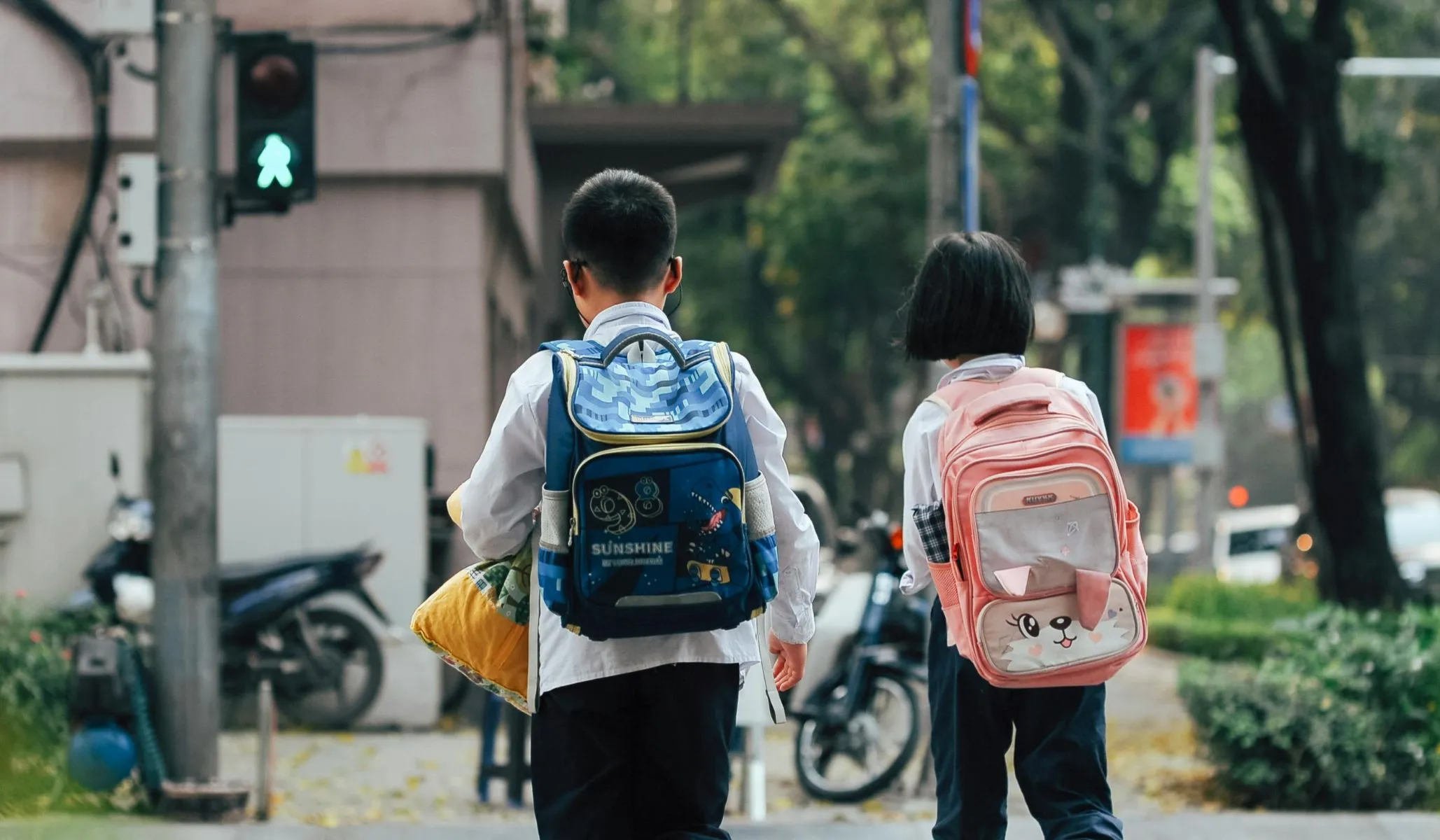
Moore’s new bill would amend the Child Abuse Prevention and Treatment Act to make clear that childhood independence activities — like walk to a friend’s house, play at a neighborhood park, or go to the local grocery store unaccompanied — do not constitute neglect.
As law enforcement and child welfare systems increasingly investigate parents who allow their children to partake in these acts of independence, children are spending more time than ever inside and online, harming their mental health and personal growth, according to the representative.
“We’ve heard or seen experiences where neighbors are calling Child Protective Services if children are sort of roaming the neighborhood, even if parents know where they are and what they’re doing,” Moore told National Review. “There’s a level of nervousness about this. It’s okay to want to be responsible, but I think we’ve taken this to the point where we’re not letting kids free roam and explore and walk the neighborhood a little bit. We’re a little too tense on the definition of what neglect is.”
“So we want to clarify that definition and work to make sure that kids are still getting an unstructured playtime.”
The bill was also inspired in part by Jonathan Haidt’s book The Anxious Generation and his nonprofit Let Grow, both of which warn of the public health emergency around children increasingly remaining online and indoors, and instead advocate for more “real world” and independent exploration in childhood.
A cultural shift toward accepting increased childhood independence would also help low-income families who must rely on their older children to let themselves into the house, run to the store, or play with their siblings while their parents work multiple shifts to make ends meet, the representative adds.
Rather than tying up CPS resources with calls about children out playing, Moore urges concerned neighbors to check in with the children’s parents and to create a good relationship with their neighbors.
“Concern for children in the neighborhood is a good thing,” he added. “And we all need to be watchful, right? More eyes are good things, but do it in a way where we’re not antagonizing and threatening parents for neglect. Do it in a way that shows that you truly care about the neighborhood.”
And while technology many times can be a driving factor behind increased time spent indoors, giving children limited access to communication devices, like a child-friendly Bark Phone, can actually give parents more flexibility to let their children have more freedom and responsibility, he says.
The bill “seeks to restore a healthy American childhood, get kids off screens and playing outside, improve outcomes, and protect parents who embrace independence as part of their children’s development,” according to the representative’s office.
Moore’s proposed bill has bipartisan support and was cosponsored by Representative Jennifer McClellan (D., Va.)
In addition to amending CAPTA, the proposed bill includes several parts. First, it would instruct the Department of Health and Human Services to conduct a public study on how states and state child welfare agencies can best empower parents to give children opportunities to participate in reasonable independent activities without direct supervision.
It would also amend Title IV-B of the Social Security to encourage states to have plans in place that train child welfare staff and prevent “unnecessary and traumatic” investigations and separations of families solely based on allowing children to participate in reasonable independent activities.
The measure would further ensure that grants to states for child abuse or neglect prevention and treatment programs can be used to both develop strategies and training protocols that ensure child welfare staff understand that reasonable independence activities are not exclusive grounds for charges of child abuse and neglect, and do not justify the separation of a child from their parent or guardian; and to help the public better understand that a parent or guardian allowing a child to participate in reasonable independence activities is not being neglectful.
Finally, it would require states that pursue grants for child abuse or neglect prevention and treatment programs to have assurances and protections for parents and legal guardians so they may allow a child to participate in reasonable independence activities without fear or threat of criminal or civil charges, other custody assessments or investigations, mandated services, child abuse registry or accusations of child abuse or neglect.
It is children who lose, Moore says, when parents don’t feel empowered to let them outside for independent play.
“It’s important to have a well-rounded upbringing. They need to be able to go and be independent. It comes in phases, but you need to be building up to that to the point where you’re ready to launch and be on your own and if you’ve constantly had this kind of helicopter supervision, it’s dangerous.”
Read more Arcadia Mayor Agrees to Plead Guilty over Role as Chinese Foreign Agent

Related Posts
Top Virginia Democrat Louise Lucas Charged in Public Corruption, Drug Trafficking Case

Court Slaps Down NYC’s Latest Attempt to Punish Energy Companies for Climate Change