How Democratic Operatives Got a Copycat Candidate on the Alaska Senate Ballot to Confuse Voters
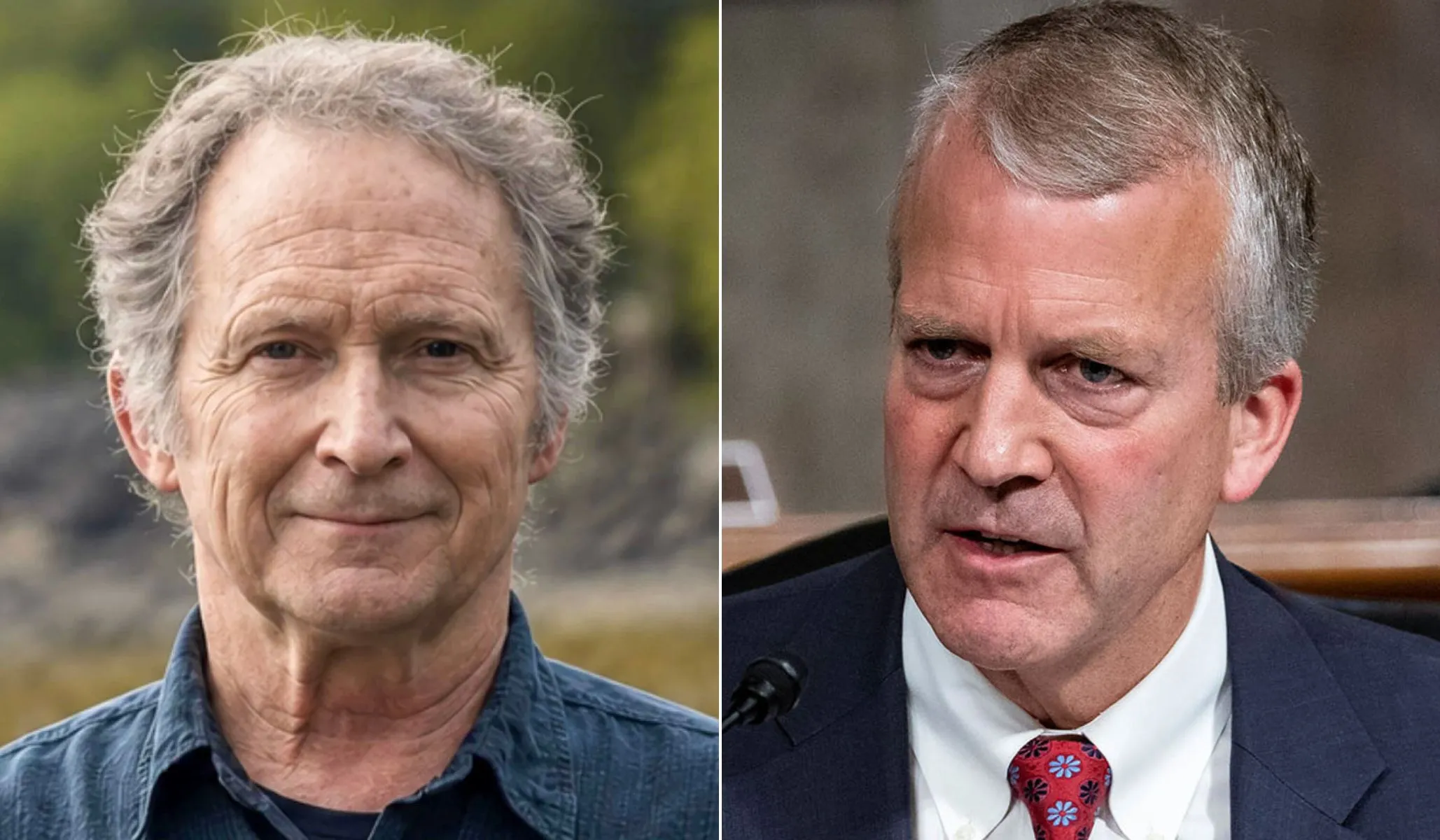
The Alaska Division of Elections disqualified copycat Senate candidate Dan Sullivan in June after finding that he’s running for office in order to mislead voters into thinking they are voting for a Republican candidate of the same name. But Sullivan’s name will appear on the ballot thanks to a ruling from the state supreme court, which held that the candidate’s motivations for running are irrelevant to his eligibility.
Barring a criminal indictment by the Department of Justice, which is reportedly investigating the second Sullivan campaign, when Alaskans go to the primary polls in August, they’ll be staring at a ballot with two identical names.
This didn’t happen by accident: It’s the end result of an orchestrated plot carried out by a group of Democratic operatives — also involved in other consequential Senate races, including Maine, Michigan, and Nebraska — who are willing to mislead voters if it gives their party a better chance to retake the upper chamber.
As the Divisions of Elections demonstrated when it threw Sullivan off the ballot, not only does he share a name with Republican Dan Sullivan, he deliberately took steps to imitate his opponent, filing to run under a version of the name he hadn’t historically used but which more closely resembles the other candidate’s usage, and creating a campaign website that looks eerily similar to the other Sullivan.
Sullivan’s campaign did not respond when asked what motivated his entry into the race.
How Did Democrats Find the ‘Fake’ Sullivan?
So how did Sullivan, a retired schoolteacher from the 3,000-person town of Petersburg, Alaska, get drawn into this scheme? It doesn’t appear he came up with the idea himself.
Sullivan’s son, Noah Sullivan, previously worked for Alaska Democratic gubernatorial candidate Jonathan Kreiss-Tomkins, both as an intern for his state house office and as field representative for Kreiss-Tomkins’s state representative reelection campaign.
Kreiss-Tomkins, who moonlights as a political consultant, has connections to James Lottsfeldt, who of the Vote Alaska Before Party PAC, which, despite its bipartisan branding, is actually a single-candidate Super PAC supporting Democrat Mary Peltola. Peltola, who served in the House from 2022 to 2025, is now running for Senate.
Lottsfeldt runs a political consulting firm called Lottsfeldt Strategies, which was paid $23,000 by the Vote Alaska Before Party PAC in February, 2025, according to FEC filings. He also served as of the Put Alaska First PAC, which was created in 2014 to oppose Republican Dan Sullivan’s first Senate bid against incumbent Democrat Mark Begich.
Lottsfeldt and Kreiss-Tomkins co-hosted a campaign launch event back in February for Kreiss-Tomkins’s gubernatorial campaign.
Kreiss-Tomkins and Lottsfeldt did not respond when asked whether they recruited the copycat Sullivan into the race.
Sullivan’s Connections to Prominent Democratic Operatives
Once Sullivan joined the race, he was immediately plugged into a well-established world of Democratic campaign consultants, despite his ostensibly running as a Republican. He hired progressive consultant Amber Lee, who has openly supported Peltola.
Lee has worked for many Democratic-affiliated Alaska groups and campaigns, and while she doesn’t list the Sullivan campaign on her firm’s website, the candidate confirmed in a letter to Lieutenant Governor Nancy Dahlstrom that he had hired Lee. Further, Lee authored Sullivan’s campaign announcement, according to metadata taken from a PDF posted online. While she’s ostensibly working for Sullivan, Lee was quoted earlier this year as saying Peltola is a real challenger for the incumbent Sullivan.
Read more How Did a Former Elizabeth Warren Volunteer End Up Attending the Ayatollah’s Funeral?
Lee also has connections to the other consultants hovering around Sullivan. She was working at Lottsfeldt Strategies in February, 2025, when the firm was paid by Peltola’s PAC, according to an archived version of the firm’s website. Lee’s bio has since been scrubbed from the website and her affiliation with the firm is not reflected on her LinkedIn account.
Lee did not respond to National Review’s request for comment.
The political operatives who appear to be behind the copycat Sullivan campaign haven’t limited themselves to Alaska.
Kreiss-Tomkins, who’s running for governor of Alaska as a Democrat, also runs a political consulting firm whose clients, according to Kreiss-Tomkins’s LinkedIn page, include Dan Osborn, who is running for Senate in Nebraska as an independent despite his extensive Democratic ties and progressive commitments.
Kreiss-Tomkins has also done work for Independent Campaigns LLC, which is owned in part by Megan Osborn, the Nebraska candidate’s wife. She is also connected to another political consulting firm called Dark Forest LLC. Earlier this spring, a complaint with the FEC was filed against the Osborns, alleging the candidate illegally funneled campaign funds to his wife via these firms.
The Osborns did not immediately respond when asked about their connection to Kreiss-Tomkins and potential involvement in the Alaska Senate race.
Why Two Sullivans Matters
As one of only two states that use a ranked-choice voting system, Alaska is uniquely vulnerable to a copycat candidate scheme.
When Alaskans go to the polls this August for their state’s primary, they won’t just choose one candidate, they’ll rank candidates based on preference. If one candidate receives more than 50 percent of the vote in the first round, it’s over; if not, the candidate who received the fewest number of votes is eliminated and a second round of counting is undertaken. If a voter had listed the eliminated the candidate as their first choice, then their second choice is counted. The rounds continue until two candidates remain and the one with the most votes wins.
If voters mistakenly rank the fake Dan Sullivan first, that ballot remains with the unintended candidate until he is eliminated, potentially shifting or delaying majorities, meaning even minor voter confusion can influence multiple rounds of counting and ultimately the outcome of the race.
Democrats, and the phony Sullivan campaign, know this.
When Republicans first became concerned about Sullivan’s campaign, Lieutenant Governor Nancy Dahlstrom requested an investigation, citing concerns Sullivan committed perjury, as campaign filings are considered sworn testimony.
“I’m troubled by the allegation that you filed for office in coordination with another campaign with the intention of confusing Alaskan voters in a way that will benefit one candidate over another,” Dahlstrom said at the time, in a letter to Sullivan. “If true, it suggests that your declaration of candidacy, which was submitted under penalty of perjury, was not genuine and not properly filed.”
In Alaska, perjury is a Class B felony, carrying a sentence of up to 10 years in prison and fines of up to $10,000.
Read more Graham Platner Drops Out of Maine Senate Race Following Sexual Assault Allegation

Related Posts
Amy Acton’s Mom Claims Candidate Lied about Childhood in Attack Ad — Despite Extensive Record of Abuse
North Carolina Democrat Who ‘Recently’ Left GOP Donated to Bernie Sanders in 2016