Parents Demand Warnings on LGBT-Related Children’s Content
Parents are becoming increasingly concerned about the rise in LGBT-related children’s content and the lack of corresponding content descriptors warning parents about the ideological nature of the programming, according to a new poll shared with National Review.
Read more Why Ohio Governor Mike DeWine Changed His Mind on the Death Penalty
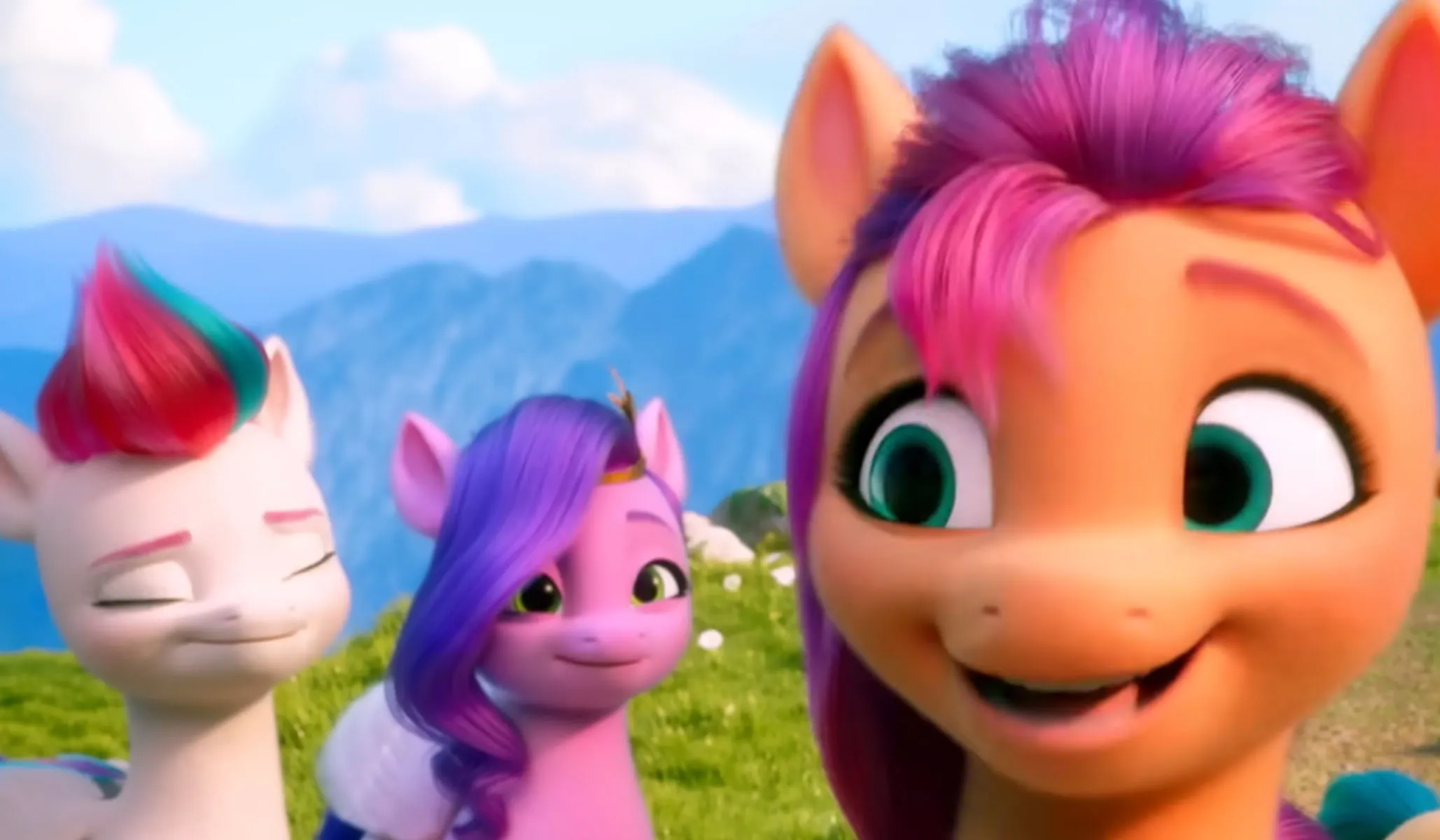
Children’s television and media programming increasingly highlights LGBT characters, storylines, and conversations. This ideology isn’t exclusive to fringe television programs — My Little Pony, the reboot of Rugrats, and Doc McStuffins have all highlighted different LGBT storylines.
And for some producers, this content is a point of pride, with “one of the creators of My Little Pony, for example, bragging about introducing a same-sex couple,” Melissa Henson, a senior policy advisor for Media and Culture at Concerned Women for America, explained. “Or you know, the creator of Anne with an E on Netflix, bragging about adding non-binary characters.”
Currently, television shows with G, TV-Y, or Tv-Y-7 ratings do not require any content labels for designations like sexual content or dialogue.
“When you get up into like PG rated content or TV-14 rated content, they have additional descriptors,” Henson told National Review. “But there are no descriptors other than FV, for fantasy violence, for those programs that are for younger audiences, so the Federal Communications Commission is seeking comment about whether or not maybe additional disclosures should be required for children’s programming.”
As the FCC considers adding new content descriptors to children’s content, Concerned Women of America commissioned a poll which found that 87 percent of parents believe it is important for children’s programming to include warnings about graphic content such as violence, sexual content, and LGBT messaging.
Almost 80 percent of parents believe the television ratings oversight board should include input from parents, child-advocacy organizations, and independent experts.
“As the FCC decides if the TV content ratings system needs to alert parents to sensitive content in children’s TV programs, our poll data shows that parents overwhelmingly want to be informed,” Penny Nance, CEO and president of Concerned Women for America, said in a statement. “Parents should be able to make informed viewing decisions for their children, but currently, parents have no way of knowing whether LGBTQ+ content is in that program. It’s time to give parents that choice.”
Similarly, almost half of parents polled said the entertainment industry has too much control over the ratings process.
“There is an oversight body, it’s called the Television Content Ratings Oversight Monitoring Board, but if you look at the composition of that monitoring board, it’s basically 90% of it is the entertainment industry, and the less than 10% that isn’t the entertainment industry are organizations that have definitely been captured by the progressive left, so there really isn’t viewpoint diversity on that board,” Henson said.
Read more For Suffering Families, New Right-to-Try Legislation Offers a Glimmer of Hope
CWA found 41 percent of G-rated and TV-Y-7 content on Netflix includes LGBT content, after analyzing 326 series on the platform.
Outrage over this phenomenon gained traction specifically after Elon Musk took to social media to complain about a Netflix series called “Dead End: Paranormal Park,” which highlighted a transgender character. Musk urged patrons to cancel their Netflix subscriptions, and the company lost an estimated $15 million in value, Concerned Women of America .
Representative Harriet Hageman (R., Wyo.) recently introduced a resolution, also urging the FCC to update the television ratings system. As Henson explained, the television of today is vastly different from television in 1996, back when these systems were first established.
“Parents have the right to decide what their children watch, and the current ratings system is robbing them of that right,” Hageman said in a press release. “Streaming platforms are pushing ideology into children’s programming, and Washington has looked the other way for too long. This resolution puts the FCC on notice that transparency is not optional.”
The FCC, which has requested public comment to inform its potential new guidance, has been flooded with comments defending these themes, like LGBT representation, in children’s shows, Henson said.
“Just labeling the content is not going to remove the representation, it’s still going to be there, it’s not censorship, it’s just identifying,” Henson said. “It’s no different than the ingredient list on food package, it’s just telling you what’s there, and you can decide whether that’s suitable for you or not. It’s not making a judgment about it, it’s just saying here’s what’s in it.”
But until these changes are potentially made, Henson recommends parents closely monitor what media their children are consuming.
“You cannot trust the ratings alone, you can’t assume that just because it’s rated G or Y that it’s going to be suitable for your child,” Henson said. “It really does require you to do your research and not just sort of plop them down in front of Netflix or plop them down in front of TV and assume that the rating is going to give you every all the relevant information.”