Is The U.S. Navy Cleaning House Amid ‘Loss of Confidence’ Firings?
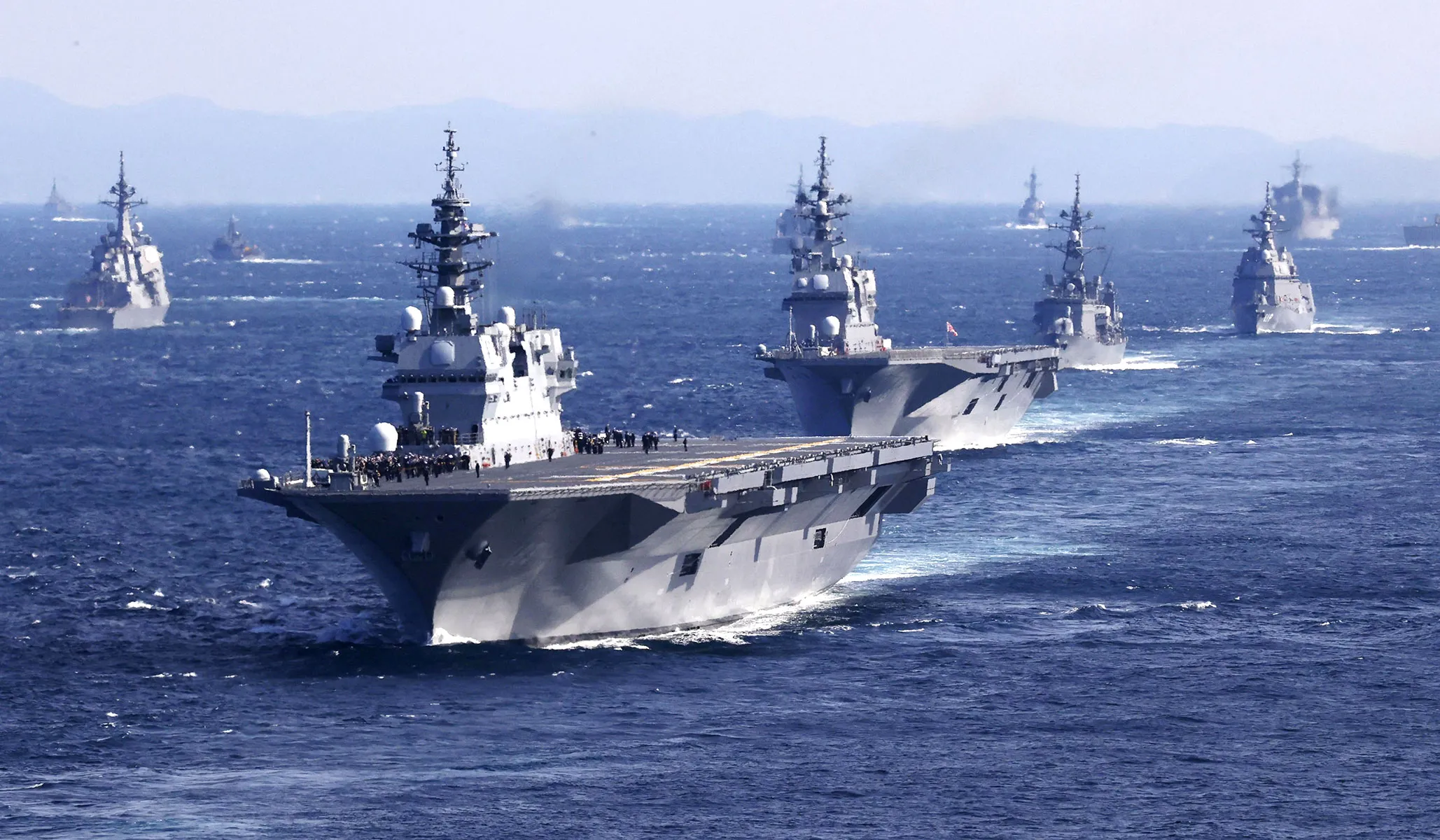
The executive officer, commanding officer, and command master chief of the United States Navy’s largest overseas ship maintenance facility — the Naval Ship Repair Facility and Japan Regional Maintenance Center (SRF-JRMC) — were fired last Wednesday. In the official announcement, the Navy cited “a loss of confidence in their ability to command.”
Read more Texas Teen Karmelo Anthony Sentenced to 35 Years in Prison for Fatal Track Meet Stabbing
SRF-JRMC is a critical location for maintenance and modernization work on Navy vessels that would otherwise have to be done back in the U.S. It is also a critical location for rapidly mobilizing warships like mine countermeasures vessels, amphibious ships, and destroyers into the Indo-Pacific.
And while critics may question whether now is the right time for a leadership change, as the Trump administration navigates tensions in the region, experts tell National Review the shakeup could actually help — not hurt — military readiness.
“I do not expect that the firings will adversely affect 7th Fleet operations. They might improve them,” Seth Cropsey told NR. Cropsey is the president of the Yorktown Institute, a think-tank focused on issues like U.S. military supremacy and great power competition, and has formerly served as the deputy undersecretary of the Navy.
“SRF-JRMC is part of the Naval Sea Systems Command (NAVSEA). NAVSEA has not covered itself with glory in recent years,” he said. “It is conceivable, although it would — and should — require more investigation that [the] Navy is attempting a very long overdue cleaning of the house at NAVSEA.”
In the Navy, “loss of confidence” can be caused by something as simple as a dispute with a supervisor or as egregious as severe misconduct. The American military has historically used the phrase as a blanket statement to conceal confidential case details.
“The Navy places tremendous responsibility on Navy leaders and holds accountable those who fall short of our high standards,” said a U.S. Navy official in a statement to NR.
Over the past two years, Secretary of War Pete Hegseth has worked to more closely oversee personnel, policies, and promotions for the military at large. He presented his vision for the armed forces in an address to military leaders at the Marine Corps Base in Quantico, Virginia, on September 30, 2025.
“For too long, we’ve promoted too many uniformed leaders for the wrong reasons, based on their race, based on gender quotas, based on historic so-called firsts,” he said. “We’ve weeded out so-called toxic leaders under the guise of double-blind psychology assessments, promoting risk-averse, go-along-to-get-along conformists instead.”
“Because this job is life or death, standards must be met. And not just met. At every level, we should seek to exceed the standard, to push the envelope, to compete,” he said. “It’s common sense and core to who we are and what we do. It should be in our DNA.”
The firings in Japan come after several other high-profile firings within the U.S. Navy.
Back in April, Secretary of the Navy John Phelan was fired and his undersecretary, Hung Cao, stepped in as acting secretary of the Navy.
Read more Teachers’ Unions Spent Billions of Dollars in Membership Dues on Exorbitant Employee Salaries
“He’s a hard charger, and he had some conflicts with some other people — mostly as to building and buying the ships” President Trump told the press in a briefing on April 23, adding, “I’m very aggressive in the new ship building, and somehow he just didn’t get along.”
These disputes appear to be a common cause for the firing of military personnel. “Especially in the military, you’ve got to get along,” Trump said.
On February 13, the commanding officer of the Arleigh Burke-class destroyer USS Mason (DDG-87), Captain Chavius Lewis, was fired from his position and replaced by Captain Kevin Hoffman.
“The Navy maintains the highest standards for leaders and holds them accountable when those standards are not met,” the Navy said in a press release. It cited “a loss of confidence in Lewis’ ability to command” as grounds for the change.
Despite the staffing shakeups, the Navy is still charging forward, pursuing developments in its technological prowess, robustness, efficiency, and size.
The leadership team in Japan will now include Captain John Bauer, the former supervisor of salvage and diving, as the stand-in commanding officer; Waterfront Operations Officer Commander David Reinhardt as the temporary executive officer; and Master Chief Petty Officer David Marcus, Commander, Navy Regional Maintenance Center (CNRMC) command master chief as the short-term command master chief at SRF-JRMC.
And the Navy intends to expand its forces across the board.
“The Department of the Navy currently operates 291 battle force ships, while the Navy requirement by law is 355,” reported the U.S. Naval Institute staff in the Navy’s official shipbuilding plan published on May 11. The proposed plan encouraged the development of both manned and unmanned systems and a return to modular construction that can be completed anywhere.
“Today, roughly 10% of shipbuilding work is performed at distributed sites. Our goal is 50%,” the Naval Institute staff said. “New hulls will prioritize modular, digital designs that enable distributed shipbuilding across multiple yards and suppliers.”
On Monday evening, an unmanned sea drone carried out a first of its kind rescue mission, saving two crew members from a downed AH-64 Apache helicopter in the Strait of Hormuz.
Though the helicopter incident may have been caused by a mechanical issue, Trump has said it was an attack by Iranian forces.
“[T]he United States must, of necessity, respond to this attack,” he said in a post on Truth Social that preceded U.S. military strikes on Iran on Tuesday.
Read more Republican Steve Hilton Will Take On Xavier Becerra in California Gubernatorial Race

Related Posts
Top Virginia Democrat Louise Lucas Charged in Public Corruption, Drug Trafficking Case
Court Slaps Down NYC’s Latest Attempt to Punish Energy Companies for Climate Change