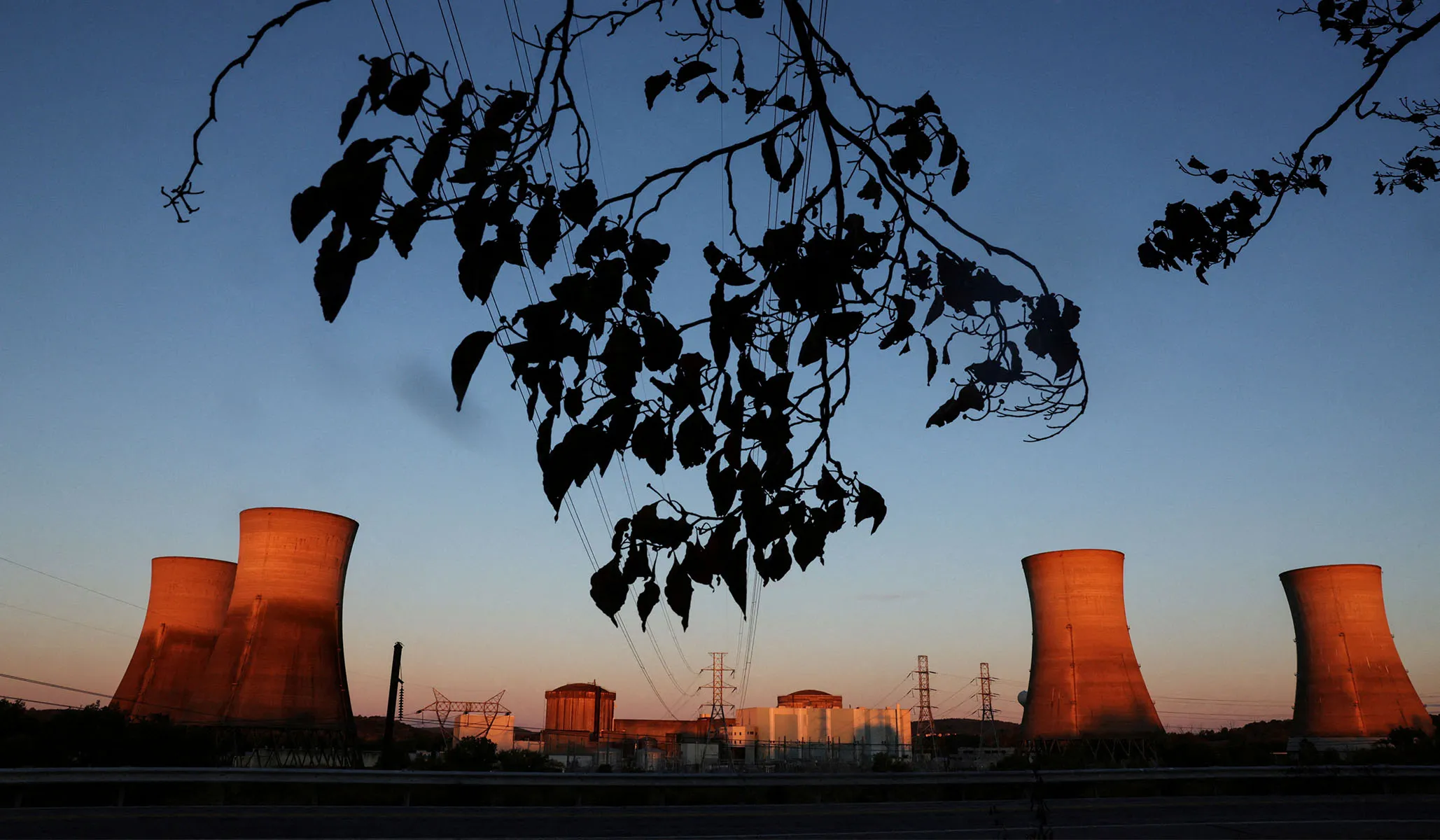
The Nuclear Energy Renaissance Is Here. Industry Leaders Want Congress to Seize the Moment
As interest and investment in American nuclear energy surge, industry leaders are asking Congress to help keep up the momentum.
Read more Texas Republicans Dig in on Opposition to Data Centers: Poll
Representing a variety of interests, a row of men in suits delivered a simple message to the House Science, Space, and Technology subcommittee on Wednesday morning: technology and public perception surrounding nuclear power have both evolved significantly since the field first faded out of fashion — and Congress should act now to help facilitate a new era of nuclear power.
Through a series of executive orders and federal programs, the Trump administration has attempted to streamline nuclear regulatory processes and help private developers move products toward viability and commercialization. These initiatives have resulted in four privately built microreactors reaching criticality, marking the first major advancement in decades.
But to keep up the progress, advanced nuclear energy CEOs, academic researchers and representatives of the Department of Energy are asking Congress to support nuclear power with both funding and legislation.
Dr. Steven Shannon, the head of the nuclear engineering department at North Carolina State University, told the congressional panel that a growing number of incoming freshmen are taking an interest in the field.
Enrollment in introductory nuclear engineering classes has doubled in the past three years at NCSU, he said, and the trend continues at peer institutions.
“The enthusiasm is real, and it is fragile,” Shannon said. “We cannot afford to let [the] momentum of this moment outrun our capacity to educate and train these students.”
“When I got my nuclear engineering degree from the University of Michigan in 1995, there were nine students in my graduating class, and most of us didn’t go into nuclear power after we got our degrees,” Shannon told National Review.
But now there are 100 sophomore students taking NCSU’s introductory nuclear engineering class, he said, adding, “It is so exciting; there are lots of faculty who have been waiting a long time for this moment.”
NCSU’s nuclear engineering lab spaces, classrooms, and faculty have hit capacity, he said.
Shannon pointed to recent rapid changes to the technology as a driving factor behind the renewed interest in the field. “It’s been a while since nuclear power from a commercial standpoint has really evolved,” he said. “Now all the sudden it’s like an L-shaped curve. Everything is changing.”
Read more Conservative Group Rolls Out ‘Fight Socialism’ Campaign as DSA Candidates Surge
Increasing university funding for nuclear engineering will help the U.S. train the next generation to both sustain long-standing technology and build new advanced reactors, Shannon said. “The stress point there is making sure we have the faculty and the infrastructure, so our students are ready to work in these new technologies and still serve the existing tech. Those light water reactors still play a role … and we’ve got to make sure that we can also serve that,” he explained.
However, even though public perception has softened on nuclear energy through the last decade, several lawmakers still expressed concerns over potential meltdowns.
The founder and CEO of Valar Atomics, Isaiah Taylor, tried to assuage those concerns. The industry’s shift toward smaller, mass manufacturable reactors make the technology “inherently safe and mass manufacturable,” he said.
Taylor’s reactor, which reached criticality on June 18 in Utah, uses helium as a coolant instead of water. This offers several safety benefits, since the gas cannot become radioactive, and it cannot undergo sudden phase changes that cause explosions.
Small modular reactors and microreactors are “our best shot at accelerating energy generation, keep[ing] up with domestic energy needs for residential populations, and keep[ing] costs down,” Taylor said, noting the smaller reactors will also allow the field to “supercharge the burgeoning AI and robotics revolution.”
Representative Zoe Lofgren voiced other concerns about nuclear safety, however, and described President Donald Trump’s interventions in the Nuclear Regulatory Commission as “legally dubious and really unjustified.”
In 2025, Trump appointed a new NRC chair, who has since given the commission the goal of completing the federal licensing process in less than 18 months. In the past, the process has taken between three and ten years.
Antares Nuclear founder and CEO Jordan Bramble told lawmakers that the changes are beneficial.
“For too long, we’ve treated nuclear regulation as the realm of lawyers and legal proceedings. Actually, it is both safer and faster when you treat regulatory engagement as an engineering problem first and foremost. You rely on physics to establish a safety basis, and that drives your requirements and how you set up your organization,” Bramble said.
Read more Prosecutors Say Tyler Robinson Killed Charlie Kirk over Political Views He Found ‘Repugnant’

Related Posts
Dearborn Leaders Spent Taxpayer Funds to Promote Islam While Discriminating Against Christians and Jews, Lawsuit Alleges
Dem Fundraising Giant ActBlue Accepted Illegal Foreign Donations, Covered Up Evidence, House Report Says