On the Eve of the Michigan Primary, Stevens Projects Unity with El-Sayed. Her Supporters Aren’t Convinced
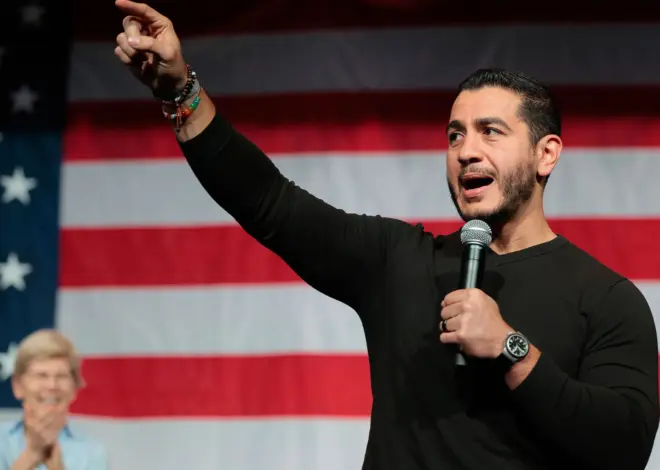
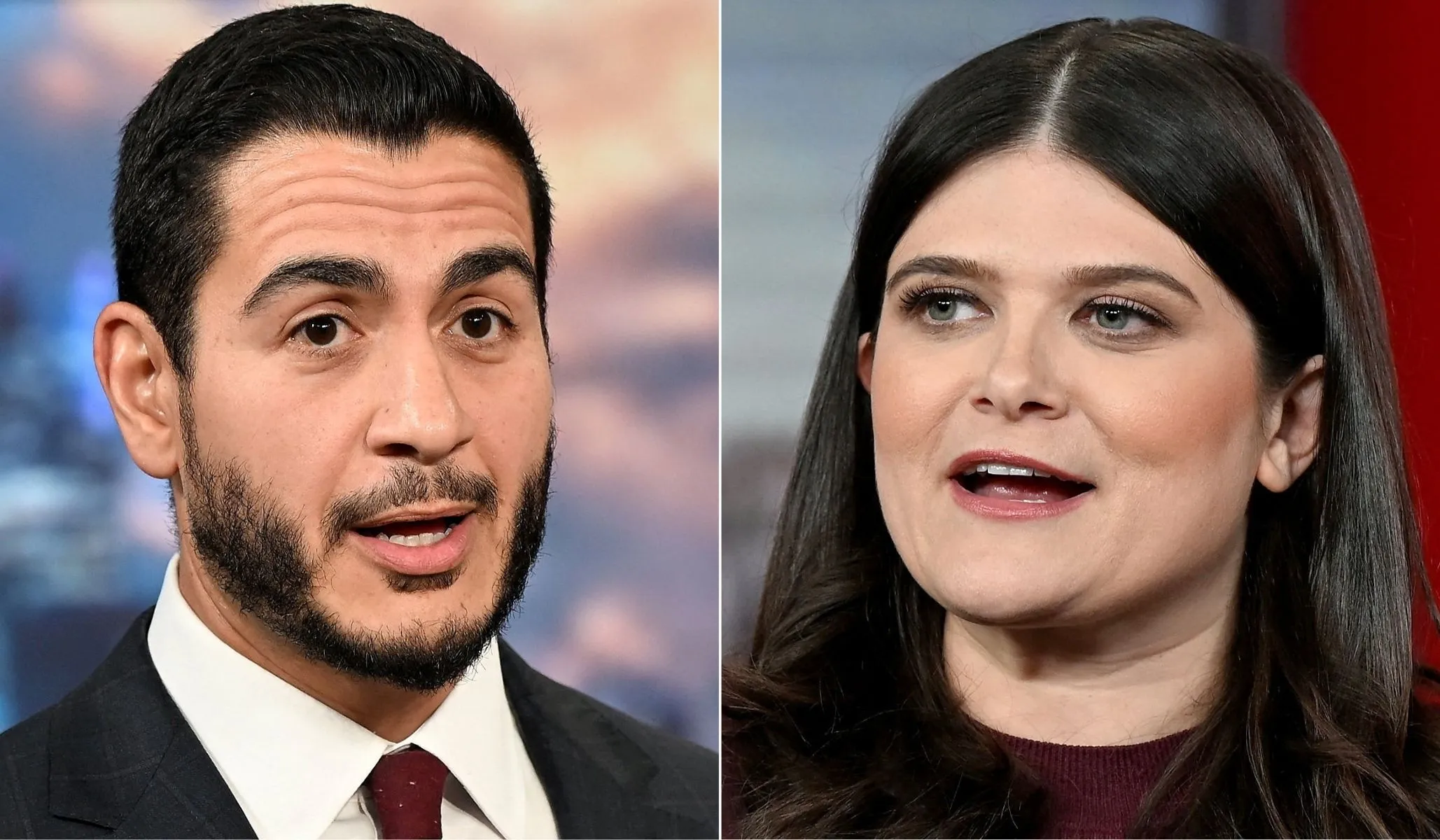
Madison Heights, Mich. — On the eve of Michigan’s Democratic primary, political observers might expect Haley Stevens to be laser-focused on drawing sharp contrasts with her socialist opponent, Abdul El-Sayed. Instead, Stevens has chosen to project party unity, even as many of her supporters make clear that they would cast a vote for Republican Mike Rogers over El-Sayed, should the upstart socialist prevail on Tuesday.
Read more GOP Holdouts Reach Deal with Trump to Advance Todd Blanche AG Nomination
Stevens, who has represented Michigan’s 19th district in the House since 2019, campaigned as the moderate alternative to El-Sayed, a Democratic Socialist who supports Medicare for All, the abolition of Immigration and Customs Enforcement, and an end to U.S. aid for the “rogue state” of Israel.
But when she was given the opportunity to highlight her disagreements with El-Sayed’s radical approach, during a campaign stop at a plumbing union hall in southeast Michigan over the weekend, Stevens declined to do so.
“Well, look, I’m on the Democratic ticket. I’m on the let’s make sure that anyone but Mike Rogers gets to the United States Senate,” Stevens told National Review. “And look, we still have an election underway, so all the conversations and all the things that are to unfold, you know, after the primary, you’re going to see a united Democratic Party.”
.@NRO asked Haley Stevens today if her commitment to endorse El-Sayed is also a full endorsement of his policies. She couldn’t come up with one she rejects. https://t.co/5aruuFUl8R
— Kamden Mulder (@kamdenmulder_) August 3, 2026
Stevens has promised to back El-Sayed “full force” should he best her in the primary, a pledge which El-Sayed reciprocated, albeit less enthusiastically. Stevens’s supporters, however, seem less enthused about voting for a socialist, a prospect that seems increasingly likely as recent polls show El-Sayed with a substantial lead over Stevens.
Mark Daskin told National Review at Stevens’s get-out-the-vote event on Sunday that El-Sayed’s biggest issue is that he is “very very far to the left on a lot of policies,” and he specifically likes Stevens because she is “more centrist.” Daskin also said he is worried about El-Sayed’s position on Israel.
If Stevens loses the primary, Daskin “probably would vote for” Rogers in the November general election. Daskin said many of his neighbors and friends also plan to vote for Rogers if Stevens loses.
Similarly, Michael Dorman said he would vote for Rogers rather than not vote at all.
“If he, basically, continues with the rhetoric that he does, then I won’t be able to vote for someday who doesn’t believe in Israel’s right to exist,” Dorman said of El-Sayed.
It’s unsurprising that the issue of America’s relationship with Israel would come up in conversation with Stevens supporters at a Michigan union hall. The candidates’ views on the conflict have dominated the race, thanks in large part to the overwhelming anti-Israel sentiment percolating among El-Sayed’s socialist supporters.
Read more A Conversation with the Dead
While Stevens supports a two-state solution, El Sayed has refused to endorse the proposition that Israel has the right to exist as a Jewish state, calling it a “distraction” from the question of whether Israel is entitled to U.S. aid. He has also repeatedly attacked the American Israel Public Affairs Committee (AIPAC) for buying influence over the American political system and backing “the least capable candidate” — Stevens — in the Michigan primary.
El-Sayed is also conscious of appealing to the anti-Israel constituency in heavily Muslim areas like Dearborn. He was heard on a leaked campaign call saying he didn’t want to comment on the death of Iranian supreme leader Ayatollah Khamenei earlier this year because “a lot of people in Dearborn are sad,” the Washington Free Beacon reported.
El-Sayed has given Stevens no shortage of potential targets had she wanted to highlight their differences. He has campaigned on imposing term limits on the Supreme Court, abolishing the filibuster, eliminating the use of fossil fuels, and hiking taxes on the rich.
National Review reached out to the Stevens campaign to offer the candidate another chance to identify the policies of El-Sayed’s with which she disagrees, but the campaign did not respond.
In projecting a united front with El-Sayed, Stevens is following the lead of Democratic leaders like Hakeem Jeffries and Chuck Schumer, who have proven hesitant to criticize the upstart socialists who have found success in blue-state primaries this cycle.
Senator Gary Peters (D., Mich.) has also pledged to support the eventual Democratic nominee, but he praised Stevens’s “commonsense, practical problem-solving ability” during a campaign event he co-hosted with the candidate on Sunday. He also favorably compared Stevens’s endorsements from establishment Michigan Democrats like Governor Gretchen Whitmer with El-Sayed’s popularity among out-of-state political and media elites, whom he dismissed as “other folks coming in from other states that look a whole that different than Michigan that think they know more about Michigan than we do.”
El-Sayed’s recent campaign events have included the leading lights of progressivism: Congresswomen Alexandria Ocasio-Cortez, Ilhan Omar, and Summer Lee, to name a few. Vermont Senator Bernie Sanders has also campaigned for El-Sayed and is outspoken in his support for him. Leading up to Tuesday’s primary election, all members of the far-left “Squad” endorsed El-Sayed.
The Democratic Socialists of America have also taken to El-Sayed, with the group’s Detroit chapter describing him as “a longtime friend.” El-Sayed, however, disclaims the moniker, insisting that political labels are tools used by the powerful to divide people.
Congresswoman Hillary Scholten, who represents Michigan’s more conservative third congressional district, endorsed Stevens on the grounds that her moderate approach will help rebuild trust with demographics with which the party is struggling, such as working-class young men. Like the voters with whom National Review spoke over the weekend, Scholten has not pledged to support El-Sayed in the general election if he wins on Tuesday. She has criticized the socialist candidate for campaigning with disgraced former Maine Democratic candidate Graham Platner and with Hasan Piker, a far-left podcaster who said America deserved the September 11 terrorist attacks.
“I think that condoning behavior like this from candidates like Abdul El-Sayed is taking us in a direction that we don’t want to go as a party,” Scholten said in an interview with CNN’s Jake Tapper.
Read more Who’s Writing the Curriculum Climate Activists Are Using to Influence Judges?

Related Posts
Amy Acton’s Mom Claims Candidate Lied about Childhood in Attack Ad — Despite Extensive Record of Abuse
North Carolina Democrat Who ‘Recently’ Left GOP Donated to Bernie Sanders in 2016