Why Are Canada’s Indigenous Leaders Still Pushing the School Burial Site Story?
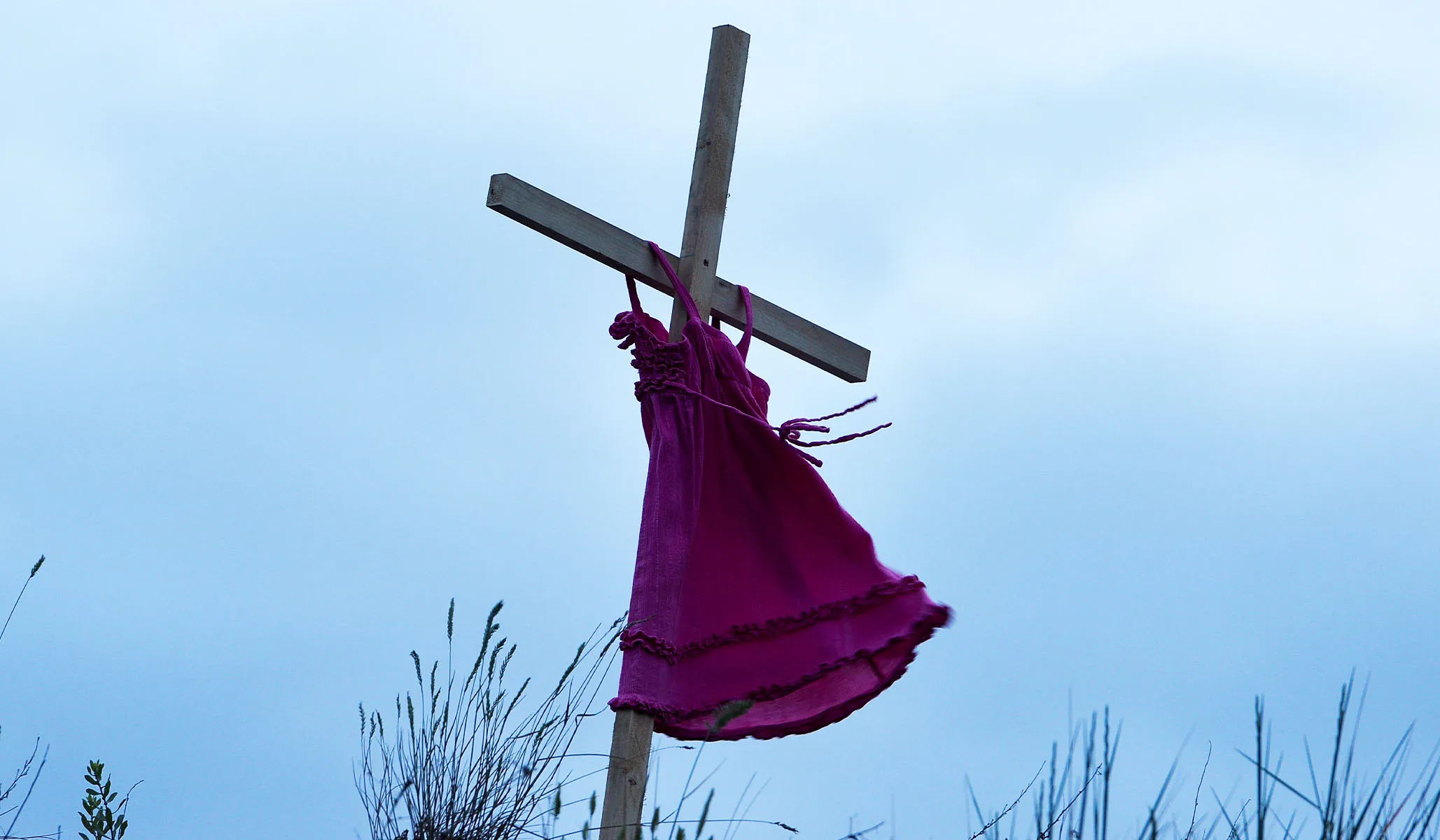
Five years after Canadians were rocked by the discovery of what Indigenous leaders described as mass burial sites scattered across the country, no evidence of mass graves has been discovered. But that hasn’t stopped those leaders from continuing to insist that children were killed and buried en masse on their reservations, and that the public should take their word for it.
Read more WNBA Team Co-Owner Fined, Suspended for Harassing Teen Fans over Opposition to Men in Women’s Sports
“I don’t think we should have to prove to anybody what happened to these people because they are there and they send us messages telling us they’re there,” Grand Chief Garrison Settee recently told attendees of the Assembly of First Nations in Ottawa.
Settee is the leader of Manitoba Keewatinowi Okimakanak, a group representing over two dozen First Nations communities.
He paused briefly during his speech to recognize Chief Rosanne Casimir, leader of the Tk’emlups te Secwepemc First Nation tribe. Casimir’s announcement in May 2021 that the remains of over 200 children were discovered at a former residential school in Kamloops, British Columbia, elicited breathless coverage in the New York Times and ignited a social panic that Canada is still reckoning with.
“And Chief Casimir and I went to visit the sacred site. You can tell they’re there, right?” Settee says softly. Feel the power. The energy,” he continues.
“For somebody that’s not from our communities, that doesn’t understand our culture, you cannot understand what that means. But we do. And you just don’t go into any cemetery and start digging up graves just to prove that someone died. It is disrespectful to our culture.”
Settee was apparently not alone among convention attendees in his belief that claims of spiritual communication should be sufficient in proving the existence of mass graves. The convention passed an emergency resolution calling for the criminalization of “residential school denialism.” A similar amendment recently introduced in a Canadian bill sought to criminalize speech that downplayed or dismissed claims of Indigenous victimization by residential school staff.
Canadian political and religious leaders created residential schools in the 19th century to deprive Indigenous children of their cultural ancestry and forcibly assimilate them. Roughly 150,000 children were sent to residential schools that dotted the country between 1831, when the first school opened, and 1996, when the last school closed.
The Canadian Truth and Reconciliation Commission estimated as many as 6,000 children died in the residential school system, calling it “a systematic, government-sponsored attempt to destroy Aboriginal cultures and languages and to assimilate Aboriginal peoples so that they no longer existed as distinct peoples.” Over 3,500 minors are named on the National Centre for Truth and Reconciliation’s registry of student deaths.
Residential schools undoubtedly took a toll on indigenous children, but influenza and tuberculosis, not the grisly mass murders implied by Indigenous leaders, were the primary cause. According to some estimates, the odds of a residential school student dying may have been as great as Canadian soldiers serving during World War I.
Casmir’s announcement and the resulting media coverage unleashed a wave of unmarked-grave declarations across Canada from indigenous leaders who claimed that ground-penetrating radar (GPR) had revealed geological anomalies on their reservations that could only be the bodies of children.
One month after Casmir spoke out, the Cowessess First Nation in Saskatchewan reported finding 751 unmarked graves in a field. Then-Prime Minister Justin Trudeau visited the site in July, days after “muted” Canada Day celebrations, to lay a teddy bear at the alleged site. Before year’s end, a Ktunaxa Nation band in British Columbia was said to have discovered nearly 200 unmarked graves, while the Penelakut Tribe in British Columbia claimed over 160 “undocumented and unmarked graves.”
Similar claims poured forth in the coming years. In 2022, Williams Lake First Nations in British Columbia reported “93 potential burials.” The following year, the Stó:lō Nation alleged that over 150 unmarked graves were located and, most recently, in May 2026, a First Nations community in Alberta said it had identified the remains of dozens of unmarked graves.
Read more Trump Lashes Out Against the Harsh Reality of Senate Math
But overlooked in the initial rush to condemn the atrocities committed against the Indigenous was the failure to produce any evidence they occurred. Little scrutiny was given to the Kamloops GPR surveyor, an anthropologist who boasted that science is a tool best used to affirm the intuitions of Indigenous elders.
“My findings confirmed what Elders had shared,” the researcher told her university after Casimir’s bombshell announcement. “It’s an example of science playing an affirming role of what the Knowledge Keepers already recognized.”
Neither Grand Chief Settee nor Chief Casimir responded to National Review’s request for comment.
Perhaps the only remnant? to be unearthed was a solitary jawbone that a security member found walking the perimeter of the former Lebret Indian Industrial School in Saskatchewan, where members of the Star Blanket Cree Nation were previously sent. The community had earlier announced more than 2,000 “hits” after surveying the school using GPR.
The Minegoziibe Anishinabe, located in rural Manitoba, is likely the only community to have performed an exhaustive excavation at a former residential school after more than a dozen anomalies were found using GPR. No remains were located. Chief Derek Nepinak said afterward it took “nothing away from the difficult truths experienced by our families who attended the residential school in Pine Creek.”
Still, Indigenous leaders say the investigations, which together have cost the Canadian government $285.5 million since 2021, must continue. Casmir’s tribe, Tk’emlúps te Secwépemc, alone has received more than $9.5 million. Earlier this year, Chief Casimir said her community was in the process of planning an eventual excavation “pending consent from Tk’emlups and the roughly 120 communities throughout western Canada that sent children to the school” in Kamloops.
While the investigations continue, the Canadian government has already begun making amends for crimes as yet unproven.
Flags were lowered for nearly half a year at Trudeau’s behest following Casimir’s announcement, the longest period in the country’s history. And there remains a deep discomfort acknowledging the political and journalistic shortcomings Kamloops revealed.
When the Globe and Mail, considered by many Canada’s newspaper of record, released an editorial this May stating the basic facts that no human remains had been found while reiterating the terrible history of residential schools, it was hailed as a landmark moment of truth-telling.
That conviction isn’t shared by everyone at the outlet. The Globe’s recently retired investigative journalist Robert Fife insists there are human remains based solely on conversations he had with First Nations people. Like the Indigenous leaders, Fife argued that his identity, that of reporter, gives him special access to knowledge that eludes the public.
“As journalists, you know when it’s true and not true,” he suggested on a recent podcast.
Read more Fauci Pleads the Fifth in Covid Hearing, Citing Rand Paul’s ‘Unhinged Obsession with Me’