Even Fauci Was Shocked by How Much the Media Loved Him
Welcome back to Forgotten Fact Checks. This week, we look at the revelations included in Anthony Fauci’s recently released diary from 2020, and we cover more media misses.
Read more New Jersey Refuses to Cooperate with DOJ Investigation into Noncitizen Voting
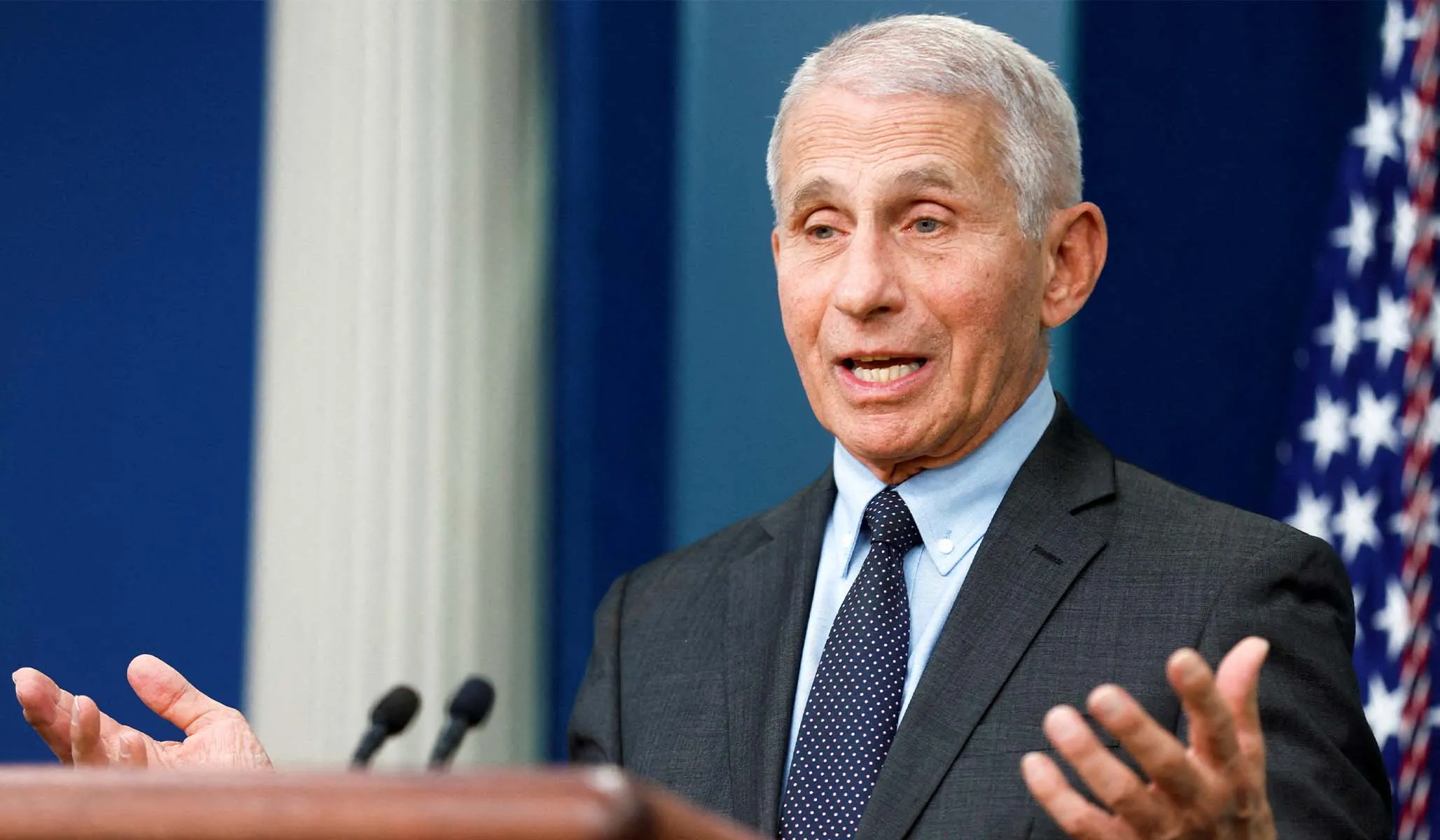
Fauci Was Eating Up His ‘Very Flattering’ Media Coverage in 2020
Chuck Todd called him “the single most respected voice on the pandemic.” To Mehdi Hasan, he was “America’s doctor.” Dana Bash went so far as to call him a “superhero.”
And now, , we know Anthony Fauci was basking in the positive media coverage, much of which served to obscure the vaunted public health official’s role in pushing harmful lockdown policies and downplaying the likelihood that the virus emerged from a Chinese lab.
Senator Rand Paul (R., Ky.), who seems intent to not let any pandemic-related stone go unturned, released 1,141 pages of Fauci’s diary from 2019 to 2022 on Friday. The near-daily entries feature Fauci obsessively cataloguing and celebrating his newfound media fame, while eagle-eyed readers have been able to retroactively catch Fauci in a number of lies thanks to the unprecedented access the diary provides to his innermost thoughts. Fauci misled Americans on a number of topics, the diary reveals, from Covid-19’s origins to its mortality rate, and his role in shutting down American society in 2020.
Many of Fauci’s diary entries begin with the death toll of the pandemic, before quickly devolving into a self-satisfied recounting of his adoring media coverage.
On March 21, 2020, when deaths from the virus reached 9,800 globally, Fauci wrote that a “big front page article abut [sic] me appeared in the Washington Post. Very flattering.”
“The situation with my national and international fame is explosive and really unimaginable,” he added. “It is not hyoperbole [sic] to say that today I am the most famous and talked about person in the country and one of the most recognizable peson [sic] in the world.”
“Countless profiles on me in multiple media. I cannot even read all the things that are written abuyt [sic] me since I am so busy. . . . seriously,” he added.
He went on to say that President Trump “seems to be enamored of me even though I am taking the spotlight away from him” and that he and the president were “developing a very unique and interesting relationship.”
One day later, he wrote that “cases continue to soar” and the U.S. had recorded 400 deaths.
“Press is going wild with me,” he wrote. “Front page in Washintgton [sic] Post yesterday and Op Ed by Maureen Dowd in NY Times today about me and my relationship with the POTUS. Profile by Peter Nicholas on me in The Atlantic.”
“I am trying in several articles and on TV to clarify that the POTUS is tsalking [sic] about hope for therapies although there are no good data, while I must stick to the science and so fundamentally we are approaching this from different, but not conflicting standpoints,” he added, noting “The press are crucifying the POTUS for ‘not listening to me and making crazy statements about ‘game-changing’ therapies and praising me fot stivking [sic] to my guns.”
He goes on to say watching a press conference the president held “made it clear how self-congratulatory the POTUS, VP and others appear on the stage.”
Fauci clipped a number of newspaper headlines throughout his diary entries, from the Washington Post in August 2020, “As Fauci battles the pandemic and politics, his grateful neighbors celebrate him as a hero,” to a March 2020 article in the New York Times, “Not His First Pandemic, Dr. Anthony Fauci Sticks to the Facts.”
Fauci’s diary entries also reveal an increasingly cozy relationship with broadcast journalists, including NBC’s Chuck Todd and CNN’s Jake Tapper.
He writes about a “really nice conversation with Chuck Todd” that began when Todd texted to ask about what he thought of an interview the day before. Fauci went on to ask Todd for advice about “publicly defending myself” against “slanderous attacks.” The pair agreed that any defense Fauci might mount would only fuel his critics. Fauci said Todd told him “that Fox News and people like Tucker Carlson would use anything I say as the theme for their next show.”
“Although he must maintain his objectivity and reporting it is very clear that he is really being a friend in understanding the difficult position that I am in,” he added.
Fauci’s diary also mentions a budding friendship with Tapper, who at one point checked in with the National Institute of Allergy and Infectious Diseases leader to ensure a CNN interview hadn’t caused problems with the White House.
Fauci also sent questions to Tapper for the CNN anchor’s interview with Trump’s assistant secretary of health at the time, shortly after Fauci visited the Tapper home for dinner and assessed that the pair had a “friendship building.”
CNN’s Dana Bash also privately texted Fauci at one point in response to a heated exchange he had with Representative Jim Jordan (R., Ohio) in April 2021. Bash told Fauci he was a “better man” and said her colleague Wolf Blitzer had joked no one would have blamed Fauci if he had told Jordan to “go f*** yourself.”
That Fauci was developing close ties to members of the mainstream media behind the scenes perhaps comes as no surprise, given how little broadcast anchors tried to hide their admiration for Fauci on screen.
In response to a video compilation by Grabien showing news anchors’ overly deferential attitudes toward Fauci, former Trump White House staffer Alexa Henning said Fauci was “impossible to get off tv” at the time.
“He’s an egomaniac, obsessed with attention,” said Henning, who served as special assistant to the president and director of broadcast media during President Trump’s first term.
“He used to tell hosts directly that I was keeping him off tv and I’d get calls from Chris Cuomo and others yelling at me that I was endangering the lives of the American people if I didn’t let Fauci on tv,” she wrote. “Another time I recall a conversation we had where I said it maybe it wasn’t a good idea to go on SNL, he looked at me and said ‘SNL!? Who do you think will play me? Brad Pitt?’”
Read more Nebraska Senate Candidate Dan Osborn Accepts Corporate Money Despite Loud Opposition
But despite Fauci’s public-facing role as a Covid hero — and the anchors’ repeated insistence on thanking him for his “candor” — the diary also reveals that Fauci’s public and private thoughts on the pandemic’s origins greatly diverged.
On January 26, 2020, Fauci wrote, “It now appears using epi data and genomic data that the first infection was in early December and was not connected to the market.”
“Now we know the market was not the source, it was the amplifier,” he said. “Having said that, somewhere the virus jumped from animals to humans.”
NR’s Jim Geraghty acknowledged that he couldn’t find an instance in which Fauci explicitly states that SARS-CoV-2 came from a wet market, but he “certainly didn’t do anything to dispel that perception.”
Instead, Fauci emphasized the likelihood of a “natural origin” and rejected the notion that the virus could have leaked from a lab.
The public has known for years now that Fauci “prompted” “The Proximal Origin of SARS-CoV-2,” a paper published in Nature Medicine in March 2020 that would go on to be widely cited by the journalists and public health officials who roundly dismissed the idea that Covid-19 had emerged from a lab leak in Wuhan, China.
But recent document dumps by Paul’s office show Fauci and other scientists, including those who authored the papers, were privately casting doubts about a natural origin for the virus.
Fauci’s diary details his February 1, 2020, call with a dozen scientists that ultimately led to the “Proximal Origin” paper. He reveals in his writings that just two of the scientists thought the virus had natural origins; the other ten “felt that deliberate insertion was possible,” Fauci wrote.
Not only that, but the scientists pointed to the gain-of-function studies on coronaviruses in Wuhan as a particular point of concern.
And yet, eight days after the call, Fauci went on Newt Gingrich’s podcast and dismissed a lab leak as “just conspiracy theories.”
Slack messages released by Paul’s office earlier last week showed the scientists behind the “Proximal Origins” paper began having doubts just three months after publishing their paper, which claimed that the Covid lab-leak theory was not “plausible.”
When asked publicly in April 2020 whether Covid-19 may have emerged from a lab, Fauci cited the paper to cast doubt on the theory.
Meanwhile, in a diary entry from March 15, 2020, Fauci recalls convincing then-New York City Mayor Bill de Blasio and California Governor Gavin Newsom to close schools, bars and restaurants. And yet two years later, Fauci told The Hill he “didn’t recommend locking anything down.”
Fauci also testified before Congress on March 11, 2020, that the mortality rate of Covid was between 1 and 3 percent, or that Covid-19 was ten times more lethal than the seasonal flu.
But one month before his testimony, Fauci wrote in his diary about a conversation he had with former CDC director Tom Frieden in which they both agreed that the case fatality rate was “more like 0.2-0.3 % rather than 2.0%.”
Headline Fail of the Week
USA Today sports columnist Nancy Armour was widely panned online last week for invoking Emmett Till in an essay criticizing women’s basketball phenom Caitlin Clark.
“Caitlin Clark’s flopping isn’t just annoying — it’s becoming dangerous,” Armour wrote, arguing that Clark’s “histrionics” while accusing other players of foul play endangers black and queer players.
“It seems there is a White nationalist element to Clark’s fandom that is deeply, deeply problematic,” Armour said.
“It shouldn’t need reminding this country has an awful history of Black people being harmed, even killed, in the name of ‘defending’ white women,” she later added.
“The irony of the WNBA’s All-Star Game is that it’s happening this weekend in Chicago, the hometown of Emmett Till,” she said, referring to the 14-year-old black boy who was lynched in Mississippi in 1955.
In response to backlash, Armour acknowledged that her comparison to Emmett Till was “inartful.”
“In my recent column, I made an inartful comparison with the murder of Emmett Till,” she posted in a statement on Instagram. “I intended to connect the issues the WNBA is currently facing with its All-Star Game being hosted in Till’s hometown of Chicago.”
“I obviously did not provide enough context for that. However, this point stands: There is a history in this country of perceived threats to white women being weaponized against African-Americans, and the danger that poses to Black players in the league.”
Read more How Cuba Is Covertly Boosting America’s Radical Left
Media Misses
- Former CNN anchor Don Lemon recently said President Trump’s MAGA movement is “the closest thing to the modern version of the Nazi Party.” “This is America’s version,” he said during an appearance on the Can’t Be Censored podcast. “It’s the closest thing, without the Holocaust and all that stuff.”
- Cecilia Vega was fired from her role as a 60 Minutes correspondent in May, but spoke out for the first time about her firing last week saying “the stitches” from being fired are “still fresh” and she is “scared to be talking” about her experience working under CBS News editor in chief Bari Weiss.“It’s not that I just lost a job. There is a lot at stake,” Vega said. “Sometimes you got to be scared and do it still.”