Celebrated Historian’s Book Knocking White Abolitionists Received Rave Reviews. Now It’s Being Pulled from Shelves
Welcome back to Forgotten Fact Checks. This week, we look back at the media’s uncritical celebration of a 2022 book that scrutinized a pair of famed white abolitionists, and we cover more media misses.
Maybe the Abolitionists Were Good, Actually
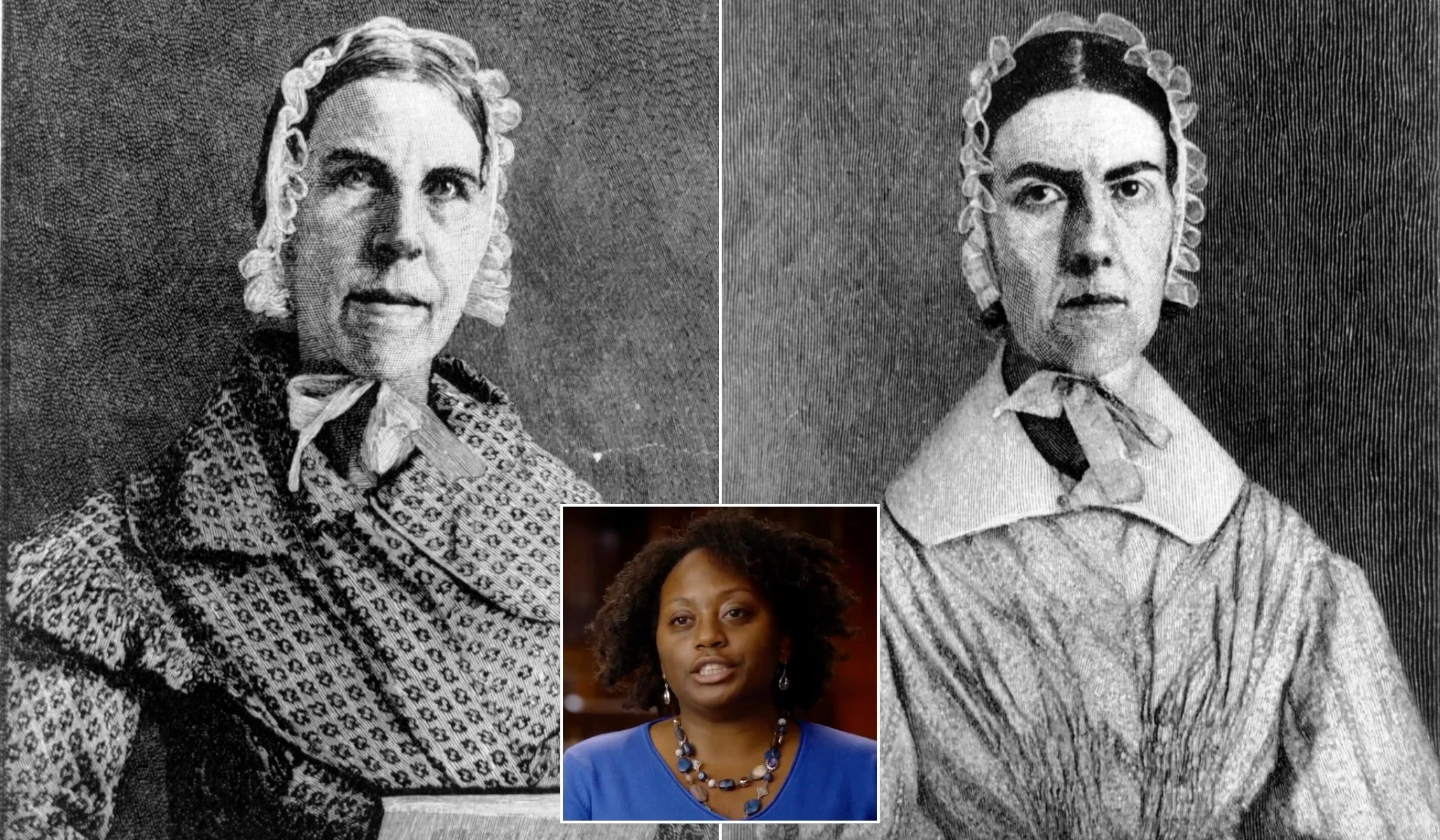
Historian Kerri K. Greenidge’s The Grimkes was met with rave reviews when it was published in 2022. The book, which calls into question the virtue of prominent abolitionist sisters in the antebellum south, was called a “compelling” account of “slavery’s indelible stain on a white abolitionist legend.” Publisher’s Weekly even named it one of the ten best books of that year.
But now Greenidge’s publisher, Liveright Publishing, has pulled the book from shelves after several of Greenidge’s academic peers came forward with concerns that she had misled readers and failed to present sufficient evidence to back up some of her key claims in the book, which sought to rewrite the narrative around two sisters, Angelina and Sarah Grimke, who were born and raised in a slaveholding family but ultimately denounced their upbringing and branched out on their own as important figures in the abolitionist movement.
The Grimke sisters were the daughters of John Grimke, who had more than 300 slaves on his South Carolina properties. A New York Times book review from 2022 notes historians long believed the Grimke sisters “rejected their white inheritance by coming north and joining the movement, gaining moral credibility that few of their peers could match.” However, “Greenidge challenges this narrative, showing that the sisters’ contributions to abolition and women’s rights were undergirded by the privileges they reaped from slavery. The lives they built, and their relationships with Black relatives, were poisoned by the profits, violence and shame of white supremacy.”
A contemporaneous review from The Atlantic similarly found that earlier biographies on the women “hailed the sisters’ successes,” while Greenidge “finds these vitiated by Sarah and Angelina’s unacknowledged ‘complicity in the slave system they so eloquently spoke against.’”
Greenidge’s book also worked to dismantle the “feel-good stories” of the Grimkes’s two biracial nephews, Archibald and Francis, who were born to the women’s brother, Henry, and an enslaved woman. Tales of the brothers’ achievements have ignored “the superficialities of the colored elite” of which they were members, wrote Greenidge, who also noted the men’s obsession with skin color and class hierarchies in the black community.
Mainstream media was all too eager to accept the rewritten narrative about two of America’s abolitionist and feminist heroes.
At the time of the book’s publishing, just one year after the death of George Floyd rewrote the way many of America’s institutions and leaders engaged with conversations about race, the Times heralded Greenidge’s book as providing “a consummate cartography of racial trauma, demonstrating, through an adept use of the family’s letters, diaries and other archival materials, how the physical and emotional abuses of slavery traveled through generations long after abolition.”
Greenidge “offers an intimate and provocative account of a family’s intergenerational struggle to remake itself” and “takes the Grimke sisters off their pedestal so that we understand them as pieces of a tapestry that could only be sewn in America,” the Times review reads.
However, two years after the book was published, as the excitement around both the book and the country’s racial obsession began to wane, Myra C. Glenn, a retired professor of American history at Elmira College, raised concerns about inaccuracies in the once-celebrated story.
Glenn was examining Greenidge’s book on behalf of Reviews in American History, a scholarly journal published by Johns Hopkins University Press, and found that the book on the Grimkes was “well-written” but “deeply flawed.”
“All too often Greenidge lacks the evidence to substantiate many of her major claims,” Glenn wrote. “Her work is also riddled with factual errors and repeatedly omits needed endnotes.”
Among the problems that Glenn identified was the use of quotes from letters exchanged between the Grimke sisters that could not be found in the University of Michigan’s archive, as Greenidge’s citations suggested. She further called into question the book’s retelling of an 1838 attack on Pennsylvania Hall in Philadelphia by an anti-abolitionist mob. While Greenidge wrote that the Grimke sisters “led thousands of antislavery women through prayer” and helped them escape the “flaming building,” Glenn argues that “numerous sources have documented [that] no one was in the building when it was torched since antislavery activists cancelled a scheduled meeting, fearing impending violence.”
While Glenn’s critique was the most public facing, Tufts University, where Greenidge was employed at the time of the book’s publishing, had apparently quietly undertaken a review of the book in December 2022 in response to complaints that it contained “multiple errors of fact and failed to give appropriate credit to the work of another,” according to a statement from the university to the New York Times last week.
“The university initiated a thorough peer review involving a panel of external scholars of American history which identified multiple errors of fact and citation,” a university spokesperson told the outlet. “In keeping with its commitment to ethical conduct in research, the university proactively moved to correct the public record by informing publisher W.W. Norton of the peer review findings.”
Read more Senator Lindsey Graham Dies at 71
The university also confirmed Greenidge is no longer employed there as a tenured associate professor in the Department of Studies in Race, Colonialism, and Diaspora.
The Times further reports that the book was seemingly pulled by its publisher, with the title now absent from a list of books written by Greenidge on her author page on the Norton website.
Greenidge, for her part, defended herself in comments to the Times, claiming that the criticisms of her work have been driven by race, because she is black.
“I am heartbroken that a field I have given my life to can treat me this way,” Greenidge said. “The attack on Black women academics is real.”
“I have never plagiarized anything in my life,” she said. “I have never fabricated anything.”
Nonetheless, she acknowledged that there were “probably” citations that were misattributed in the book.
The latest revelations raise questions about how the book’s flaws were so easily overlooked by several major reviewers at the time of its publishing four years ago.
A New York Times book review previously called it a “nuanced, revisionist account of an American family best known for a pair of white abolitionist sisters,” while a subheading in The Atlantic read: “The abolitionists have long been portrayed as heroes. A new book views them, and their family, in a different light.”
The book also won Greenidge the Joan Kelly Memorial Prize from the American Historical Association in 2023; the award recognizes scholars in women’s history and feminist theory. The Grimkes was also a finalist for the 2023 National Book Critics Circle award in biography.
Smithsonian magazine dubbed the book one of the ten best history books of 2022, while the Boston Globe called the writing “brilliant” and celebrated Greenidge as “an especially elegant writer.”
The Wall Street Journal called the book “brilliant, prodigiously researched, and utterly devastating.” The Los Angeles Review of Books described the book as “remarkable,” while the New York Review of Books said the biography “greatly enhances our understanding” of the Grimke family.
Headline Fail of the Week
Longtime Senator Lindsey Graham (R., S.C.) died on Saturday at the age of 71. Just days after Graham’s death, the New York Times chose, for some reason, to highlight his supposedly fraught relationship with black voters. The simplest explanation for Graham’s lack of popularity among the state’s black residents, simple partisan sorting, is ignored in favor of the implication that something about Graham in particular alienated his black neighbors. “Lindsey Graham Had a Complicated Relationship With Black Voters.”
But the Times wasn’t alone in its distasteful response to Graham’s death: The Young Turks co-host Ana Kasparian said, “Good riddance,” in response to the news, while Lincoln Project co-founder Steve Schmidt called Graham a “lonely and unprincipled man who betrayed his country for power and his decency for attention” in a Substack post.
Read more Young People Aren’t Having Kids Because Their Friends Aren’t. So What Can Be Done?
Media Misses
- CNBC ranked the top ten states to live for 2026 based on a peculiar rubric. While some of the attributes are reasonable enough — “quality of life” that includes things like health care and crime — others are purely liberal ideals: “inclusiveness,” anti-gun “reforms” and “reproductive rights.” It should come as little surprise that eight of the top ten states are politically blue.
- MS NOW’s Joe Scarborough says Republicans should “just really shut up” with criticisms about Democrats’ support for disgraced former Maine Senate candidate Graham Platner. “They really should just shut up. If they’re going to be critical of Democrats for supporting a morally challenged candidate or one who has been accused of doing things that are morally challenged, it is so hypocritical, and they should just leave this to the Democrats to clean up their own house.” But Platner and his Democratic allies were quick to wave away numerous scandals the candidate faced throughout his campaign, including assault allegations from a former girlfriend who had prior ties to the GOP. It wasn’t until a second ex-girlfriend came forward with a sexual assault allegation that Democrats were finally given almost no choice but to pull their support from the troubled candidate.