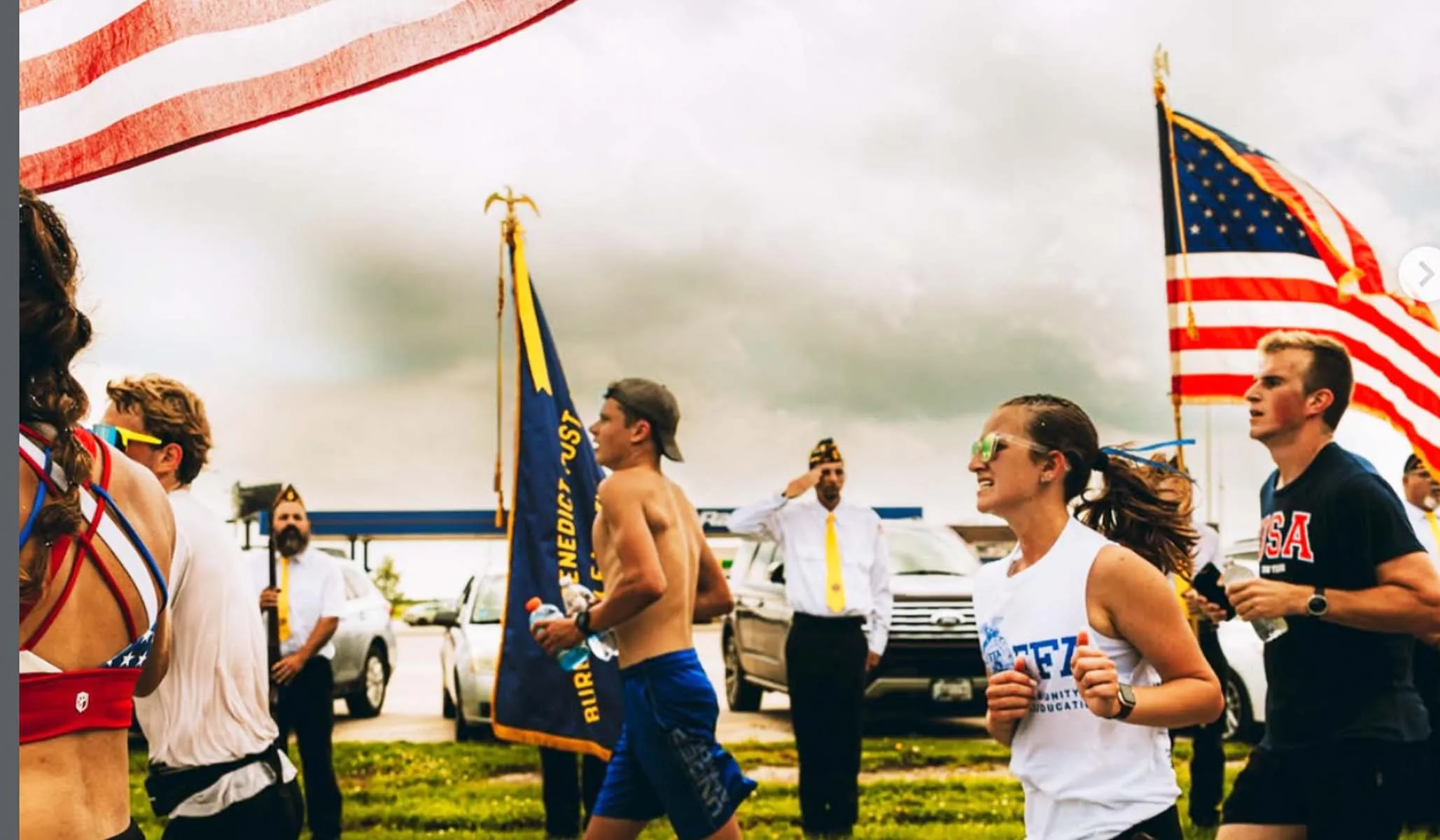
American Flag to Arrive in D.C. on July 4 After Runners Carried It Nonstop from California
The American Flag will arrive on the steps of the U.S. Capitol building around 10 a.m. on July 4 after being carried, by hand, across the country by hundreds of American runners.
Read more Daughters of the American Revolution Leaders Undermine Push to Ban Trans-Identifying Men
The Relay for America began in San Francisco on June 14 and before it’s over, the flag will have traveled 3,016 miles to honor 3,000 veterans who were nominated by friends and family members grateful for their service.
“Events like these generally have full teams working for months and budgets in the hundreds of thousands,” relay Co-Founder Wyatt Moss said in an Instagram reel, “but all Joe and I had was a few weeks, our combined lifetime savings, and credit card limits to pull this thing off.”
The flag will have passed through 15 states on a route divided into 250 different segments of varying lengths and terrain intensities. One flag bearer carries the flag per segment, resulting in a total of 250 flag bearers by the end.
“What stood out most was the people,” Missouri resident David Martin told NATIONAL REVIEW. “We met runners from all over the country with different backgrounds, different stories, and different perspectives, yet we all came together with one shared purpose. It was a powerful reminder that we’re far more united than we’re often led to believe.”
Martin was a chauffeur for segment 165, and his wife ran it. As they passed through two small northern Missouri towns, Martin said they were met with so much enthusiasm — people waving American flags and offering them drinks.
Runners in other towns were met with similar fervor.
“Probably half our town showed up” Kansas resident ShayLinn Zweygardt told NR. “The fire trucks and the police vehicles, they had their sirens going, and kids were blowing blowhorns and a lot of people were crying.”
Zweygardt ran all 13.6 miles of segment 122 in Cheyenne County. She said people went out of their way to drive to the towns the relay passed through and cheer the runners on. Young kids even came running out to pass out water bottles. “It was super empowering,” she recalled.
Dates and times for specific segments have shifted slightly, but the race is still on track to conclude on the 4th. In order to reach D.C. in time, runners are required to stick to an under 9:30 per-mile pace.
“We built this relay to welcome every runner, but we’re now in the final push and can’t slow the relay to accommodate a slower pace and still finish on time,” the website explained. “If under-9:30 isn’t your pace right now, you’re still welcome to come run a single mile of your segment at pace and hand off.”
The pacing of the final stint of the race, segment 250, will be deliberately slowed so more people can participate, aiming for a 20-minute mile.
Read more NYC Budget Allocates Almost $7 Million to ‘Trans Equity,’ Nothing for Promised Police Hires
There is no limit to the number of segments runners can participate in and no limit to the number of runners participating in a given segment. The flag does not stop for any weather conditions except lighting or tornado warnings, and runners carry it through the night so it doesn’t stop moving.
The relay was U.S. Army National Guardsman Joe Nail’s idea. Nail planned to run the flag from California to the Capitol with the help of endurance athlete Wyatt Moss. The men met in 2024 while both attempting to run 50 marathons in 50 states and became friends through their shared passion. Moss suggested that they expand the scope of the relay to include the American people, and Nail agreed.
Relay for America has a team of 17 people, 14 of whom are volunteers, traveling in what Moss calls their “moving caravan.” They follow the runners, ensure they are safe, and share live on-the-ground updates on Facebook and Instagram.
Zweygardt and many of the other runners first heard about the event through social media — either by seeing Relay for America’s Instagram reels or hearing about them from someone who did.
“It’s been so fun to watch their Instagram just blow up,” she said. The page now has over 70,000 followers and over 220 posts since the first post on May 25.
Social-media posts from relay participants all over the country describe the event as a much-needed opportunity for communities to come together.
“For us, this was much more than just another run,” Martin said. “It was a once-in-a-lifetime experience and an opportunity to be part of something bigger than ourselves.”
Zweygardt agreed, appreciating the unity she sensed a she ran through Kansas communities.
“It’s really easy to find negatives in the world, but this really highlighted the positives,” she said. The heart behind the relay resonated deeply with the residents of her small town. “I think it really touched people to honor our veterans,” she said, “and we have a lot of veterans here.”
Moss said the hope is that Relay for America will be an annual event “uniting Americans one mile at a time” for years to come.
Read more Man Sentenced to Just One Year in County Jail in Death of Pro-Israel Protester
